How Feral Cats Think Compared to Domesticated Cats
Cats share a mysterious reputation. They walk quietly, observe everything, and communicate through subtle signals. Yet not all cats think or behave the same way. A cat raised in a loving home develops a very different mindset from one surviving outdoors without human contact.
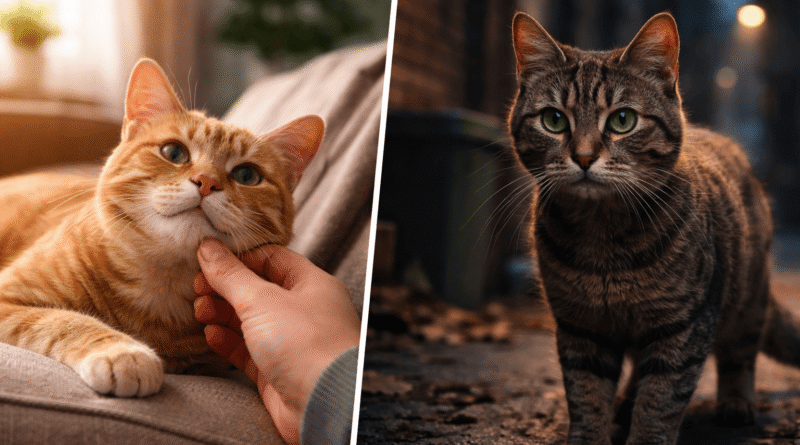
Understanding the differences between domesticated and feral cat psychology helps guardians, rescuers, veterinarians, and animal welfare advocates interact more effectively with cats. While domesticated cats often seek human companionship, feral cats rely heavily on instinct, survival skills, and cautious behavior.
Although both groups belong to the same species—Felis catus—their life experiences shape how they perceive humans, threats, food, and territory. Early socialization plays a powerful role. Environmental conditions also influence how cats interpret the world around them.
This article explores the psychological differences between domesticated and feral cats. It also explains their behavioral patterns, emotional responses, social structures, and adaptation strategies. By understanding these differences, readers can better appreciate feline intelligence and support humane approaches to cat welfare.
What Is a Domesticated Cat?
A domesticated cat grows up with regular human contact. Most domesticated cats live inside homes or move freely between indoors and outdoors while maintaining a close relationship with humans.
Historically, cats began living alongside humans thousands of years ago. Archaeological discoveries suggest that the domestication process started around 9,500 years ago in the Near East when wildcats began hunting rodents near early farming settlements. Over time, humans encouraged their presence because cats protected food supplies from pests.
Domesticated cats gradually adapted to human environments. They learned to interpret human voices, body language, and routines. As a result, their psychology developed around cooperation with people.
Several psychological traits commonly appear in domesticated cats:
- Curiosity toward humans
- Comfort with touch and handling
- Dependence on humans for food and safety
- Playful behavior resembling kitten instincts
- Ability to bond with multiple human family members
Because domesticated cats receive consistent care, they rarely need to rely entirely on survival instincts. Instead, they focus more on social interaction and environmental exploration.
However, domesticated cats still retain strong ancestral instincts. They stalk toys, chase insects, and mark territory. These behaviors remind us that domestication did not erase the wild nature within cats.
What Is a Feral Cat?
A feral cat lives independently from humans and has little or no socialization with people. These cats survive outdoors by hunting small prey, scavenging food sources, and avoiding potential threats.
Many feral cats descend from abandoned or lost domestic cats. Over generations, they adapt to life in colonies and develop strong survival instincts.
Unlike stray cats, feral cats typically avoid human contact. They view people as predators or dangers rather than companions.
Key psychological traits of feral cats include:
- Extreme caution around humans
- Strong territorial awareness
- High alertness to environmental changes
- Survival-driven hunting behavior
- Limited tolerance for handling or confinement
Feral cats often form colonies near stable food sources such as restaurants, farms, or residential areas. Within these colonies, cats establish social hierarchies and shared territories.
Importantly, feral cats are not “mean” or “aggressive” by nature. Their behavior simply reflects the psychological adaptations required for survival in unpredictable environments.
The Role of Early Socialization in Cat Psychology
Early life experiences shape feline psychology more than many people realize. Researchers studying kitten development emphasize a critical socialization window between two and seven weeks of age.
During this short period, kittens learn which creatures are safe companions and which represent threats.
If kittens interact regularly with humans during this stage, they usually grow into friendly, confident pets. However, kittens that grow up without human contact often develop fear-based responses that persist into adulthood.
This developmental difference explains why many adult feral cats cannot easily adapt to domestic life.
Socialization influences several psychological traits:
- Trust toward humans
- Stress tolerance
- Curiosity levels
- Ability to adapt to new environments
- Communication with humans
Kittens raised by humans also learn to interpret human voices, gestures, and routines. As a result, domesticated cats respond when called, seek attention, and recognize their caregivers.
Feral kittens, on the other hand, prioritize survival skills. They focus on stealth, rapid escape, and cautious observation. These traits allow them to survive outdoors but make social bonding with humans more difficult.
Fear and Trust: The Core Psychological Difference
One of the most significant differences between domesticated and feral cats lies in their relationship with fear and trust.
Domesticated cats generally associate humans with positive experiences. They expect food, warmth, and comfort. Therefore, they often approach people willingly.
Feral cats interpret human presence differently. Because they rarely experience kindness from humans during early development, they rely on fear as a protective mechanism.
Fear responses in feral cats include:
- Running away immediately when humans approach
- Avoiding eye contact
- Hiding in elevated or concealed spaces
- Remaining silent to avoid detection
These behaviors protect feral cats from potential threats. However, they also limit opportunities for social bonding.
In contrast, domesticated cats express trust through body language such as:
- Slow blinking
- Purring
- Tail held upright
- Rubbing against people
These behaviors signal comfort and social connection. Over time, repeated positive interactions strengthen the human–cat relationship.
Hunting Behavior and Survival Instincts
Both domesticated and feral cats possess strong hunting instincts. However, their motivations differ significantly.
Feral cats hunt primarily for survival. They must capture prey regularly to maintain energy and health. As a result, their hunting skills remain sharp and efficient.
Common prey items include:
- Small rodents
- Birds
- Insects
- Lizards
Feral cats typically hunt several times each day. They rely on stealth, patience, and precise timing.
Domesticated cats also display hunting behaviors, even when food bowls remain full. However, their hunting serves more as mental stimulation and instinctive play rather than survival.
Indoor cats often express hunting instincts through:
- Toy chasing
- Pouncing on moving objects
- Stalking laser pointers
- Ambushing household items
While these behaviors appear playful, they reflect ancient instincts inherited from wild ancestors.
Social Structure and Community Behavior
Many people assume cats prefer solitude. However, this belief oversimplifies feline social behavior.
Feral cats often form structured colonies in areas with reliable food sources. These colonies function as loose social networks rather than strict hierarchies.
Within a colony, cats may:
- Share resting areas
- Groom one another
- Cooperatively defend territory
- Raise kittens together
Female cats frequently display cooperative parenting. They may nurse or protect each other’s kittens within the colony.
Domesticated cats also develop social bonds, especially in multi-cat households. However, their social structure revolves around human caregivers rather than colony dynamics.
Indoor cats often rely on humans for social stimulation, affection, and routine.
Communication Differences
Cats communicate using vocalizations, body language, scent marking, and facial expressions. However, domesticated and feral cats emphasize different communication methods.
Domesticated cats use vocal sounds frequently. These include:
- Meowing
- Chirping
- Purring
- Trilling
Interestingly, adult cats rarely meow to other cats. Instead, they primarily use meows to communicate with humans. Over generations, domesticated cats adapted their vocal behavior specifically for human interaction.
Feral cats rely more heavily on silent communication such as:
- Tail positioning
- Ear orientation
- Scent marking
- Body posture
Because vocal sounds could attract predators or competitors, feral cats communicate quietly whenever possible.
Stress and Environmental Adaptation
Domesticated cats and feral cats respond differently to environmental stress.
Indoor cats depend heavily on routine. Changes in feeding schedules, furniture arrangement, or household members can create anxiety.
Common stress signs in domesticated cats include:
- Hiding
- Reduced appetite
- Excessive grooming
- Aggressive reactions
Feral cats demonstrate greater environmental resilience. Their survival depends on rapid adaptation to changing conditions.
For example, feral cats must respond quickly to:
- Weather changes
- Food shortages
- Predator presence
- Human disturbances
Their psychology prioritizes flexibility and vigilance rather than routine stability.
Can Feral Cats Become Domesticated?
This question often arises in animal rescue discussions.
The answer depends largely on the cat’s age and socialization history.
Young feral kittens sometimes adapt successfully to domestic life if caregivers introduce human interaction early.
However, adult feral cats rarely adjust fully to indoor living. Their psychological framework remains rooted in survival instincts and fear-based responses.
Animal welfare organizations often recommend Trap-Neuter-Return (TNR) programs for managing feral colonies. This approach involves:
- Humanely trapping cats
- Spaying or neutering them
- Vaccinating them
- Returning them to their outdoor territory
TNR programs reduce population growth while allowing feral cats to maintain familiar environments.
Ethical Considerations in Human–Cat Relationships
Understanding feline psychology also raises important ethical questions.
Humans influence the lives of both domesticated and feral cats. Therefore, responsible care and compassionate management strategies remain essential.
Ethical approaches include:
- Supporting spay and neuter programs
- Avoiding abandonment of pets
- Providing shelter for community cats
- Encouraging responsible adoption practices
Animal welfare organizations worldwide advocate humane strategies that respect both animal well-being and ecological balance.
How Domestication Changed Cat Behavior
Domestication subtly altered several aspects of feline psychology.
Over thousands of years, cats that tolerated human presence gained advantages such as reliable food sources and protection. Consequently, natural selection favored individuals with calmer temperaments.
Scientists studying feline behavior note several changes in domesticated cats:
- Increased tolerance for social interaction
- Extended kitten-like behaviors into adulthood
- Greater vocal communication with humans
- Reduced fear of human environments
Despite these changes, domesticated cats remain more independent than many other companion animals. Their psychology still balances wild instincts with social adaptability.
Helping Feral Cats Safely
Many people feel compassion for outdoor cats but remain unsure how to help responsibly.
Experts recommend several safe and humane actions:
Provide food and fresh water regularly.
Support local TNR initiatives.
Create simple outdoor shelters for harsh weather.
Avoid attempting to force physical contact with feral cats.
By respecting their natural boundaries, people can support feral cat welfare without causing stress.
In Short
Domesticated and feral cats share the same ancestry, yet their psychological worlds differ dramatically.
Domesticated cats develop trust toward humans, rely on structured routines, and express social behavior through vocal communication and physical affection.
Feral cats, in contrast, rely on heightened awareness, cautious behavior, and survival instincts shaped by outdoor living.
Early socialization plays the most influential role in determining which psychological traits dominate a cat’s personality.
Understanding these differences allows humans to interact with cats more respectfully and compassionately. It also supports effective animal welfare strategies such as adoption programs and colony management.
Ultimately, every cat—whether living in a home or roaming outdoors—deserves empathy, protection, and thoughtful care.
References
Books
Bradshaw, John. Cat Sense: How the New Feline Science Can Make You a Better Friend to Your Pet. Basic Books.
Turner, Dennis C., and Patrick Bateson. The Domestic Cat: The Biology of Its Behaviour. Cambridge University Press.
Serpell, James. The Domestic Cat: The Biology of Its Behaviour. Cambridge University Press.
Organizations
American Veterinary Medical Association (AVMA)
https://www.avma.org
International Cat Care
https://icatcare.org
Alley Cat Allies
https://www.alleycat.org
Scientific Resouces
American Association of Feline Practitioners
https://catvets.com