Why Do Cats Sleep All Day?
Cats are enigmatic creatures, living life by their own set of rules, captivating us with their air of independence. One moment, they are lounging lazily in a sunbeam; the next, they dart across the room chasing invisible prey. Their lives seem like a balance of serene calmness and sudden bursts of energy. With ease, they shift from rest to play in the blink of an eye.
Mornings: The Ritual of Stretch and Feast
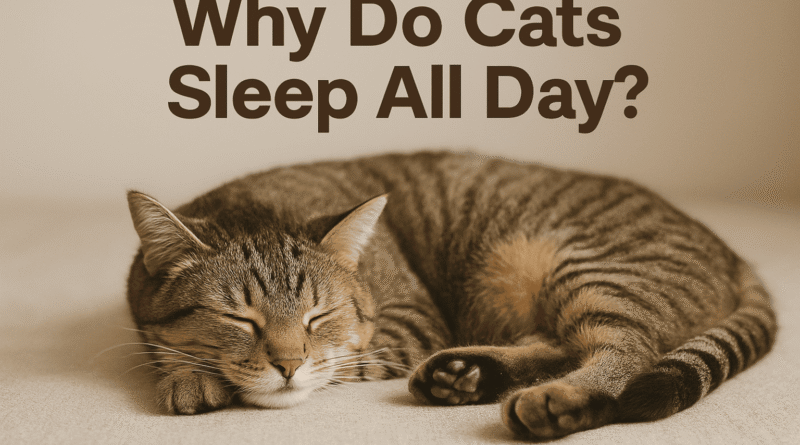
Most cats begin their mornings with a languid stretch, their muscles rippling beneath sleek fur. They may then saunter over to their food bowls, either meowing persistently for breakfast or waiting patiently with expectant gazes. Once fed, they often seek out a cozy spot for their first nap of the day—a ritual as natural to them as breathing.
The Importance of Naps
For cats, lounging isn’t just about relaxation. Napping helps them conserve energy for their next burst of activity. Whether indoors or outdoors, they love to snooze in safe, comfortable spaces, regaining strength.
Natural-Born Hunters: The Instinct to Play
Despite their love for lounging, cats are predators at heart. Their eyes sharpen at the slightest movement, ready to chase and pounce. Playtime is essential not just for fun but also for honing their predatory skills. A simple crumpled paper or a dangling feather can awaken this instinct, turning your calm cat into a blur of fur and claws.
Play as Practice
Cats engage in play not only for entertainment but to practice their hunting techniques. It keeps their reflexes sharp and provides physical and mental stimulation.
Grooming: More Than Hygiene
In quieter moments, cats groom themselves meticulously. Their sandpaper-like tongues glide through their fur, ensuring every inch is clean and pristine. However, grooming is more than hygiene—it’s a way for them to relax and unwind after bursts of energy.
The Ritual of Grooming
Grooming allows cats to bond with their environment, reduce stress, and regulate their temperature. It’s a personal care ritual that speaks to their natural instincts for cleanliness.
Diverse Lifestyles: Indoors vs. Outdoors
Not all cats lead the same lifestyle. Some live indoors in luxury, surrounded by scratching posts, climbing trees, and endless toys. Others roam freely outdoors, exploring the world with its dangers and delights. There are also cats who experience both worlds, enjoying the comfort of home and the occasional outdoor adventure.
Indoor Cats: Comfort and Play
Indoor cats often enjoy a life of relative luxury, with plenty of mental and physical stimulation from toys and human interaction.
Outdoor Cats: Exploration and Adventure
Outdoor cats lead more unpredictable lives, filled with risks but also the joy of exploration and hunting. They face challenges but embrace the freedom of their environment.
Nocturnal Energy: The Nighttime Surge
Just when you think your cat has settled for the night, some experience a sudden surge of nocturnal energy. They dash around the house, treating the darkness as their personal playground. Chasing shadows or engaging in solo games of hide and seek, they surprise us with their lively nighttime antics.
Conclusion: The Multifaceted Life of a Cat
In the end, a cat’s lifestyle is as multifaceted as the creatures themselves—full of quiet solitude, energetic play, and affectionate moments. They live on their own terms, gracefully balancing between their wild instincts and domestic comforts, making them the fascinating companions we adore.
References
General Cat Behavior & Independence
Bradshaw, J. W. S. (2013). Cat Sense: How the New Feline Science Can Make You a Better Friend to Your Pet. Basic Books.
Turner, D. C., & Bateson, P. (Eds.). (2013). The Domestic Cat: The Biology of Its Behaviour. Cambridge University Press.
Sleeping & Energy Conservation
ASPCA – Feline Behavior FAQs. American Society for the Prevention of Cruelty to Animals.
https://www.aspca.orgAmerican Veterinary Medical Association (AVMA) – Cat Care Guidelines.
https://www.avma.org
Hunting Instincts & Play Behavior
Leyhausen, P. (1979). Cat Behavior: The Predatory and Social Behavior of Domestic and Wild Cats. Garland STPM Press.
International Cat Care (iCatCare) – Understanding predatory and play behavior.
https://icatcare.org
Grooming Behavior
Hart, B. L., & Hart, L. A. (2013). The Behaviour of Domestic Cats. CAB International.
Cornell University College of Veterinary Medicine – Feline Grooming and Its Importance.
https://www.vet.cornell.edu
Indoor vs. Outdoor Lifestyle
American Humane Society – Indoor vs. Outdoor Cats: Safety and Well-Being.
https://www.americanhumane.orgHumane Society of the United States (HSUS) – The Indoor Cat Initiative.
https://www.humanesociety.org
Nocturnal / Crepuscular Activity
Royal Society for the Prevention of Cruelty to Animals (RSPCA) – Cat Activity Cycles & Behavior.
https://www.rspca.org.ukFogle, B. (2018). The Cat Encyclopedia. DK Publishing.