Why Does My Cat Stare at Me? 7 Surprising Reasons Explained
The Silent Language of Cats
Cats communicate in ways that often feel mysterious. Unlike humans, they do not rely on words. Instead, they express themselves through subtle signals—tail movements, ear positions, vocalizations, and, most importantly, their eyes.Among these behaviors, staring stands out. It feels intense, personal, and sometimes even confusing. One moment, your cat gazes at you softly. The next, the stare seems fixed and unreadable. Naturally, this raises an important question: why does your cat stare at you?
At first glance, the behavior may appear random. However, it rarely is. In fact, a cat’s stare often carries layered meanings shaped by instinct, emotion, and learned behavior. Therefore, understanding this silent communication becomes essential if you want to strengthen your bond and respond appropriately.In this in-depth guide, you will explore the true reasons behind this behavior. More importantly, you will learn how to interpret different types of stares and what your cat is trying to tell you in each situation.
Understading Cat Eye Contact: A Unique Communication Tool
Before diving into the reasons, it is important to understand how cats use eye contact in general.In the animal world, direct staring often signals a challenge or a threat. Many species interpret prolonged eye contact as dominance. However, domestic cats have adapted their communication style over thousands of years of living with humans.As a result, cats use eye contact in more nuanced ways. Sometimes, a stare expresses affection. At other times, it reflects curiosity or even discomfort. Consequently, context plays a crucial role.Moreover, your cat does not rely on eye contact alone. Instead, it combines visual signals with body language. For example, the same stare can mean completely different things depending on whether the tail is relaxed or flicking, or whether the ears are forward or flattened.Understanding this combination allows you to decode your cat’s message more accurately.
Cuiosity: Your Cat Is Observing You Closely
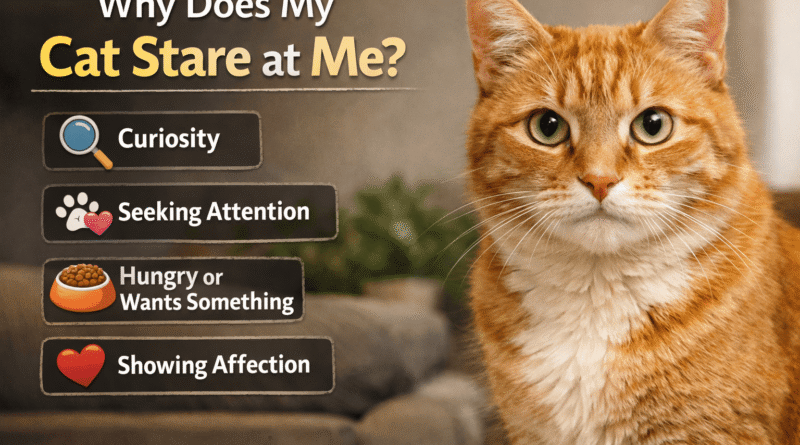
First and foremost, cats are natural observers. They study their environment constantly. In fact, your daily routine provides endless entertainment for them.When your cat stares at you, it may simply be watching. Perhaps you are cooking, typing, or walking around. From your cat’s perspective, these actions are unpredictable and fascinating.Additionally, cats rely on observation to learn patterns. Over time, they begin to associate your behavior with specific outcomes. For instance, opening a cupboard may signal feeding time. Therefore, your cat watches closely to anticipate what happens next.In this case, the stare reflects curiosity rather than emotion. It is your cat’s way of gathering information and staying mentally engaged.
Affetion: A Quiet Expression of Love
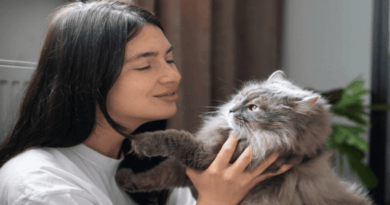
Although cats may seem independent, they form deep emotional bonds with their humans. However, they express affection in subtle ways.One of the clearest signs of feline affection is the soft stare accompanied by slow blinking. Unlike a fixed or intense gaze, this type of eye contact feels relaxed and gentle.Interestingly, animal behavior experts often describe slow blinking as a “cat kiss.” When your cat blinks slowly while looking at you, it signals trust and comfort. Essentially, your cat feels safe enough to lower its guard.You can strengthen this bond by responding in the same way. Simply blink slowly back and maintain a calm presence. Over time, this interaction reinforces mutual trust and deepens your relationship.
ARequest: Your Cat Wants Something
On the other hand, staring can serve a practical purpose. Cats quickly learn how to communicate their needs effectively.If your cat stares at you persistently, it may be asking for something. Common requests include:
- Food or treats
- Fresh water
- Playtime
- Attention or affection
- Access to a closed space
Moreover, this behavior often follows a routine. For example, your cat may stare at you every morning before breakfast. This pattern shows that your cat associates you with fulfilling its needs.Therefore, when you notice this type of stare, consider the timing and context. In many cases, meeting your cat’s needs will resolve the behavior immediately.
Cmmunication: More Than Just a Look
Cats rely on a complex system of communication. Staring is only one part of that system.In most situations, your cat combines eye contact with other signals. For example, a cat that stares while meowing is clearly trying to get your attention. Meanwhile, a silent stare with a relaxed body may indicate observation rather than urgency.Furthermore, body posture adds important clues. A relaxed cat with a soft gaze feels comfortable. In contrast, a tense cat with rigid posture may be communicating discomfort.By observing these combinations, you can better understand what your cat is trying to express. Consequently, this reduces confusion and improves your interaction.
Discomfort or Defense: When Staring Signals Tension
Not all stares are friendly. In some cases, they indicate discomfort or even defensive behavior.
This usually happens when your cat feels threatened or overwhelmed. Common triggers include:
- Loud noises
- Unfamiliar visitors
- Sudden movements
- Introduction of new pets
A defensive stare often appears intense and unblinking. Additionally, it may come with other warning signs, such as:
- Dilated pupils
- Flattened ears
- Stiff body posture
- Tail flicking or puffing
If you notice these signals, it is important to give your cat space. Avoid direct eye contact, as it may escalate tension. Instead, allow your cat to calm down naturally.
Instinct: A Link to Wild Ancestry
Even though domestic cats live comfortably in homes, they still retain many instincts from their wild ancestors.In the wild, staring plays a crucial role in both hunting and survival. Predators use focused eye contact to track prey. At the same time, animals use staring to assess potential threats.Therefore, your cat’s gaze may reflect these instinctive behaviors. It observes movement, analyzes surroundings, and evaluates situations—even within the safety of your home.Although your cat does not view you as prey, the instinct remains embedded. This explains why some stares feel intense or prolonged.
Bonding: Strengtening Emotional Connection
Finally, staring can be a powerful bonding behavior.Cats tend to focus their attention on individuals they trust. When your cat watches you calmly, it may simply enjoy your presence. These quiet moments reflect emotional attachment.In multi-person households, cats often choose a favorite person. Interestingly, they may stare more frequently at that individual. This preference usually develops based on care, interaction, and positive experiences.Over time, these repeated interactions strengthen the bond between you and your cat.
Types of Cat Stares and Their Meanings
Understanding the type of stare helps you interpret your cat’s message accurately.
👁️ Soft Eyes with Slow Blinking
This indicates trust and affection. Your cat feels safe and relaxed.
👁️ Wide-Eyed Focused Stare
This reflects curiosity or alertness. Your cat is observing something interesting.
👁️ Narrowed Eyes with Tension
This signals irritation or discomfort. Your cat may need space.
👁️ Staring with Vocalization
This usually indicates a request or demand. Your cat wants something specific.
How to espond Effectively
Responding correctly strengthens communication and prevents misunderstandings.
✅ What You Should Do
- Maintain a calm and relaxed posture
- Use slow blinking to show trust
- Observe the full body language
- Address your cat’s needs promptly
❌ What You Should Avoid
- Staring aggressively back
- Forcing interaction
- Ignoring repeated signals
Scientific Insight: The Role of Eye Contact in Bonding
Scientific research highlights the importance of eye contact in feline communication. Studies suggest that cats form attachment styles similar to those seen in human relationships.Moreover, slow blinking has been shown to function as a positive social signal. It reduces tension and promotes trust between cats and humans.This behavior demonstrates how cats have adapted their communication to coexist with people. Over time, they have developed ways to express emotions more clearly.
When Should You Be Concerned?
Although most staring is harmless, certain situations require attention.
You should monitor your cat if you notice:
- Sudden changes in behavior
- Excessive or unusual staring
- Signs of confusion or disorientation
- Physical symptoms such as vision problems
In such cases, consulting a veterinarian is essential. Early detection helps address potential health issues effectively.
Practical Tips to Strengthen Your Bond
You can turn this behavior into a positive interaction.
- Practice slow blinking regularly
- Maintain consistent feeding and play routines
- Provide mental stimulation through toys
- Spend quality time with your cat daily
These actions create a sense of security and reinforce trust.
To Conclude : A Silent Conversation Worth Uderstanding
So, why does your cat stare at you?
The answer is not simple. In fact, it depends on context, emotion, and instinct. Your cat may be curious, affectionate, or simply communicating a need. At times, it may even rely on deep-rooted survival instincts.
However, one thing remains clear: your cat is not staring without reason.
Instead, it is engaging in a silent conversation. By learning to interpret this behavior, you unlock a deeper level of understanding. More importantly, you strengthen the bond you share with your feline companion.
Ultimately, every stare tells a story. The more you observe, the better you become at reading it.
Practical References & Books
To truly understand why your cat stares at you, it helps to go beyond general advice and explore scientific research and expert-written books. The following resources combine theory, real-world applications, and behavioral insights.
Must-Read Books on Cat Behavior
- The Domestic Cat: The Biology of Its Behaviour – Turner & Bateson
This book remains one of the most respected scientific references in feline behavior. It explores how cats communicate, interact socially, and adapt to human environments.
Ideal for: Advanced understanding of feline psychology
- Cat Sense by John Bradshaw
This bestselling book explains how cats perceive humans and why they behave the way they do. It highlights how cats treat humans similarly to other cats, which explains behaviors like staring and slow blinking.
Practical takeaway: Your cat’s stare is part of social interaction, not random behavior.
- Decoding Your Cat by the American College of Veterinary Behaviorists
This book provides expert-backed explanations of common cat behaviors, including communication signals like eye contact. It also offers solutions for unwanted behaviors.
Ideal for: Practical problem-solving and behavior correction
- Toal Cat Mojo by Jackson Galaxy
This guide focuses on understanding your cat’s emotional needs. It explains how behaviors like staring connect to territory, confidence, and bonding.
Practical takeaway: Staring often reflects your cat’s comfort level and trust.
- Think Like a Cat by Pam Johnson-Bennett
This book breaks down feline behavior into easy-to-understand concepts. It helps you interpret body language, including eye signals.
Ideal for: Beginners and intermediate cat owners
- Feine Behavior: A Guide for Veterinarians – Bonnie V. Beaver
A professional-level reference used by veterinarians. It covers communication, social behavior, and neurological aspects of feline actions.
Ideal for: Deep scientific understanding
- eline Behavior and Welfare (Academic Press, 2024)
This modern resource provides updated insights into feline communication and behavioral patterns, including how cats adapt to indoor environments.
Practical takeaway: Many “mysterious” behaviors come from environmental adaptation.
8.Cat Behavior Insights by Zara Sagan
This newer book connects neuroscience, evolution, and daily cat behavior. It explains how cats process information and respond to human interaction.
Ideal for: Modern, research-based perspective
Scientific Studies & Research Insights
Human–Cat Attachment Study (2019)
Research shows that cats form secure attachment bonds with their owners, similar to dogs and even infants.
Meaning for staring behavior:
Your cat may stare at you as a form of emotional connection and reassurance.
Feline Behavior Perception Study
A large-scale study on cat owners found that behaviors influencing daily life—like attention-seeking—strongly shape how humans interpret cats.
Insight:
Staring often becomes noticeable because it directly affects interaction with owners.
Feline Communication & Facial Signals Research
Recent studies highlight that cats use facial expressions and eye signals as part of their communication system.
Meaning:
Your cat’s stare is not random—it is structured communication.
Trusted Online Resources (For Ongoing Learning)
International Cat Care
- Expert articles on cat behavior and welfare
- Clear explanations of body language
Cornell Feline Health Center
https://www.vet.cornell.edu/departments-centers-and-institutes/cornell-feline-health-center
- Scientific, vet-reviewed feline research
- Behavior and health insights
American Association of Feline Practitioners
- Professional guidelines on feline behavior
- Practical care recommendations
ASPCA
- Easy-to-understand behavioral guides
- Practical tips for cat owners
How These References Help You (Practical Value)
By combining these sources, you gain:
- Scientific understanding → why cats stare (instinct + cognition)
- Behavioral insight → how cats communicate with humans
- Practical solutions → how to respond correctly