Outline Preview
Explore This Article
- Halloween 2026: Why Cats Are Part of the Celebration
- The Growing Market for Pet Halloween Costumes
- The Most Popular Halloween Costumes for Cats
- How Social Media Shapes Cat Halloween Trends
- Matching Costumes for Cats and Their Owners
- DIY Cat Costumes and Halloween Decorations
- Halloween-Inspired Cat Names
- Cat-Friendly Halloween Activities
- Halloween Photoshoots and Social Media Content
- Halloween Safety Tips for Cats
- Do Cats Actually Enjoy Wearing Costumes?
- What Halloween Trends Say About American Cat Culture
- A Better Halloween for Cats and Their Families
- Frequently Asked Questions
Halloween 2026: Why Cats Are Part of the Celebration
Halloween in the United States is traditionally associated with pumpkins, costumes, candy, haunted houses, and trick-or-treating. However, one familiar household companion has become an increasingly visible part of the celebration: the family cat. From pumpkin-themed photographs to tiny vampire accessories, cats now appear in seasonal shopping, social media posts, and family Halloween traditions.
For many American households, pets are more than animals that share their homes. They are companions and important members of the family. As a result, owners often include them in birthdays, holidays, family photographs, and seasonal activities. Halloween provides another opportunity to celebrate that connection through costumes, themed toys, decorations, and creative photographs.
The 2026 season reflects this growing interest. Pet costumes remain a recognizable part of American Halloween shopping, while social media platforms help owners discover new ideas and share their own creations. Some people choose elaborate outfits, while others prefer a simple bandana, a seasonal collar, or a photograph beside a pumpkin.
Cats also have a special place in Halloween imagery. Their historical association with mystery, folklore, witches, and nighttime has made them familiar symbols of the season. This cultural connection gives cat owners plenty of inspiration, from traditional black-cat decorations to funny modern costumes.
However, Halloween should not become an uncomfortable experience for the animal. Some cats tolerate a lightweight accessory, while others dislike clothing, visitors, and unfamiliar decorations. A successful celebration should respect those differences.
This article explores the Halloween trends influencing American pet owners in 2026, with a particular focus on cats. It covers costume ideas, social media, seasonal names, home activities, photography, and practical safety advice. The main message is simple: cats can be part of Halloween without being forced to participate in activities they dislike.
The Growing Market for Pet Halloween Costumes
Pet Halloween products have developed into a recognizable seasonal retail category in the United States. Shops now offer costumes, themed collars, accessories, toys, treats, beds, blankets, and decorative products designed specifically for animals. This growing selection gives owners more options than a basic costume purchased at the last minute.
According to the National Retail Federation’s 2026 Halloween survey, American consumers expect to spend approximately $920 million on pet costumes. The survey identifies pumpkins, hot dogs, and ghosts among the leading costume choices. These figures demonstrate the commercial importance of pet costumes, although they cover pets generally rather than cats alone.
The wider market also includes products that do not require an animal to wear clothing. Owners can purchase Halloween-themed toys, feeding accessories, blankets, scratching products, and decorative photo props. These items allow families to include their pets in seasonal activities while keeping their normal routines.
Why owners buy Halloween products for pets
Several motivations help explain the popularity of seasonal pet products. First, many owners enjoy including their animals in family photographs and holiday memories. A small accessory or themed background can make a cat part of a Halloween picture without requiring a complicated outfit.
Second, seasonal products provide an easy way to express affection. Owners may buy a new toy, a comfortable blanket, or a special treat as a small gift. The purchase becomes part of the household celebration rather than simply another item for the animal.
Social media also contributes to this demand. A funny photograph or a creative costume can attract attention and encourage other owners to try similar ideas. As a result, products that photograph well may become particularly attractive during October.
Pet costumes and the 2026 spending figures
The NRF’s estimate of $920 million refers to expected spending on pet costumes across the United States. It should not be interpreted as spending on cat costumes alone. The organization also reports pumpkin costumes at 11.6%, hot dogs at 5.9%, and ghosts at 2.8% among its leading pet costume choices.
These figures provide useful context for the season. They show that traditional Halloween imagery remains commercially important, while humorous food-themed outfits also attract shoppers. However, the figures do not tell us how many cats will actually wear each costume.
Seasonal shopping does not have to mean buying more
A cat owner does not need to purchase a new outfit every year. A familiar toy, a reusable background, or a safe decoration can create a seasonal atmosphere without unnecessary spending. Owners can also reuse suitable accessories, provided that they remain clean, undamaged, and comfortable.
The most useful purchase is one that improves the cat’s environment. A new puzzle toy or a comfortable resting place may offer more lasting value than a costume used for a few photographs.
The Most Popular Halloween Costumes for Cats
Traditional Halloween imagery continues to influence pet costume choices in 2026. Pumpkins, ghosts, witches, bats, and other familiar symbols remain easy to recognize. At the same time, funny food costumes and pop-culture references give owners more playful options.
The NRF’s 2026 survey places pumpkins, hot dogs, and ghosts among the leading pet costume choices. These results cover pets in general, so they should not be presented as a ranking of costumes worn specifically by cats. Nevertheless, each theme can inspire cat-friendly accessories and photographs.
Pumpkin cats
The pumpkin remains one of the clearest symbols of Halloween. Orange fabric, a small green detail, or a pumpkin-shaped accessory can create a seasonal look. Orange cats may seem particularly suited to the theme, although cats of every colour can appear in pumpkin-inspired photographs.
Owners who prefer not to dress their cats can place a decorative pumpkin nearby and photograph the animal naturally. The decoration should remain stable and should not contain sharp edges, loose parts, or materials that the cat might chew.
Ghost-themed accessories
Ghost costumes offer a simple Halloween idea. A lightweight white accessory or a themed photo background can create the effect without covering the cat’s body. Some owners may prefer to use a white blanket, a paper ghost decoration attached to a wall, or a small prop placed beside the animal.
Avoid covering a cat’s face or restricting its movement. A ghost-themed photograph should never require the animal to remain inside fabric or wear a headpiece that interferes with its senses.
Witches, bats, and classic Halloween characters
Witch-themed photographs often use dark colours, pointed hats, and traditional Halloween decorations. Bat-inspired designs may include simple wing shapes or black accessories. These themes work particularly well for photographs because they are easy to recognize.
A miniature hat placed beside the cat can communicate the idea without putting anything on its head. Similarly, a dark background and a few safe decorations can create a classic Halloween atmosphere.
Funny food costumes
Food-themed costumes add humour to Halloween. Hot dogs, tacos, baked potatoes, bananas, and other playful designs have become familiar options in the wider pet costume market. Their appeal comes from the contrast between an ordinary household animal and an unexpectedly funny outfit.
For cats, the design matters more than the joke. Bulky clothing, tight fabric, and accessories that restrict movement can cause discomfort. A food-themed prop placed beside the cat can deliver the same visual idea with less interference.
Pop-culture and character-inspired looks
Films, television, games, and animated characters regularly influence Halloween costumes. Owners may choose a superhero cape, a fantasy-inspired accessory, or a colour scheme associated with a favourite character.
The best character-inspired idea is usually simple. A small accessory or themed photograph can communicate the reference more effectively than a heavy outfit. Owners should also avoid accessories that block vision or make it difficult for the cat to walk normally.
How Social Media Shapes Cat Halloween Trends
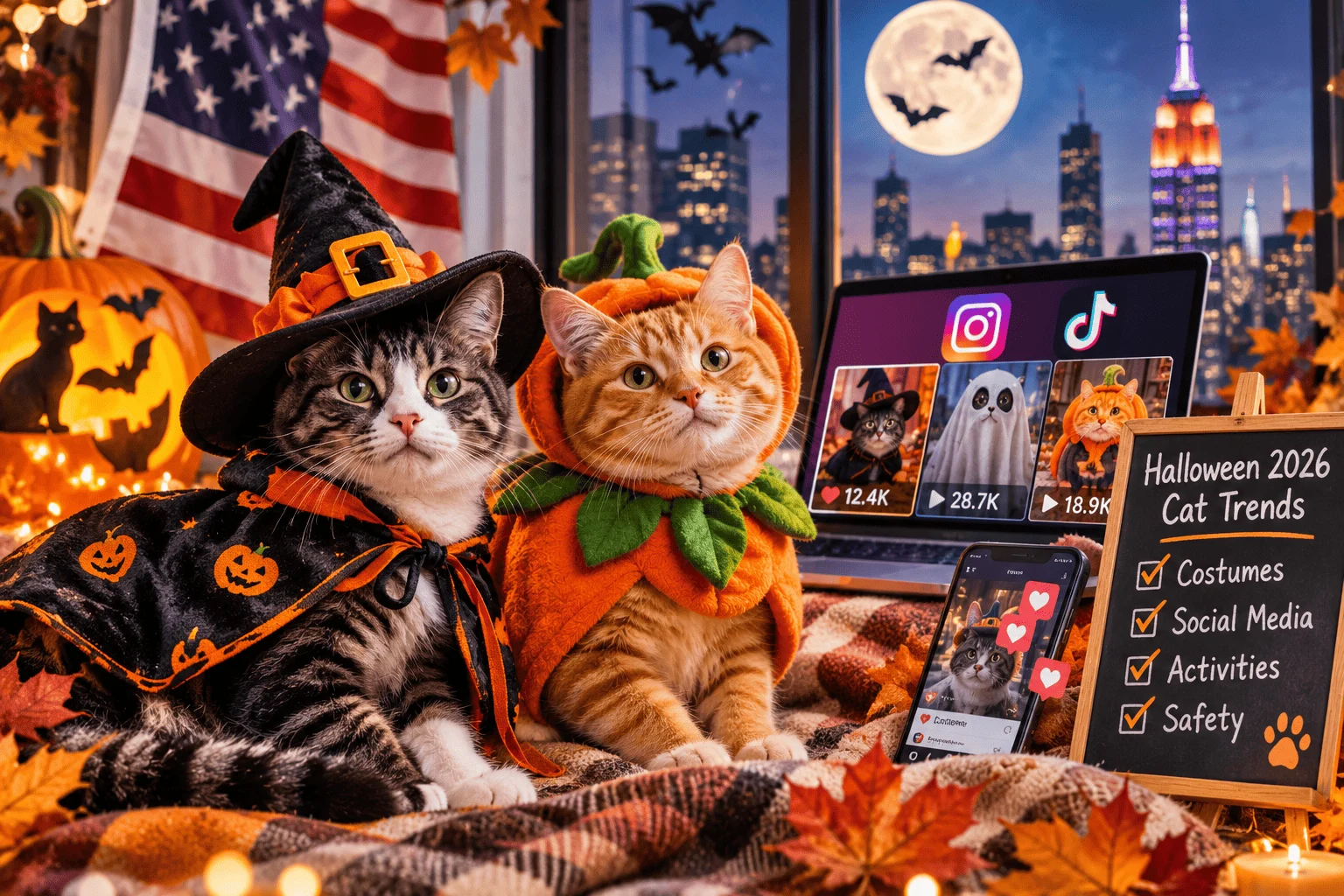
Social media plays an important role in the way American pet owners discover Halloween ideas. Instagram and TikTok make it easy to see costume photographs, short videos, decorating tutorials, and creative pet content. A simple idea can spread quickly when owners recreate it with their own animals.
Rover’s October 2026 research surveyed 1,000 US pet parents through Pollfish. The company reports that 66% of respondents said they had chosen a pet costume based on something they saw on Instagram or TikTok. This result highlights the influence of social platforms on seasonal pet choices, although it does not mean that every cat owner follows online trends.
Short videos and funny cat moments
Short videos work particularly well for Halloween content. A cat investigating a pumpkin, entering a decorated cardboard box, or reacting to a new toy can create an entertaining clip without requiring a costume.
Owners often add seasonal music, captions, filters, or simple editing effects. The most successful videos do not necessarily involve expensive equipment. Natural behaviour and a clear visual idea can be enough.
A short video can also tell a small story. For example, an owner might film a cat approaching a cardboard haunted house, inspecting a pumpkin, or playing with a new toy. These moments feel natural because the animal is doing something it might enjoy anyway.
Instagram photography and themed profiles
Instagram encourages carefully arranged photographs. During October, some pet accounts adopt a seasonal look with orange and black backgrounds, pumpkin decorations, autumn leaves, and Halloween accessories.
A consistent visual style can help a pet account feel more polished. Owners may use the same background, lighting, or colour palette across several photographs. They can also create a short series featuring different seasonal themes.
For example, one post might show a pumpkin-themed photograph, while another features an autumn resting area or a funny Halloween nickname. A series gives followers more variety than repeating the same costume photograph.
Viral ideas and responsible content creation
Not every viral trend is suitable for cats. Some videos encourage animals to wear uncomfortable outfits, interact with unfamiliar objects, or react to frightening situations. Owners should avoid recreating content that causes fear or distress simply because it attracts attention.
A cat should never be startled deliberately for a video. Loud sounds, sudden movements, forced handling, and unwanted costumes can turn a harmless trend into a stressful experience. A relaxed cat playing with a safe toy is a better subject than an animal being pushed into an uncomfortable situation.
Building a seasonal cat account
Owners who regularly publish pet content can plan a small Halloween series. They might share a costume idea, a safe decoration, a seasonal photograph, and a short post about keeping cats comfortable during the holiday.
Useful captions should describe the actual photograph rather than rely on unrelated trending phrases. Hashtags such as #HalloweenCats, #CatHalloween, #BlackCats, and #CatLovers can help organize seasonal posts, although hashtags do not guarantee visibility.
Social media can provide inspiration, but it should not decide what a particular cat must do. The animal’s behaviour should always guide the activity.
Matching Costumes for Cats and Their Owners
Coordinated costumes are another way families include pets in Halloween celebrations. Instead of dressing the cat as a completely separate character, owners create a shared theme. A person might wear a witch costume while the cat appears in a simple black bandana, or a family might use matching pumpkin colours for a photograph.
Rover’s 2026 research reports that 44% of pet parents planning to dress up their pets also intend to coordinate their own costumes with their animals. This is a result from the survey’s pet-parent sample, not a measurement of all American households.
Simple matching ideas
A matching colour scheme is often easier than a complete costume. Orange and black clothing, pumpkin-themed accessories, or a shared superhero theme can create a coordinated appearance without placing a complicated outfit on the cat.
Other ideas include a person dressed as a wizard with a cat photographed beside a themed book, or a vampire-inspired outfit for the owner with a simple red accessory near the pet. These arrangements allow the human to wear the costume while the cat remains comfortable.
Group themes for families with several pets
Households with multiple animals can create a group photograph using one theme. Each pet might have a different pumpkin-inspired accessory, or the family might arrange a photograph around a haunted-house backdrop.
Owners should not assume that all pets will enjoy posing together. Some cats prefer their own space, and unfamiliar animals may not tolerate close contact. A group photograph should remain optional and should never require forced interaction.
Make the human costume do most of the work
A useful approach is to build the entire theme around the owner’s outfit. A person can dress as a witch, pirate, vampire, or superhero while the cat appears naturally in the photograph. This method reduces the need for pet clothing and still creates a coordinated image.
The cat can also sit beside a themed object or in a familiar resting place. If the animal chooses to investigate the setting, the owner can capture the moment without arranging a forced pose.
DIY Cat Costumes and Halloween Decorations
Do-it-yourself Halloween projects remain attractive because they allow owners to personalize decorations and control the materials used. A homemade project can also cost less than a store-bought costume. For cat owners, the safest DIY ideas often focus on the environment rather than clothing the animal.
Cardboard Halloween props
Cardboard boxes are familiar objects for many cats. Owners can decorate the outside of a box to resemble a haunted house, pumpkin carriage, or spooky doorway. The entrance should remain wide enough for the cat to enter and leave easily.
Use non-toxic materials and allow paint or glue to dry completely before introducing the cat. Remove staples, sharp edges, strings, and small decorations that an animal could chew or swallow. Never close the cat inside a prop.
Seasonal photo backgrounds
A simple background can transform an ordinary photograph into a Halloween image. Orange fabric, a dark blanket, paper decorations attached securely to a wall, or a pumpkin placed at a safe distance can create a seasonal setting.
Keep the cat’s favourite resting surface available. Some animals will investigate the new arrangement, while others may prefer to sit nearby. Both responses are fine.
Homemade toys and enrichment
Owners can also prepare Halloween-themed enrichment activities. A puzzle feeder, a treat-search game, or a new toy in seasonal colours may provide entertainment without requiring a costume.
Choose toys designed for cats and supervise play with any homemade item. Avoid loose threads, elastic bands, ribbons, small plastic parts, and decorations that could become choking or ingestion hazards. Once play ends, put away any item that the cat might chew unsupervised.
Reuse decorations carefully
Reusing decorations can reduce seasonal spending and waste. However, owners should inspect stored products before bringing them into a cat’s environment. Old strings may fray, plastic pieces may break, and electrical decorations may have damaged wires.
Keep artificial cobwebs, tinsel-like materials, and small detachable ornaments out of reach. A decoration that looks harmless on a shelf may become an attractive object for a curious cat.
DIY should make the celebration more enjoyable, not introduce unnecessary risks. A simple, safe project is more valuable than an elaborate decoration that the cat cannot use comfortably.
Halloween-Inspired Cat Names
Halloween and autumn provide inspiration for cat names throughout the year. Some owners choose a seasonal name when adopting a cat in October, while others give an existing pet a temporary nickname for the holiday.
Rover’s 2026 research reports that 30% of surveyed pet parents use a Halloween- or autumn-themed name or nickname for their pet. The company also examined its database of user-submitted pet names to identify seasonal naming trends. These findings reflect the survey and database used by Rover, rather than a universal naming pattern.
Classic spooky names
Names such as Salem, Shadow, Midnight, Raven, and Phantom fit the traditional Halloween atmosphere. They may appeal particularly to owners who enjoy gothic imagery, black-cat symbolism, or classic spooky stories.
Salem is especially recognizable because of its association with witch folklore and popular culture. Midnight and Shadow work well for cats with dark coats, while Raven offers a short and distinctive alternative.
Autumn and pumpkin-inspired names
Pumpkin, Maple, Ember, Cinnamon, Hazel, and Autumn reflect the colours and atmosphere of the season. These names can suit cats with orange, brown, cream, or golden coats, but they also work as playful choices for cats of any colour.
Owners who prefer short names may choose Ember or Maple. Those who enjoy seasonal humour might prefer Pumpkin or Cinnamon. The most important consideration is choosing a name that feels natural to say every day.
Funny seasonal nicknames
Some owners prefer humorous names such as Count Catula, Meowcula, Pumpkin Spice, or Sir Pounce-a-Lot. These names are especially useful for social media captions and temporary Halloween posts.
A seasonal nickname does not need to replace a cat’s everyday name. Owners can simply use it for a photograph, a greeting card, or a themed profile update.
Choose a name that lasts beyond October
A Halloween-inspired name can remain suitable throughout the year. Salem, Raven, Ember, and Hazel do not depend entirely on the holiday, so owners can continue using them after the decorations disappear.
If the name is only a temporary joke, a nickname may be a better option. This allows the family to enjoy the seasonal theme without changing the name the cat already recognizes.
Cat-Friendly Halloween Activities
Not every cat enjoys visitors, loud parties, or unfamiliar environments. Fortunately, owners can celebrate Halloween at home without involving their pets in the busiest parts of the evening. A calm indoor activity can be more suitable than taking a cat outside or exposing it to a crowded event.
A quiet Halloween play session
A short play session with a favourite wand toy or interactive toy can provide enrichment before visitors arrive. Owners can also use a puzzle feeder or a small portion of the cat’s regular food as part of a simple activity.
Keep the session familiar. Halloween does not require a new routine, and a cat that prefers normal play should be allowed to enjoy it.
A seasonal treat routine
Some owners like to offer a special treat during holidays. Choose a cat-safe treat that fits the animal’s normal diet and portion needs. Human Halloween sweets are not appropriate substitutes.
Chocolate, sweets containing xylitol, and many rich or heavily processed human foods should remain out of reach. Cats should never receive candy simply because it is part of the celebration.
A comfortable room away from visitors
A quiet room can provide a safe retreat when the doorbell rings repeatedly or guests move around the home. Set up the cat’s water, litter box, bedding, hiding place, and familiar toys. Let the animal enter and leave the space freely where possible.
Some cats enjoy observing visitors from a distance. Others prefer to remain hidden until the house becomes quiet. Owners should respect both responses rather than forcing social interaction.
Indoor enrichment for curious cats
Cats that enjoy exploring may appreciate a new cardboard box, a puzzle feeder, or a short supervised play session. Owners can arrange a small activity area away from candles, electrical decorations, and busy walkways.
A new object should not overwhelm the cat. Introduce it gradually and allow the animal to investigate at its own pace. If the cat ignores the activity, there is no need to insist.
Halloween Photoshoots and Social Media Content
Halloween photographs are a major part of seasonal pet content. Owners share pictures with friends, post them on social media, or use them in digital greeting cards. Cats can become natural subjects because their expressions, poses, and curiosity often create interesting images.
A successful photoshoot does not need a professional studio. A familiar room, natural light, and a simple background can produce a clear photograph. Owners should allow the cat to approach the setting voluntarily and stop if the animal shows signs of discomfort.
Use simple backgrounds
A plain background helps keep attention on the cat. Orange, black, cream, and dark green can create an autumn or Halloween atmosphere. A few decorations are usually enough; too many objects may distract the cat or make the space difficult to navigate.
Keep candles, electrical wires, artificial cobwebs, and small decorative objects away from the photography area. Never use a live flame as a prop beside a cat.
Photograph natural behaviour
Some of the most engaging cat photographs capture ordinary behaviour. A cat looking out of a window, sitting inside a cardboard box, stretching beside a pumpkin, or investigating a toy can create a memorable seasonal image.
Avoid holding a cat in an unnatural pose for a long time. Take a few photographs, give the animal a break, and let it leave whenever it wants.
Choose lighting that keeps the cat relaxed
Natural window light often produces better results than a bright flash. Position the camera so that the light reaches the cat without shining directly into its eyes. A familiar room can also help the animal remain relaxed.
Avoid loud camera effects, sudden movements, or repeated attempts to make the cat look at the lens. A natural expression usually looks better than a forced pose.
Captions and seasonal storytelling
A good caption can give a photograph more personality. Owners might write a short Halloween greeting, introduce a seasonal nickname, or describe a funny moment from the photoshoot.
For public posts, avoid sharing information that reveals a home’s exact location or routine. Seasonal content should be enjoyable without compromising household privacy.
Halloween Safety Tips for Cats
Halloween can introduce risks that do not exist during an ordinary evening. Doors open more frequently, visitors wear unfamiliar costumes, decorations appear around the home, and sweets may be left within reach. These changes can create stress or expose cats to hazards.
The American Society for the Prevention of Cruelty to Animals (ASPCA) advises owners to keep pets away from Halloween commotion when necessary and take care with costumes, decorations, candles, and sweets. Owners should prepare the home before the evening becomes busy.
Prevent door escapes
Repeated door opening creates a risk for indoor cats. A cat may become curious, frightened, or startled by a visitor and run outside. Before trick-or-treating begins, make sure identification details are current and that the cat has access to a secure indoor area.
A quiet room can help reduce the chance of an accidental escape. Tell visitors not to enter that room, and check that windows and other exits remain secure.
Keep sweets and chocolate out of reach
Halloween candy should never be left where a cat can investigate it. Chocolate can be toxic to pets, while wrappers may cause problems if swallowed. Some sweets contain ingredients that are unsafe for animals.
Store treats in closed containers and remind children not to share candy with pets. If a cat eats something potentially harmful, contact a veterinarian or an animal poison-control service promptly rather than waiting for symptoms.
Be careful with candles and electrical decorations
A lit pumpkin may look attractive, but a curious cat can knock it over or burn itself. Battery-operated lights are generally a safer decorative option. Keep electrical wires secured and inspect decorations for exposed cables or damage.
Artificial cobwebs, tinsel-like materials, ribbons, and small plastic decorations can also attract curious cats. Remove loose items that an animal could swallow or become tangled in.
Watch out for glow sticks and small accessories
Glow sticks and small costume accessories can attract curious cats. If an animal bites a glow stick, the liquid may cause irritation and excessive drooling. Small plastic parts may also create choking or ingestion hazards.
Keep these products in closed containers and away from areas where cats play. Do not leave children’s costume accessories scattered around the home.
Watch for signs of stress
Cats may respond to Halloween activity by hiding, pacing, vocalizing, refusing food, or trying to escape. Some may become unusually quiet, while others may show defensive behaviour.
Give the cat a familiar hiding place and avoid forcing it to meet guests. If the animal seems distressed, reduce noise and activity around its space. Owners who notice persistent or severe behavioural changes should seek advice from a veterinarian.
Update identification details
A current identification tag and microchip registration can help reunite a lost cat with its owner. Check that the contact details are correct before Halloween. If the cat wears a collar, make sure it fits properly and uses an appropriate safety-release design.
Indoor cats also benefit from identification. An unexpected door opening or a frightened escape can happen even in homes where animals never go outside.
Do Cats Actually Enjoy Wearing Costumes?
A cat does not need a costume to participate in Halloween. Some animals tolerate a lightweight accessory for a short time, while others dislike clothing altogether. Both responses are normal.
The ASPCA recommends that owners avoid dressing pets in costumes unless they know the animal is comfortable with the experience. Any outfit must allow normal movement, vision, and breathing. It should also remain free of small parts that the animal could chew or swallow.
Recognize signs of discomfort
A cat may show discomfort by freezing, crouching, walking awkwardly, trying to remove the outfit, or repeatedly grooming the area underneath it. Some cats may become unusually still rather than actively resisting.
Do not interpret a lack of movement as acceptance. If the cat appears uncomfortable, remove the costume and allow it to return to normal activity.
Check the costume before using it
If a cat already tolerates clothing, inspect the costume carefully. It should fit without pressure around the neck, chest, or legs. It must not restrict the animal’s ability to walk, breathe, see, hear, or groom normally.
Avoid small detachable decorations, loose strings, elastic pieces, and headwear that covers the ears or eyes. Never leave a costumed cat unattended.
Choose alternatives to full costumes
A seasonal collar, a lightweight bandana designed for cats, or a simple photo background may be enough. Even these accessories should be used only when they fit safely and do not interfere with normal movement.
Another option is to dress the human family members and leave the cat as it is. The animal can still appear in the family photograph without wearing anything.
Let the cat decide
The best Halloween activity is one the cat can comfortably accept or leave. Owners should never hold an animal in place, use restraints for a photograph, or keep an uncomfortable costume on for the sake of a social media post.
A relaxed cat beside a pumpkin is a better Halloween memory than a frightened cat in an elaborate outfit. Comfort should remain more important than appearance.
What Halloween Trends Say About American Cat Culture
The Halloween trends of 2026 reflect a wider change in how many Americans include pets in everyday life. Seasonal products, family photographs, themed names, and social media posts all point toward a culture in which animals often take part in household celebrations.
The growing market also shows that retailers recognize pet owners as an important seasonal audience. The NRF’s projected $920 million in pet costume spending illustrates the commercial scale of this interest. However, the figure represents spending on pet costumes broadly, not cats alone.
Pets as members of the family
Many owners now plan celebrations around their pets’ needs. They may choose pet-friendly decorations, buy seasonal toys, or organize a quiet space during parties. These choices reflect an interest in including animals without exposing them to unnecessary stress.
Rover’s 2026 survey found that 63% of the pet parents surveyed considered Halloween their preferred holiday to celebrate with their pets. The same research reported that 55% planned to include their pets in treat-giving or trick-or-treating activities. These findings illustrate how some owners are incorporating pets into familiar family traditions.
Personal expression through pet content
Social media gives owners a way to express their personalities through their pets. Some prefer traditional Halloween imagery, while others choose funny costumes, autumn photography, or pop-culture references.
This content can also connect people with shared interests. Cat owners exchange ideas, discuss products, and enjoy seeing how other households celebrate. The result is a seasonal online community built around creativity and affection for animals.
Seasonal spending and practical choices
The growth of pet Halloween products does not mean every owner needs to spend more. A family can participate with a reused decoration, a homemade cardboard prop, or a simple photograph.
This approach also makes seasonal celebrations more accessible. Owners can choose activities that fit their budgets and their cats’ personalities instead of following every new product trend.
Creativity balanced with animal welfare
The most important development is not simply that more people buy costumes. It is the opportunity to make celebrations more thoughtful. Owners can choose safer materials, avoid frightening activities, and use photographs or accessories instead of restrictive clothing.
Trends will continue to change from one year to the next. A viral character may become popular, a new product may sell out, or a different colour palette may dominate seasonal photographs. The basic responsibility remains the same: the cat’s wellbeing should guide every decision.
A Better Halloween for Cats and Their Families
Halloween 2026 gives American cat owners plenty of ways to celebrate with their pets. Pumpkin costumes, funny food outfits, seasonal names, coordinated photographs, and DIY decorations all offer opportunities for creativity. Social media continues to spread ideas, while retailers make seasonal pet products easier to find.
Yet the best celebration does not depend on buying the most elaborate costume or creating the most popular online post. It depends on understanding the individual cat. Some animals may enjoy a short photoshoot or a lightweight accessory. Others will be happier playing with a familiar toy or resting in a quiet room while visitors arrive.
Owners can enjoy the season while keeping sweets, candles, wires, and small decorations safely out of reach. They can also prevent door escapes and give their cats a calm place to retreat. These simple steps help make Halloween safer for every member of the household.
Ultimately, cats do not need to become Halloween characters to belong in the celebration. Their presence, personality, and familiar habits are already enough to make the season special. A comfortable cat and a happy family are the real highlights of Halloween.
Frequently Asked Questions About Cats and Halloween 2026
Are cat Halloween costumes popular in the United States in 2026?
Pet costumes remain a visible part of Halloween shopping in the United States. The National Retail Federation estimates that consumers will spend about $920 million on pet costumes in 2026. This figure covers pets generally rather than cats alone.
What are the most popular Halloween costumes for pets in 2026?
The National Retail Federation lists pumpkins, hot dogs, and ghosts among the leading pet costume choices in 2026. Other popular themes include traditional Halloween characters and food-inspired outfits. These rankings cover pets overall, not only cats.
Do cats enjoy wearing Halloween costumes?
Some cats tolerate lightweight accessories for a short time, but many dislike wearing clothes. Watch your cat’s behaviour and remove any item that causes discomfort or restricts movement. A costume is never necessary for Halloween.
How can I celebrate Halloween with a cat that dislikes costumes?
Use a seasonal photo background, offer a familiar toy, or place a safe decoration near the cat’s favourite resting area. You can also dress up yourself and include your cat naturally in a family photograph.
Is it safe to take my cat trick-or-treating?
For most cats, busy streets, crowds, unfamiliar costumes, and repeated door opening can create stress. A secure indoor celebration is usually more suitable. If your cat is accustomed to outdoor travel, use a secure carrier or harness and avoid crowded areas.
Can cats eat Halloween candy?
No. Do not give cats Halloween candy or chocolate. Keep sweets and wrappers out of reach, and contact a veterinarian if your cat eats something potentially harmful.
How can I keep my cat safe when trick-or-treaters visit?
Prepare a quiet room with water, bedding, a litter box, and familiar toys. Keep the cat away from frequently opened doors, and make sure identification details are current. Ask visitors not to enter the cat’s safe space.
Are Halloween pumpkins dangerous for cats?
A decorative pumpkin is not automatically dangerous, but cats should not chew decorations or eat mouldy or spoiled pumpkin. Keep carved pumpkins stable and avoid using open flames near pets. Battery-operated lights are a safer choice.
Why are black cats associated with Halloween?
Black cats became linked with Halloween through European folklore, stories about witches, and centuries of supernatural symbolism. Today, they are widely used in seasonal decorations and popular culture. The association is cultural, not a reflection of a cat’s personality or behaviour.
Can I use Halloween decorations for a cat photoshoot?
Yes, if the setup is safe and the cat can leave whenever it wants. Avoid candles, loose strings, artificial cobwebs, small detachable pieces, and decorations that the cat might chew. Keep the session short and follow the cat’s behaviour.
References
- National Retail Federation (2026). Halloween Survey Shows Consumer Spending Expected to Reach $13.5 Billion.
- Rover (2026). Pet-acular Halloween: Costumes, Treats and Trending Names.
- ASPCA. Halloween Safety Tips.
- VCA Animal Hospitals. Halloween Safety Tips for Cats.
- MeowKats. Halloween Safety for Cats.
- MeowKats. Cats in Halloween Culture and Folklore.
Editorial note: Survey figures in this article describe the specific US consumer or pet-parent samples identified by their publishers. They should not be interpreted as measurements of every American cat owner.