Article Outline
- Dutch Cat Culture and Everyday Life
- The Cat Cabinet in Amsterdam
- What You Can See at the Cat Cabinet
- Cats in Amsterdam, Utrecht, and Rotterdam
- Cat Adoption and Responsible Ownership
- Important Cat Welfare Rules in the Netherlands
- The 2026 Ban on Hairless and Fold-Eared Cats
- Traveling to the Netherlands With a Cat
- Tips for a Cat-Friendly Netherlands Trip
- Frequently Asked Questions
Dutch Cat Culture and Everyday Life
The Netherlands has a long relationship with domestic cats. Cats appear in Dutch paintings, illustrations, literature, advertisements, and everyday household life. Their image can feel particularly natural in historic cities, where narrow canal houses, quiet courtyards, and large windows create countless places for a curious cat to observe the world.
Cats as Part of Dutch Art
Dutch artists have depicted cats in many different ways. Some works present them as ordinary household companions, while others use cats as symbols, humorous characters, or decorative subjects. This artistic tradition helps explain why Amsterdam’s Cat Cabinet feels like a natural part of the country’s cultural landscape.
The relationship between cats and art extends beyond one museum. Cat imagery appears throughout European art history, and Dutch collections provide plenty of opportunities to see how artists represented domestic animals alongside people, interiors, landscapes, and everyday objects.
Cats in Modern Dutch Homes
Today, cats remain popular household companions in the Netherlands. Responsible ownership focuses on providing suitable food, clean water, safe housing, veterinary care, enrichment, and appropriate attention.
Dutch animal-welfare rules also place responsibilities on people who keep, sell, or breed pets. The Dutch government explains that pet owners must provide suitable housing, adequate food and water, and veterinary care when necessary.
The Cat Cabinet in Amsterdam
If you want to experience Dutch cat culture through a dedicated attraction, the Cat Cabinet in Amsterdam should be near the top of your list.
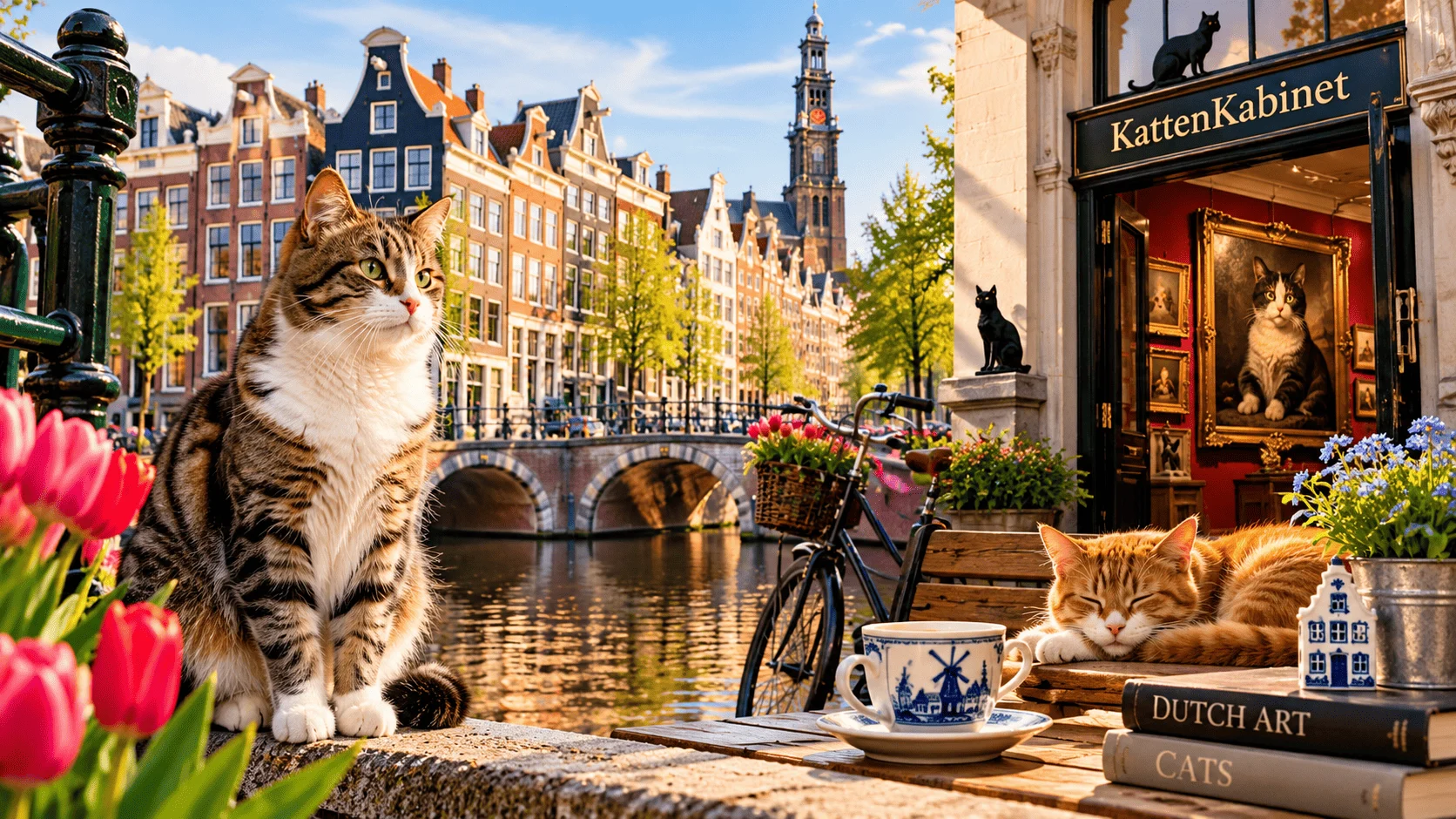
The KattenKabinet is an art museum devoted to works depicting cats. Its collection includes paintings, drawings, sculptures, and other cat-related artworks. The museum occupies a historic canalside building at Herengracht 497 in Amsterdam’s famous Golden Bend.
A Museum Created in Memory of a Cat
Bob Meijer founded the Cat Cabinet in 1990 in memory of his red tomcat, John Pierpont Morgan, who lived from 1966 to 1983. The museum’s official history explains that John Pierpont Morgan remained an important companion to Meijer throughout the cat’s life.
That personal origin gives the museum a distinctive character. Rather than presenting cats simply as an art subject, the Cat Cabinet celebrates the cultural and emotional relationship between people and cats.
A Historic Amsterdam Setting
The museum sits inside a historic canal house. According to the Cat Cabinet, the house at Herengracht 497 and the neighboring building at number 499 date to 1667. The location adds another layer to the visit because you experience cat art inside one of Amsterdam’s historic canal districts.
Cat Cabinet Opening Hours and Tickets
The museum currently opens from Tuesday through Sunday, from 12:00 p.m. to 5:00 p.m. Adult admission costs €12.50. The museum also lists reduced prices for older people and students, while children under 12 can enter free.
Because museum schedules and admission prices can change, check the official Cat Cabinet ticket page before visiting.
What You Can See at the Cat Cabinet
The Cat Cabinet collection focuses on the role cats have played in art and culture over the centuries. Visitors can see paintings, drawings, sculptures, and other works featuring cats.
Famous Artists and Cat Imagery
The museum’s collection includes works associated with artists such as Pablo Picasso, Rembrandt, Henri de Toulouse-Lautrec, Corneille, Sal Meijer, Théophile Steinlen, and Jože Ciuha. The variety makes the museum more interesting than a conventional single-theme exhibition because different artists approach cats from very different perspectives.
Some visitors may arrive because they love cats, while others may appreciate the museum primarily as an unusual art experience. Both perspectives work well here.
Real Cats at the Museum
The Cat Cabinet also notes that cats live in the museum. That detail adds a playful element to the experience, although visitors should always respect the animals’ space and avoid disturbing them.
Guided Cat Tours
The museum also offers guided tours for small groups. Its official website states that the English-language guided tour can accommodate groups of two to eight people. The standard tour begins on Tuesdays at 11:00 a.m., one hour before the museum opens, while visitors can contact the museum about other possible dates.
Cats in Amsterdam, Utrecht, and Rotterdam
Amsterdam offers the strongest dedicated cat attraction, but cat lovers can find feline charm throughout the Netherlands.
Amsterdam
Amsterdam works particularly well for cat lovers because its historic streets provide an atmospheric backdrop for exploring Dutch culture. While walking along the canals, you may notice cats watching from windows or enjoying quiet residential spaces.
The Cat Cabinet makes Amsterdam the obvious destination for visitors who want a specifically cat-focused cultural experience. You can also combine the museum with the city’s broader art, architecture, and canal attractions.
Utrecht
Utrecht offers a quieter alternative to Amsterdam. Its historic center, canals, cafés, and residential streets create a relaxed environment for travelers who prefer a less crowded city.
Visitors traveling with their own cats should remember that a beautiful city does not automatically make every location suitable for a pet. Busy streets, unfamiliar environments, crowds, and transportation can create stress. Always consider your cat’s temperament before taking them into public spaces.
Rotterdam
Rotterdam provides a very different urban experience. Modern architecture, wide streets, contemporary cultural spaces, and a strong maritime identity give the city a distinct character.
For cat lovers, Rotterdam works best as part of a broader Netherlands itinerary rather than as a dedicated cat-tourism destination. The country’s major cities can complement one another: Amsterdam for historic canals and the Cat Cabinet, Utrecht for atmosphere and heritage, and Rotterdam for modern architecture.
Cat Adoption and Responsible Ownership
Anyone considering a cat in the Netherlands should think beyond the initial adoption decision. A cat can live for many years, and responsible ownership requires long-term planning.
Prepare Your Home
Before bringing a cat home, prepare essential resources such as a litter box, food and water bowls, scratching equipment, resting areas, hiding places, and appropriate toys.
A safe indoor environment can help reduce stress. Secure windows and balconies, remove dangerous household items, and give the cat places where it can retreat when it wants privacy.
Plan for Veterinary Care
Veterinary expenses form part of responsible cat ownership. Routine care matters, but owners should also prepare for unexpected illness or injury.
The Dutch government emphasizes the importance of proper care for pets, including access to veterinary treatment when necessary.
Choose Health Over Appearance
When choosing a cat, health and welfare should come before unusual physical characteristics. Some appearance-focused breeding practices can create serious health problems.
The Netherlands has taken particularly strong action against certain physical traits in cats. Understanding these rules can help prospective owners make responsible decisions and avoid purchasing an animal that cannot legally enter the country or remain in private ownership.
Important Cat Welfare Rules in the Netherlands
The Netherlands regulates the keeping, selling, and breeding of pets through animal-welfare legislation. The government states that people who keep pets must provide appropriate housing, food, water, and care. It also restricts breeding practices that create serious health or behavioral problems.
Rules on Harmful Physical Traits
One of the most important developments for cat owners took effect on January 1, 2026. The Netherlands introduced a ban on keeping hairless cats and cats with folded ears as pets.
The Dutch government explains that these physical traits can cause significant welfare problems. Folded-ear cats can develop cartilage abnormalities and painful joint problems, while hairless cats can face problems related to skin protection, temperature regulation, and the absence of functional whiskers.
Why the Netherlands Introduced the Ban
The policy focuses on the welfare consequences of breeding for particular physical characteristics. Rather than judging a cat’s appearance as simply fashionable or unusual, Dutch authorities consider whether that appearance creates avoidable suffering.
The Netherlands Enterprise Agency (RVO) explains that hairless cats and folded-ear cats can experience health and welfare problems because breeders selected these physical traits.
The 2026 Ban on Hairless and Fold-Eared Cats
The 2026 rules deserve special attention for anyone researching cats in the Netherlands.
Which Cats Does the Rule Cover?
The rules cover hairless cats, including types such as the Sphynx, Bambino Sphynx, and Peterbald, as well as cats with folded ears, such as the Scottish Fold, Highland Fold, and Foldex.
RVO explains that hairless cats can face increased risks of skin irritation, infections, sun damage, difficulty regulating body temperature, and respiratory problems. Fold-eared cats can develop a cartilage disorder that affects more than the ears and can cause painful joints and mobility problems.
What Happens if Someone Already Owns One?
The rules include a transitional arrangement. Owners who already had a qualifying cat before January 1, 2026 do not automatically have to give up the animal.
However, owners must be able to prove that they possessed the cat before the deadline. RVO gives examples such as documentation showing the animal’s chip date or registration in a recognized database. Owners who qualify can keep the cat for the rest of its life.
What About Visitors From Abroad?
The rules also apply to people who bring qualifying hairless or folded-ear cats into the Netherlands. RVO states that owners must be able to prove that the cat met the relevant pre-2026 conditions. The rule can therefore matter even during a temporary visit, such as a vacation.
If you plan to travel internationally with a cat that may fall under these rules, check the current Dutch requirements before making travel arrangements.
Shows and Competitions
The Netherlands also prohibits hairless and folded-ear cats from participating in exhibitions, competitions, and similar events. This restriction applies even when an individual cat qualifies for the transitional arrangement.
RVO states that authorities can issue administrative fines for violations of the keeping ban and exhibition ban.
Traveling to the Netherlands With a Cat
Traveling with a cat requires more preparation than traveling alone. Before entering the Netherlands, check the current requirements for your country of departure and your cat’s specific circumstances.
Check Official Requirements First
International pet travel can involve identification, vaccination, health documentation, and border requirements. Rules can also differ depending on whether you travel from another EU country or from outside the EU.
Use official Dutch government and Netherlands Food and Consumer Product Safety Authority (NVWA) information when preparing an international journey. Avoid relying solely on old blog posts because animal-travel rules can change.
Make the Journey Comfortable
Even when your paperwork meets every requirement, your cat still needs a comfortable journey. Use a secure carrier that gives the cat enough room to sit, stand, turn around, and lie down. Familiar bedding can also make the carrier feel less stressful.
For longer journeys, plan food, water, toilet needs, temperature control, and rest periods according to the transport method and your veterinarian’s advice.
Think About Your Cat’s Personality
Not every cat enjoys travel. Some cats adapt well to new environments, while others become highly stressed by unfamiliar sounds, people, smells, and transportation.
If your cat becomes anxious easily, consider whether bringing them on a sightseeing trip serves their interests. Sometimes the most responsible choice involves arranging reliable care at home rather than taking the cat on a long holiday.
Tips for a Cat-Friendly Netherlands Trip
If you are visiting the Netherlands as a cat lover, you do not need to bring your own cat to enjoy the country’s feline culture.
Start With Amsterdam
Amsterdam provides the strongest combination of cat-related culture and general sightseeing. Begin with the Cat Cabinet, then explore the surrounding canal district and other cultural attractions.
Respect Residential Cats
You may see cats in windows, gardens, or quiet streets. Admire them from a respectful distance. Do not enter private property, feed unfamiliar cats, or attempt to pick up an animal without the owner’s permission.
Check Attractions Before You Visit
Pet policies vary between museums, cafés, hotels, public transport services, and other attractions. A destination that looks cat-friendly online may not allow animals inside.
Always check the venue’s current policy before you arrive, especially if you plan to travel with your own cat.
Why Cats Matter in Dutch Culture
The appeal of cats in the Netherlands goes beyond tourism. The Cat Cabinet demonstrates how a personal love of a cat can become a cultural institution, while Dutch animal-welfare rules show how modern society increasingly evaluates pet ownership through the lens of animal health and welfare.
For travelers, this creates an interesting contrast. You can enjoy centuries of cat imagery and cultural history while also seeing how contemporary Dutch policy addresses the consequences of selective breeding and irresponsible ownership.
That combination makes the Netherlands an especially interesting destination for people who love both cats and culture. A visit can begin with a quiet canal-side cat sighting and continue into a museum dedicated entirely to feline art.
Frequently Asked Questions About Cats in the Netherlands
Is there a cat museum in the Netherlands?
Yes. Amsterdam is home to the Cat Cabinet (KattenKabinet), a museum devoted to cats in art and culture. It displays paintings, drawings, sculptures, and other cat-related works.
Where is the Cat Cabinet in Amsterdam?
The Cat Cabinet is located at Herengracht 497 in Amsterdam, in the city’s historic canal district.
When is the Cat Cabinet open?
The museum currently opens Tuesday through Sunday from 12:00 p.m. to 5:00 p.m. Check the official website before visiting because opening hours can change.
How much does the Cat Cabinet cost?
The current adult admission price listed by the museum is €12.50. The museum also offers reduced admission for some visitors and free entry for children under 12.
Can I keep a Sphynx cat in the Netherlands?
From January 1, 2026, Dutch law prohibits keeping hairless cats as pets. However, owners who already had a qualifying cat before the deadline may fall under a transitional arrangement if they can prove prior ownership.
Can I keep a Scottish Fold cat in the Netherlands?
The Netherlands prohibits keeping cats with folded ears, including Scottish Fold-type cats, from January 1, 2026. A transitional arrangement can apply to qualifying cats that owners already possessed before the deadline.
Can I travel to the Netherlands with my cat?
International travelers can bring pets to the Netherlands when they meet the applicable animal-travel requirements. Because requirements depend on factors such as the country of departure and the cat’s circumstances, check the current official NVWA and Dutch government guidance before traveling.
Are cats popular pets in the Netherlands?
Yes. Cats are established household pets in the Netherlands, and Dutch authorities provide specific rules covering pet welfare, care, breeding, and ownership.
Explore the Netherlands Through Its Cats
For cat lovers, the Netherlands offers an appealing mix of history, art, architecture, and modern animal-welfare awareness. Amsterdam’s Cat Cabinet provides the clearest feline-focused attraction, while the country’s historic cities offer plenty of opportunities to appreciate the quieter presence of cats in everyday life.
If you plan a visit, start with the Cat Cabinet, explore Amsterdam’s canal district, and then expand your itinerary to cities such as Utrecht or Rotterdam. If you plan to bring your own cat, put animal welfare and current travel regulations first.
Most importantly, remember that responsible cat culture means more than admiring beautiful cats. It means supporting healthy breeding practices, providing proper care, respecting animals’ boundaries, and understanding the laws that protect their welfare.