Explore This Article
Cats in Russian Folklore and Fairy Tales
Cats occupy an unusual place in Russian culture. They appear in fairy tales, popular sayings, paintings, literature, and stories about the home. Some are clever household companions. Others possess magical voices, guard mysterious places, or connect the human world with supernatural forces.
Russian cat traditions developed across different regions and periods, so they do not represent one universal belief system. Some stories belong to older Slavic folklore, while others emerged through literature, popular entertainment, or later cultural traditions. Their common theme is the cat’s ability to move between ordinary domestic life and the world of imagination.
For generations, cats also had a practical role in homes, farms, and storage buildings. Their hunting skills helped control rodents, while their independence and unpredictable behavior made them memorable characters in folklore. Russian storytellers built on those familiar qualities to create animals that could speak, outsmart powerful opponents, or protect their human companions.
Cats as Symbols of Home and Good Fortune
The Russian Ethnographic Museum documents several traditional beliefs surrounding cats. One custom held that people should allow a cat to enter a newly built house before the other occupants. The animal’s arrival symbolized the beginning of a settled household and a hopeful future for the people who would live there.
Some folk beliefs also associated a calico cat with protection against house fires. Another tradition interpreted a cat washing its face near the entrance as a sign that visitors would arrive. These beliefs reveal how people used familiar animal behavior to interpret ordinary events and express hopes for domestic comfort.
Such traditions are examples of folklore rather than scientifically established predictions. A cat cannot forecast a visitor or guarantee a home’s safety through its coat color. The stories remain culturally interesting because they show how closely people connected cats with the household.
Cats and the Domovoy
In Slavic folklore, the domovoy is a household spirit associated with the home and family. Some traditions describe this being as a small, shaggy figure, while others connect it with the appearance of a cat. These stories link cats with domestic spaces, thresholds, and the protection of a household.
A 2016 academic study published by researchers associated with the Siberian Branch of the Russian Academy of Sciences examines Russian beliefs about household spirits. The researchers found that ideas about the domovoy continued to appear in both rural and urban settings, although people interpreted the figure in different ways.
The association between cats and the domovoy does not mean that every Russian household followed the same customs. Beliefs varied across communities, and modern people may know the stories without treating them as literal descriptions of the world.
Kot Bayun: The Magical Storytelling Cat
One of the most distinctive cats in Russian folklore is Kot Bayun, a magical feline whose voice can lull people to sleep. The name connects with the Russian verb bayat, which means to speak or tell stories. Kot Bayun is therefore not simply a cat that talks; storytelling itself forms part of his supernatural power.
In versions of the tale, the creature lives in a remote, enchanted place, sometimes near a golden pillar or a mysterious mill. Travelers who hear his songs may fall asleep and face danger. The cat can overpower people who fail to resist his voice, but the stories also associate him with healing powers. A person who captures him may gain protection from illness or benefit from the cat’s extraordinary knowledge.
A Cat Who Can Be Dangerous and Helpful
Kot Bayun combines two qualities that appear frequently in folklore: supernatural danger and the possibility of reward. His voice can defeat careless travelers, yet the knowledge he carries can also offer healing or protection. The character forces the hero to use courage, preparation, and intelligence rather than relying on strength alone.
In one version of a tale collected by Alexander Afanasyev, a young man must capture the magical cat. His wife warns him about Bayun’s dangerous voice and helps him prepare protective equipment. The hero succeeds by resisting the cat’s enchantment instead of approaching the creature without a plan.
These stories have different versions, and details can change between retellings. The University of Kansas Center for Russian, East European, and Eurasian Studies discusses Kot Bayun alongside other famous cats in Slavic and Eurasian culture.
The Learned Cat in Russian Poetry
Russian literature also preserves the image of an intelligent cat who sings songs and tells stories. In the opening of Alexander Pushkin’s 1820 narrative poem Ruslan and Ludmila, a learned cat walks along a golden chain around a green oak tree. When he walks in one direction, he tells stories; when he walks in the other, he sings.
The literary cat shares qualities with Kot Bayun, especially the association between feline intelligence and storytelling. However, the two characters belong to different works and traditions. Their similarities show how writers adapted familiar folklore motifs for new audiences.
Through characters such as these, Russian stories give cats a role that extends beyond catching mice. They become keepers of knowledge, guardians of mysterious places, and participants in adventures where cleverness often matters more than physical power.
Cats in Russian History
Cats became part of everyday life in Russian communities through practical relationships with people. They helped control rodents around homes and food stores, and they became familiar companions in different social settings. Their historical role changed as settlements grew, trade developed, and domestic life evolved.
Written accounts, folklore, and surviving art do not provide a complete history of every cat population across Russia. Nevertheless, museum collections and historical stories reveal how the animals became established in households and eventually gained roles in palaces and cultural institutions.
From Working Animals to Household Companions
A cat could be especially useful where people stored grain, kept supplies, or lived among buildings that attracted mice and rats. Its hunting instincts offered a practical benefit without requiring the equipment or labor associated with other pest-control methods.
As cats became familiar household animals, people included them in sayings, illustrations, decorative objects, and stories. The Russian Ethnographic Museum preserves examples of cat imagery on traditional ceramic stove tiles and in popular printed art. These objects show that cats became recognizable subjects in domestic culture, not merely animals performing a practical task.
By the eighteenth century, royal households also valued cats as hunters. Their abilities made them useful in large buildings where rodents could threaten clothing, furnishings, food stores, and other possessions. This practical history helps explain why cats became linked with some of Russia’s most famous palaces.
The Famous Cats of the Hermitage Museum
The State Hermitage Museum in Saint Petersburg is one of Russia’s best-known cultural institutions. It is also famous for a long-standing tradition of keeping cats in its buildings. The Hermitage cats became part of the museum’s identity because they helped protect its premises from mice and rats.
According to the museum’s historical account, the tradition began in the early eighteenth century when Peter the Great brought a cat from Holland to the Winter Palace. Later, Empress Elizabeth Petrovna ordered the delivery of cats from Kazan to address a rodent problem in the palace.
Why Elizabeth Ordered Cats From Kazan
Historical accounts describe Kazan as a place known for strong mouse-catching cats. In 1745, Elizabeth ordered the selection of thirty suitable cats and their transfer to the Winter Palace in Saint Petersburg. Their task was practical: control the rodents that threatened the royal residence.
The story also explains the long-standing association between Kazan and cats. The Russian Ethnographic Museum describes traditional accounts of powerful Kazan mousers and notes how their reputation reached Saint Petersburg during the eighteenth century.
The cats performed a useful role in a large building that needed protection from pests. Their legacy later became part of the cultural identity of both Kazan and the Hermitage.
Catherine the Great and the Museum’s Cat Guardians
Catherine the Great, who established the Hermitage art collection, continued the palace’s association with cats. Historical accounts describe her decision to assign cats a role in protecting the galleries from rodents.
Today, the Hermitage maintains a managed population of cats that lives in designated service areas rather than roaming freely through the museum’s galleries. Staff and supporters help care for the animals, and the museum organizes activities that celebrate their history.
The museum also holds an annual Hermitage Cat Day. The event features cat-themed cultural activities and brings public attention to the animals that have become part of the institution’s story.
The Hermitage cats demonstrate how a practical solution can become a lasting cultural tradition. Their original role involved pest control, but their place in the museum’s history now connects animal care, public engagement, and one of Russia’s most famous collections.
Cats in Russian Literature and Popular Culture
Russian writers and artists have given cats many different identities. They may represent domestic comfort, intelligence, mystery, humor, or mischief. Some literary cats behave like ordinary animals, while others speak, reason, or become central figures in supernatural adventures.
Kot Leopold: A Cat Who Promotes Peace
Kot Leopold became a familiar character through a Soviet animated series that began in 1975 and continued into the 1980s. Leopold is a polite and peace-loving cat who tries to get along with two troublesome mice.
His memorable message, commonly translated as “Guys, let’s all get along,” contrasts with the mice’s repeated attempts to provoke him. The comedy comes from the difference between Leopold’s patient approach and the chaos around him.
The character gave generations of viewers an approachable feline figure whose defining trait was not hunting or supernatural power, but a preference for peaceful relationships. Kot Leopold remains part of the broader history of cats in Russian-language popular culture.
Behemoth in The Master and Margarita
Another famous literary cat appears in Mikhail Bulgakov’s novel The Master and Margarita. Behemoth is an enormous black cat who forms part of the strange supernatural company accompanying Woland, a mysterious visitor to Moscow.
Behemoth speaks, walks upright, jokes, plays chess, and creates absurd situations. His behavior deliberately breaks the rules of ordinary life. Through him, Bulgakov combines satire, dark humor, and the surreal atmosphere that runs through the novel.
Behemoth differs from Kot Bayun and Pushkin’s learned cat, but all three characters demonstrate how writers use feline qualities to explore intelligence, disorder, mystery, and human behavior.
The Cat of Kazan in Traditional Art
The Cat of Kazan is another notable figure in Russian popular imagery. The Russian Ethnographic Museum preserves examples of prints featuring this character, including works associated with the popular tradition in which mice bury a cat.
Such images blend humor, exaggeration, and social commentary. The cat becomes more than a portrait of an animal; it can serve as a recognizable figure through which artists and audiences explore relationships, conflict, and everyday experience.
These literary and artistic characters show the breadth of Russia’s cat culture. Some cats protect a museum, others guide heroes through magical dangers, and others entertain audiences with comedy or satire.
Cat Breeds That Originated in Russia
Russia is associated with several recognized cat breeds, each with a different appearance and development history. Some are long-haired cats linked with cold regions, while others emerged through more recent breeding programs. Their shared national association does not mean that all Russian breeds have the same coat, temperament, or care requirements.
The Siberian Cat
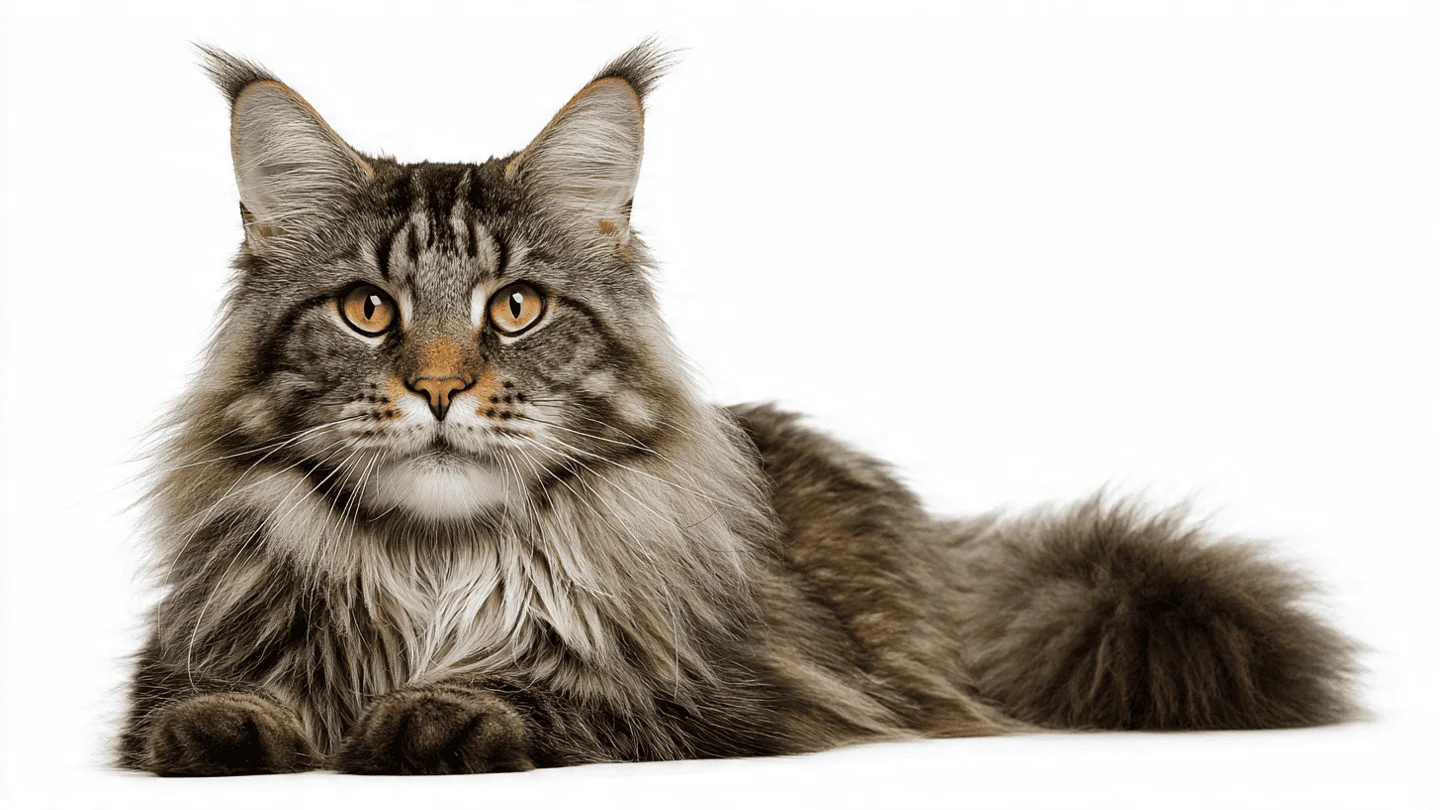
The Siberian is a large, sturdy, semi-longhaired cat recognized for its dense coat. The International Cat Association describes the breed as having a long history in Russia, with the earliest known reference dating to around AD 1000.
The Siberian’s coat changes with the seasons. It becomes fuller in colder weather and sheds into a lighter coat during warmer months. Its strong body and substantial coat are consistent with the environments associated with its Russian heritage, although individual cats still need suitable shelter and indoor comfort.
Siberians are intelligent, active cats that often enjoy climbing and interactive play. Their coat needs regular grooming to manage shedding and prevent tangles. As with any breed, a cat’s personality depends on the individual animal, early experiences, and home environment.
The Russian Blue
The Russian Blue is known for its short, dense blue-gray coat with silver-tipped hairs and vivid green eyes. Cat registries generally associate the breed’s origins with Arkhangelsk in northern Russia, although the earliest details remain uncertain.
Historical accounts describe cats traveling from northern Russia to other parts of Europe aboard ships. They appeared at cat shows in England during the nineteenth century, where people initially grouped them with other solid-blue cats. Breeders later developed the distinctive modern breed through organized programs.
Russian Blues tend to be observant and may appear reserved around strangers. Many develop strong bonds with familiar people and enjoy regular play, predictable routines, and quiet resting places. Their short coat requires less grooming than a long-haired Siberian coat, although ordinary grooming and veterinary care remain important.
The Donskoy: A Russian Hairless Breed
The Donskoy, sometimes called the Don Sphynx, developed in Rostov-on-Don after breeders discovered a cat with a spontaneous hair-loss mutation in 1987. The International Cat Association records the breed’s origin in Russia and describes several coat types, from hairless to partially coated.
The Donskoy has a distinctive appearance, with visible skin folds and a lean, muscular body. Despite its unusual look, it is a domestic cat that needs normal social interaction, play, nutrition, and veterinary care.
Hairless and sparsely coated cats require particular attention to skin health and temperature. They may need protection from cold weather and excessive sun exposure. Owners should follow veterinary guidance rather than assume that a hairless coat automatically makes grooming unnecessary.
The Peterbald
The Peterbald originated in Saint Petersburg in 1994 when breeders crossed a Donskoy cat with a shorthaired cat from the Siamese-related breed group , creating a breed known for its elegant body, long legs, large ears, and unusual coat types.
Peterbalds can range from nearly hairless to cats with a fine or fuller coat. They are often described as active, curious, and people-oriented. Their need for attention and environmental stimulation makes regular play and social contact important.
Hairless Peterbalds need specific care for their skin and body temperature. Owners should protect them from extreme cold and excessive sunlight. Hairlessness also does not guarantee that a cat will not trigger allergies, because allergens can come from saliva and skin as well as fur.
The Kurilian Bobtail
The Kurilian Bobtail traces its origins to Sakhalin and the Kuril Islands in the Russian Far East. It is known for its distinctive short, fluffy tail and a strong, athletic body. The breed may have short or semi-long hair.
The International Cat Association describes the Kurilian Bobtail as an active and intelligent cat. Its historical association with island environments and hunting helps explain its reputation as a capable mouser. Modern pet cats still need appropriate feeding, veterinary care, play, and a secure living environment.
These Russian-associated breeds illustrate the diversity of domestic cats. A Siberian’s thick coat, a Russian Blue’s short silver-tipped fur, and a Peterbald’s unusual coat reflect different breed histories and care needs.
Life With Cats in Modern Russia
Domestic cats live in many different settings across Russia, from apartments in major cities to houses in smaller communities and rural properties. Local climate, housing, the availability of veterinary services, and an owner’s routine all influence how cats live.
There is no single lifestyle that represents every Russian cat. Some live indoors with their families, some have controlled outdoor access, and others encounter the risks associated with free roaming. The safest arrangement depends on the cat and its environment.
Indoor Cats Need Daily Enrichment
An indoor home can protect cats from traffic, harsh weather, unfamiliar animals, and some infectious risks. To thrive, indoor cats need opportunities to climb, scratch, hide, play, and investigate their surroundings.
Cat trees, scratching posts, window perches, puzzle feeders, and interactive toys can make indoor spaces more engaging. Routine play helps cats exercise and express hunting behaviors safely. Quiet sleeping areas and separated resources can also help reduce tension in homes with multiple cats.
Outdoor Cats Face Different Risks
Outdoor exploration can provide stimulation, but it also introduces hazards. Cats may encounter traffic, dogs, unfamiliar animals, infectious diseases, parasites, or dangerous substances. In colder regions, wind, snow, ice, and wet fur can create additional risks.
Secure outdoor enclosures and supervised outings allow cats to experience fresh air while limiting their ability to roam into unsafe locations. Owners should also consider local wildlife, nearby roads, and whether their cat can return to a warm indoor space.
These precautions matter for all domestic cats, including Siberians and other breeds with dense coats. Breed heritage cannot eliminate exposure risks or replace appropriate supervision.
Winter Weather and Cat Safety
Russia covers a vast area with many different climates. Winters in some regions bring severe cold and deep snow, while other areas experience milder conditions. Cat owners should plan around local weather rather than assume every part of Russia faces identical temperatures.
Warmth, Shelter, and Fresh Water
Outdoor cats need a dry, sheltered place where they can escape wind and precipitation. During severe cold, access to a warm indoor space offers important protection. Cats should not have to remain outside simply because they have thick fur.
Check that water remains available when temperatures fall below freezing. Keep resting areas clean and dry, and monitor cats for changes in behavior after outdoor exposure. Kittens, senior cats, sick animals, and cats requiring additional care may need greater protection.
Recognizing Cold-Related Problems
Shivering, unusual quietness, weakness, poor coordination, and difficulty moving can indicate that a cat needs urgent help. Frostbite may affect the ears, paws, and tail. If you suspect hypothermia or frostbite, move the cat to a safer, warmer environment and contact a veterinarian promptly.
Do not rub injured areas or apply intense direct heat. A veterinary professional can assess the damage and recommend suitable treatment. Prevention remains the safest approach: provide suitable shelter and limit outdoor exposure when conditions become dangerous.
Russian Cat Day and Animal Welfare
Russia celebrates its unofficial Cat Day on March 1. The Russian Ethnographic Museum identifies the Moscow Cat Museum and the magazine Kot i Pes as the organizers who established the observance in 2004.
The date provides an opportunity to celebrate cats and bring attention to their care. Other countries observe different cat-related dates, including International Cat Day on August 8, but the Russian tradition has its own place in the national calendar of informal celebrations.
Helping Cats Through Responsible Care
People who care for cats can support animal welfare by providing suitable food, fresh water, veterinary treatment when needed, and a safe environment. Identification and responsible reproductive care may help prevent unwanted litters and make it easier to reunite lost cats with their owners.
People who encounter a cat outdoors should not immediately assume that it has no home. Some cats are lost or temporarily roaming. If a cat appears injured, ill, or distressed, contact a veterinarian or an established local animal welfare group for advice.
Adoption can provide a stable home for a cat that needs one, but it should be a long-term commitment. Prospective owners should consider housing, time, costs, travel arrangements, and the individual animal’s needs before bringing a cat home.
What Russia’s Cat Traditions Reveal
Russia’s relationship with cats brings together folklore, historical pest control, royal palace life, literature, and modern companion animals. Kot Bayun represents the magical storyteller, the Hermitage cats preserve a practical palace tradition, and Russian-associated breeds illustrate the wide variety of domestic cats that developed in or became closely linked with the country.
These traditions tell different stories, and their value does not depend on treating folklore as literal history. The strongest picture of cats in Russia comes from seeing how imagination and everyday life developed side by side. Cats could appear as supernatural characters in fairy tales while also protecting grain stores or palace collections from rodents.
For cats living in Russia today, their well-being depends on practical care. A safe home, appropriate food, fresh water, veterinary attention, daily interaction, and protection from local hazards matter more than a breed’s reputation or its place in a legend. Understanding the history makes the cats more interesting; meeting their real needs makes life better for them.
Frequently Asked Questions About Cats in Russia
Russian Folklore and History
What is Kot Bayun in Russian folklore?
Kot Bayun is a magical cat whose voice can lull people to sleep through songs and stories. Some versions describe his voice as dangerous, while others connect him with healing powers. The character appears in Slavic fairy-tale traditions.
Why are cats famous at the Hermitage Museum?
The Hermitage cats trace their history to the eighteenth century, when rulers brought cats into the Winter Palace to control mice and rats. Today, the museum maintains a cat-care tradition and celebrates the animals through its annual Hermitage Cat Day.
Why do Russians celebrate Cat Day on March 1?
The Russian Ethnographic Museum states that the Moscow Cat Museum and the magazine Kot i Pes established Russia’s unofficial Cat Day in 2004. The celebration recognizes cats and encourages interest in their welfare.
Russian Cat Breeds
Which cat breeds originated in Russia?
Russian-associated breeds include the Siberian, Russian Blue, Donskoy, Peterbald, and Kurilian Bobtail. Each has its own history, appearance, and care requirements.
Is the Siberian cat suited to cold weather?
The Siberian’s dense coat provides insulation and changes with the seasons. However, no domestic cat should face severe cold without suitable shelter, fresh water, and supervision.
Where did the Russian Blue originate?
Cat registries generally associate the Russian Blue with Arkhangelsk in northern Russia. Historical accounts describe similar blue cats traveling to Europe by ship during the nineteenth century, although the earliest details of the breed’s origins remain uncertain.
Modern Cat Care
Can cats safely live outdoors during a Russian winter?
Safety depends on the local climate and the individual cat. Freezing temperatures, wind, wet fur, and a lack of shelter can cause serious harm. Cats need a warm, dry place and should remain indoors when conditions become dangerous.
What should I do if I find a stray cat in Russia?
A cat outdoors may be lost rather than abandoned. If it appears injured or ill, seek advice from a veterinarian or a local animal welfare organization. Identification and local inquiries may help determine whether the cat has an owner.
References and Further Reading
- University of Kansas, Center for Russian, East European, and Eurasian Studies — Cats in Eastern European and Eurasian Culture. Information about Kot Bayun, Russian cultural figures, and the Hermitage cats.
- Ansimova, O. K., and Golubkova, O. V. — Mythological Characters of the Domestic Space in Russian Folk Beliefs: Lexicographic and Ethnographic Aspects (2016). Academic discussion of the domovoy and Russian household traditions.
- Russian Ethnographic Museum — Cat Day. Russian folk traditions, cat imagery, the Cat of Kazan, and the March 1 celebration.
- The State Hermitage Museum — Hermitage Cat Day. The museum’s account of its long-standing cat tradition.
- The International Cat Association — Siberian. Breed history, coat, and care characteristics.
- The Cat Fanciers’ Association — Russian Blue. Breed characteristics and historical background.
- The International Cat Association — Donskoy. Origin and coat characteristics of the Russian hairless breed.
- The International Cat Association — Peterbald. Breed development and care characteristics.
- The International Cat Association — Kurilian Bobtail. The breed’s island origins, history, and characteristics.