Explore This Article
Freyja and Cats in Norse Mythology
Norway has a fascinating relationship with cats that reaches beyond modern homes and the country’s famous forests. In Norse mythology, cats appear alongside one of the most important goddesses of the pre-Christian Scandinavian world. The connection between cats and Freyja remains one of the best-known examples of the place animals occupied in Nordic folklore.
Freyja belonged to the Vanir, a family of Norse gods. Ancient traditions connect her with love, beauty, fertility, magic, and war. She also played a role in stories about the dead and the supernatural. Her character combined qualities that modern readers might otherwise associate with several different deities.
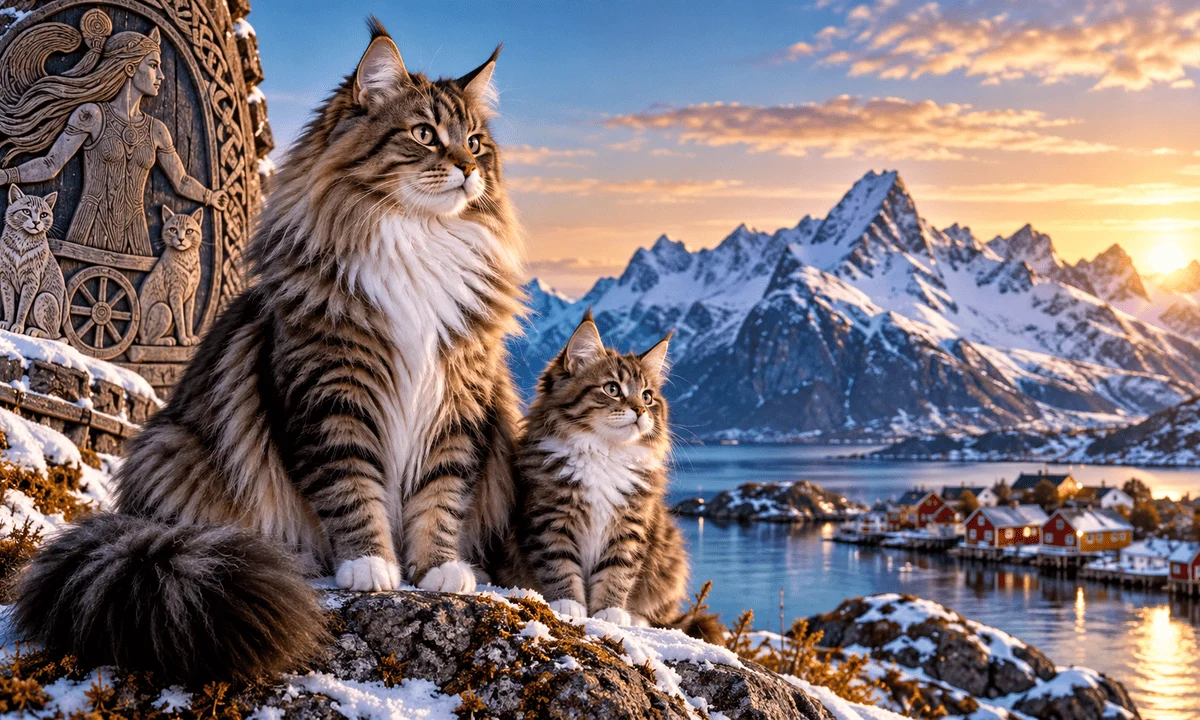
One detail makes Freyja especially interesting to cat lovers. According to the traditional mythology, she traveled in a chariot pulled by two large cats. The Swedish History Museum highlights this detail in its account of the goddess, alongside her connection with seidr, a form of Norse magic associated with prophecy and supernatural knowledge.
What Did Cats Represent in Norse Stories?
The surviving stories do not provide a complete explanation for Freyja’s feline companions. Modern interpretations often connect cats’ agility, independence, and hunting instincts with the goddess’s mysterious character. These interpretations can enrich our understanding of the mythology, but the original sources do not establish every explanation that modern writers suggest.
Cats also had practical value in human settlements. Their ability to hunt rodents helped people protect stored food and keep buildings relatively free of pests. Their quiet movements and skill at climbing may have made them compelling animals in stories as well.
Freyja’s cats therefore offer an intriguing connection between everyday animals and the supernatural world of Norse storytelling. They also remind us that animals could carry cultural meaning beyond their practical uses.
Were Freyja’s Cats Norwegian Forest Cats?
Popular stories sometimes connect Freyja’s companions with the Norwegian Forest Cat, Norway’s famous long-haired breed. The idea is attractive: a powerful goddess traveling through a northern landscape with large, fluffy cats makes a memorable image.
However, surviving mythological sources do not identify Freyja’s cats as Norwegian Forest Cats. Researchers have not established a direct ancestral connection between the legendary animals and the modern breed. The mythology belongs to a religious and literary tradition, while the modern breed has a more specific history involving domestic cats and organized breeding.
We should also avoid assuming that all Viking-Age communities treated cats as sacred. A story about a goddess cannot tell us how every household regarded its animals. Archaeological evidence offers a more complicated picture of cats in Scandinavian life.
Cats in Viking-Age Scandinavia
Historians generally date the Viking Age to approximately AD 800–1100. During this period, Scandinavian communities farmed, traded goods, traveled by sea, and established settlements across Europe and the North Atlantic. Animals supported many aspects of daily life, from agriculture and transportation to hunting and household activities.
Cats had a practical role in this world because they hunted mice and other small animals. Rodents could damage food stores, so a capable cat offered a useful form of pest control around farms, settlements, and trading centers.
What Archaeology Reveals About Viking Cats
A research paper by archaeologist Matthias S. Toplak, published in Current Swedish Archaeology in 2019, reexamines the roles of domestic cats in Viking-Age Scandinavia. The study challenges interpretations that rely too heavily on mythology and instead compares written traditions with archaeological evidence.
Toplak discusses cat bones from trading centers that show cut marks associated with skinning. These remains indicate that people used cat fur in some contexts. The study also examines cats found in certain male burials, where their presence may suggest prestige or symbolic value.
These findings complicate the familiar image of Viking cats as exclusively sacred animals or beloved companions. Cats could serve several purposes, and their role could vary between communities. Archaeological remains do not reveal every detail of an animal’s life, but they help researchers test popular stories against physical evidence.
How Did Cats Become Part of Norwegian Life?
Domestic cats spread across human communities over many centuries. Trade, travel, and migration allowed people to move animals between regions, and Scandinavian settlements maintained connections with wider European networks.
We cannot attribute the arrival of domestic cats in Norway to one ship, one Viking expedition, or one specific historical event. Their story forms part of a much broader history of domestication, migration, and changing relationships between people and animals.
Over time, cats became familiar animals in Scandinavian communities. They could hunt around farms, live near stored supplies, and provide fur in some circumstances. Their place in everyday life depended on the local economy and the needs of the people who kept them.
This evidence gives us a more realistic view of Viking cats than stories that describe every animal as a magical companion. Norse mythology offers an important cultural perspective, while archaeological research helps us understand how cats also fitted into ordinary life.
The Norwegian Forest Cat: A Distinctive Breed With Local Roots
The Norwegian Forest Cat, called norsk skogkatt in Norwegian, is one of the country’s best-known domestic cat breeds. Its large body, semi-long coat, bushy tail, and alert expression have made it recognizable among cat enthusiasts worldwide.
Long-haired domestic cats lived in Norway for generations before breeders began developing the modern Norwegian Forest Cat as a distinct breed. Although popular folklore sometimes gives these cats an ancient and mysterious ancestry, their documented breed history focuses on twentieth-century efforts to preserve their characteristic appearance.
How the Modern Breed Developed
During the twentieth century, Norwegian cat enthusiasts became concerned that the traditional long-haired cat type might disappear through uncontrolled crossbreeding. They began organized efforts to preserve these cats and establish a consistent breed standard.
In December 1975, Norwegian breeders formed the Norsk Skogkattring breed club. A European cat registry granted the breed provisional recognition in 1976 and accepted it for competition in 1977. Breeders continued developing the population and expanding its gene pool during the following years.
These milestones mark the formal development of the modern breed, not the beginning of the domestic cat population in Norway. The earlier ancestry of Norwegian Forest Cats remains more difficult to reconstruct in detail.
Physical Features and Personality
The Norwegian Forest Cat has a sturdy body, strong legs, a long bushy tail, and a distinctive head shape. Its ears may have tufts of hair, while its coat combines a dense undercoat with longer outer hairs. Together, these features create the breed’s characteristic appearance.
The coat changes with the seasons. It can become fuller during colder months and shed more heavily as the weather warms. Owners should pay attention to grooming, especially during seasonal shedding or when tangles develop around the chest, belly, and hindquarters.
Many Norwegian Forest Cats enjoy climbing, exploring, and observing their surroundings from elevated positions. Their substantial size makes sturdy cat trees and secure resting platforms useful additions to the home. Individual temperaments still vary, so owners should adapt play and enrichment to each cat.
Does a Thick Coat Make This Breed Cold-Proof?
No. The dense coat provides insulation, but it cannot protect a cat from every cold-weather hazard. Wind, dampness, freezing temperatures, age, health, and access to shelter all influence an animal’s ability to stay warm.
Norway’s Food Safety Authority, Mattilsynet, warns that domestic cats tolerate cold poorly and can suffer frostbite. Owners should never assume that a Norwegian Forest Cat can safely remain outdoors through severe winter weather simply because its coat looks suitable for a northern climate.
How Cats Live in Norway Today
Modern Norway offers many different environments for cats. Some live in apartments in Oslo, Bergen, and Trondheim. Others share homes with gardens, live in smaller communities, or stay on rural properties near forests and farmland.
Each environment creates different opportunities and risks. A cat near a busy road faces different hazards from one in a quiet rural area. The weather, layout of the home, nearby wildlife, and owner’s daily routine also influence the best living arrangement.
Indoor Cats Need a Stimulating Environment
Indoor living can reduce exposure to traffic, fights with unfamiliar animals, severe weather, and some infectious risks. However, cats still need opportunities to exercise, explore, climb, scratch, and express their natural behavior.
Useful indoor features include sturdy cat trees, scratching posts, elevated resting places, hiding spots, puzzle feeders, and toys that encourage chasing and stalking. Regular interactive play helps cats exercise and provides mental stimulation. Window perches can also give cats something interesting to observe, provided owners install them securely.
Quiet resting places matter too. Cats should have places where they can retreat when they want to sleep or avoid interaction. In multi-cat homes, separate feeding areas, litter boxes, and resting spaces can help reduce conflict.
A good indoor environment should reflect the individual cat’s age, activity level, health, and temperament. A young, energetic cat may need more play and climbing opportunities than an older cat with limited mobility.
Outdoor Access and Free Roaming
Some Norwegian cats explore gardens and nearby outdoor areas. Outdoor access can offer fresh air, new scents, climbing opportunities, and environmental stimulation. However, free roaming also exposes cats to traffic, unfamiliar animals, parasites, infectious diseases, severe weather, and the risk of getting lost or trapped.
Rural environments have their own hazards. Cats may enter sheds, garages, storage buildings, or agricultural spaces and become unable to leave. In cities and suburbs, roads and unfamiliar neighborhoods may pose greater risks.
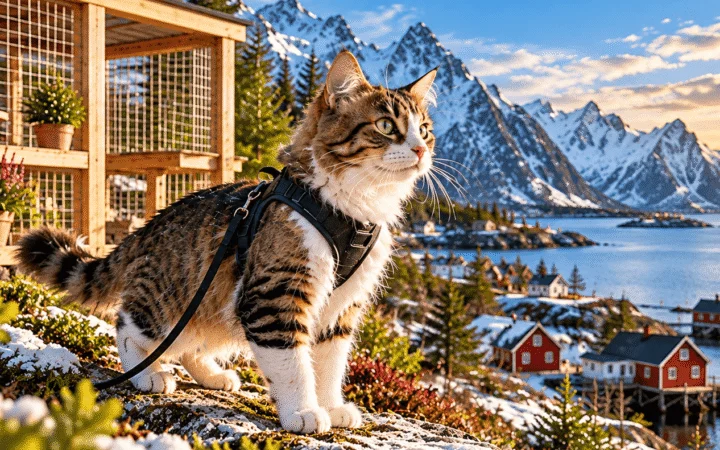
Secure catios, enclosed gardens, and supervised outings offer alternatives to unrestricted roaming. These arrangements let cats experience outdoor conditions while giving owners greater control over their surroundings.
Outdoor access is not the only measure of feline welfare. Indoor cats can enjoy healthy, stimulating lives when their owners provide opportunities for exercise, play, rest, exploration, and positive social interaction.
Winter Safety and Cold Weather Care
Winter deserves particular attention in Norway. Coastal areas, inland valleys, mountainous communities, and northern regions experience different weather patterns, but freezing temperatures, wind, dampness, and snow can create challenges for outdoor cats throughout the country.
Mattilsynet publishes specific guidance on cats and cold weather. The authority warns that cats can develop painful frostbite and that severe exposure may lead to serious injury or death. Owners must consider the actual conditions rather than assuming that fur alone provides enough protection.
Providing a Warm, Dry Shelter
Cats that spend substantial time outdoors during winter need access to suitable insulated and heated shelter or living space. Ideally, they should be able to return indoors whenever they choose. A suitable cat flap may help provide that access.
If a cat cannot enter the home freely, owners must provide an appropriate alternative. The shelter should offer a warm, dry, comfortable resting place away from drafts. Insulation beneath the sleeping area can protect the cat from the cold ground, and the bedding should remain clean and dry.
An unheated garage, shed, or barn does not automatically provide adequate protection. Owners should check the temperature inside, the condition of the building, and the cat’s access to a warm resting area. A shelter that works during mild weather may become unsuitable during a severe cold spell.
Recognizing Cold Stress and Frostbite
A cat that feels too cold may shiver, curl tightly, move less, or search for shelter. Severe cold exposure can cause weakness, poor coordination, and reduced responsiveness. Frostbite can damage the ears, paws, and tail.
Watch for pain, swelling, or unusual changes in the appearance of affected areas. If you suspect frostbite or hypothermia, move the cat to a safe, warmer environment and seek urgent veterinary advice. Do not rub potentially frostbitten tissue or apply intense direct heat.
Water, Food, and Daily Checks
Outdoor water can freeze quickly, so check water supplies often during cold weather. Make sure your cat can reach fresh water and a clean place to eat. A veterinarian can help you determine suitable food and feeding routines based on your cat’s age, health, and activity level.
Daily supervision also matters. Mattilsynet’s cat-care guidance says owners must check cats at least once a day for signs of illness, wounds, or injuries. Kittens, older cats, sick animals, and injured cats may need more frequent attention.
When conditions become severe, keeping a cat indoors may offer the safest protection. No single temperature guarantees safety for every cat. Health, age, wind, dampness, and access to shelter all affect the risk.
Cats and Norwegian Wildlife
Norway’s forests, gardens, wetlands, and rural landscapes support many wild animals, including birds and small mammals. Domestic cats retain strong hunting instincts, so even well-fed cats may chase or catch wildlife when they have the opportunity.
The impact of outdoor cats varies with local conditions, prey availability, season, habitat, and the number of cats in an area. Owners should avoid assuming that every cat has the same effect everywhere. Still, they can take practical steps to reduce avoidable risks, particularly around nesting sites and habitats that support vulnerable species.
Balancing Outdoor Enrichment With Wildlife Protection
Secure outdoor enclosures allow cats to experience fresh air and new surroundings without unrestricted roaming. Supervised outings can provide another option. These approaches give cats more control over their environment while helping owners prevent some unwanted wildlife interactions.
Indoor activities can also support natural hunting behaviors. Wand toys, chase games, puzzle feeders, climbing structures, and rotating toys encourage cats to stalk, pursue, and investigate. Regular play can make indoor life more engaging without requiring access to wild prey.
Where cats roam freely, owners should consider local wildlife patterns and reduce access to vulnerable areas whenever practical. Keeping cats away from sensitive nesting locations can help reduce potential conflicts.
Protecting Cats From Outdoor Hazards
Wildlife is only one concern. Roads, machinery, unfamiliar animals, poisons, and enclosed buildings can also threaten cats. Animals may hide in sheds or garages and become trapped, particularly when people close doors without checking inside.
Identification and up-to-date contact information can help people reunite lost cats with their owners. Owners should also evaluate whether nearby traffic, severe weather, or local hazards make unrestricted roaming unsuitable.
Responsible outdoor access considers the needs of both cats and wildlife. The goal is to provide stimulation while reducing preventable harm.
Animal Welfare and Responsible Ownership in Norway
Norway’s Animal Welfare Act establishes general duties to protect animals and promote good welfare. Mattilsynet provides detailed guidance on cat care, including living conditions, daily supervision, human contact, and veterinary treatment.
Responsible ownership requires more than putting out food and water. Owners must understand their cats’ needs and provide an environment that supports health, safety, normal behavior, and suitable rest.
Daily Supervision and Human Contact
Mattilsynet’s guidance states that owners must check cats at least once daily to look for signs of illness, wounds, or injuries. Cats also need daily social interaction with people. Kittens, older cats, sick animals, and cats requiring additional care may require more frequent supervision.
Daily contact helps owners recognize changes in appetite, movement, grooming, and behavior. These changes may reveal a developing health problem. Owners should arrange veterinary care when necessary rather than waiting for a minor concern to become serious.
When owners travel, they must arrange appropriate care with a responsible person. A neighbor who only refills food and water does not necessarily provide enough supervision or social contact. The caregiver should check the cat’s condition and arrange veterinary attention if needed.
Suitable Living Conditions
Cats need clean, safe, comfortable places to sleep, opportunities to move, and resources that support natural behaviors. Indoor cats often need extra enrichment because they have fewer opportunities to explore a changing outdoor environment.
Outdoor cats need protection from local weather and other hazards. During winter, owners must ensure that cats can reach suitable warm shelter. A garden, farm, or open landscape does not remove the owner’s responsibility to provide care.
Preventing Unwanted Litters
Unplanned reproduction can increase the number of kittens that end up without reliable homes. Mattilsynet encourages responsible cat management, including consideration of neutering or spaying. A veterinarian can explain the timing and health considerations for an individual animal.
Identification, veterinary care, and responsible adoption also support better welfare. If you discover a cat that appears injured, helpless, or severely neglected, seek advice from a veterinarian, the relevant animal welfare organization, or the appropriate Norwegian authority.
The Animal Welfare Act provides the broader legal framework, while Mattilsynet’s guidance explains how owners should apply welfare principles in everyday cat care. Anyone who needs a definitive legal interpretation should consult the current official rules.
Caring for Cats Through Norway’s Seasons
Winter requires special precautions, but good cat care continues throughout the year. Seasonal changes affect daylight, temperature, outdoor activity, and the conditions cats encounter in their surroundings. Planning ahead helps owners prevent avoidable problems.
Spring: Review Outdoor Safety
As temperatures rise and daylight increases, some cats show greater interest in exploring outdoors. Check fences, enclosure doors, and other parts of the environment before increasing outdoor access. Ensure that identification details remain current and that your cat’s health care is up to date.
Spring also brings greater activity among many wild animals. Owners who allow roaming should consider vulnerable wildlife and decide whether supervised or enclosed access offers a better balance.
Summer: Provide Water and Shade
Longer days can encourage more activity, but cats still need fresh water, shade, and comfortable places to rest. Never leave a cat in a hot vehicle or another enclosed space that may overheat.
Long-haired cats may shed heavily during seasonal changes. Check the coat regularly and remove tangles before they develop into tight mats. Contact a veterinarian or professional groomer when mats cause discomfort or prove difficult to remove safely.
Autumn: Prepare Before the Cold Arrives
Autumn offers a useful opportunity to inspect outdoor shelters and sleeping areas. Repair drafts, check insulation, and make sure bedding stays dry. Confirm that your cat can reach a suitable warm space before freezing temperatures arrive.
A shelter that works during mild weather may no longer provide enough protection in winter. Preparing early is safer than waiting for the first freezing night.
Winter: Make Warmth Part of the Daily Routine
During the coldest months, check outdoor water supplies frequently and watch your cat’s behavior. Ensure access to warmth and bring the cat indoors when conditions become dangerous. Never expect an animal to tolerate severe weather simply because it normally spends time outside.
Adjust your routine to the individual cat. An older animal or one with health problems may need more protection than a healthy adult. When you are uncertain about the safety of an outdoor arrangement, seek veterinary advice and follow current Mattilsynet guidance.
Adopting a Cat in Norway
Adopting a cat can be a rewarding long-term commitment for people living in Norway. The right choice depends on temperament, health, activity level, grooming needs, household routines, and the owner’s ability to provide consistent care.
Is the Norwegian Forest Cat Right for Your Home?
Norwegian Forest Cats are sturdy, active cats with semi-long coats. Prospective owners should prepare for regular grooming, play, suitable nutrition, and routine veterinary care. Their size also makes sturdy climbing furniture and secure elevated resting places useful additions to the home.
Their thick coats should never serve as a reason to leave them outside through winter. Norwegian Forest Cats remain domestic animals that depend on people for suitable shelter, safety, and attention.
Mixed-Breed Cats Can Be Excellent Companions
Mixed-breed cats can make equally rewarding companions. Individual personalities vary, and an adult cat may offer a clearer picture of its temperament than a young kitten. Kittens usually require substantial attention, socialization, and supervision as they grow.
Before adopting, consider your schedule, housing rules, veterinary expenses, food costs, and arrangements for holidays. Think carefully about whether unrestricted outdoor access suits your neighborhood or whether an indoor home with secure outdoor enrichment would provide a safer option.
Responsible adoption means choosing an animal whose needs fit your circumstances and making a long-term commitment to its welfare. A suitable home should provide stability throughout the cat’s life, including when its needs change with age.
From Norse Legends to Modern Cat Welfare
Norway’s feline story brings together mythology, archaeological evidence, breed history, and the realities of modern animal care. Freyja’s cats belong to Norse religious tradition, while archaeological research reveals a more varied picture of cats in Viking-Age communities. The Norwegian Forest Cat has its own documented development through efforts to preserve a distinctive domestic cat type.
These histories connect through Norwegian culture, but they do not form one unbroken legend. A memorable myth does not establish a breed’s ancestry, and a thick coat does not prove that a domestic cat can survive dangerous winter conditions without help.
Today, the quality of a cat’s life depends on practical decisions. Suitable shelter, regular human contact, a safe environment, enrichment, appropriate nutrition, and timely veterinary treatment all matter. Owners who provide outdoor access must also consider traffic, local wildlife, and sudden changes in weather.
The most meaningful way to appreciate Norway’s feline heritage is to understand both its cultural stories and the needs of living cats. The mythology explains why cats hold a distinctive place in the Nordic imagination; responsible care determines whether they can live healthy, secure lives in modern Norway.
Frequently Asked Questions About Cats in Norway
Norse Mythology and Norwegian Forest Cats
Which Norse goddess is associated with cats?
Freyja, a goddess connected with love, beauty, fertility, magic, and war, traditionally travels in a chariot pulled by two cats. This story belongs to Norse mythology and does not prove that every Viking-Age community regarded cats as sacred.
Did Vikings keep cats?
Cats lived in Viking-Age Scandinavia and had different roles. Archaeological evidence indicates that people used cat fur in some contexts, while cats found in certain burials may have carried symbolic or prestige associations. Cats could also help control rodents around settlements.
Is the Norwegian Forest Cat descended from Freyja’s cats?
No established evidence proves a direct connection between the modern Norwegian Forest Cat and Freyja’s mythological companions. The breed developed from long-haired domestic cats known in Norway over many generations and received formal recognition during the twentieth century.
Winter Safety and Everyday Cat Care
Can cats safely live outdoors during a Norwegian winter?
Cats that spend time outdoors need access to suitable warm, dry, insulated shelter. Mattilsynet warns that cats can suffer frostbite and other cold-related injuries. During severe weather, keeping a cat indoors may offer the safest protection.
Are Norwegian Forest Cats immune to cold weather?
No. Their dense coats provide insulation, but they do not prevent frostbite or other cold-related injuries. Norwegian Forest Cats still need suitable shelter, fresh water, supervision, and protection from severe weather.
Is indoor living suitable for cats in Norway?
Yes. Indoor living can suit cats when their environment provides exercise, climbing opportunities, scratching surfaces, hiding places, play, and social interaction. Secure catios and supervised outings can provide additional outdoor stimulation.
Lost Cats and Breed Characteristics
What should I do if I find a lost or abandoned cat in Norway?
A cat outdoors may be lost rather than abandoned. If it appears injured or unwell, contact a veterinarian or an appropriate animal welfare organization. Identification and local inquiries can help establish whether the cat has an owner and what support it needs.
What makes the Norwegian Forest Cat distinctive?
The Norwegian Forest Cat is a large, sturdy, semi-longhaired breed with a dense coat, bushy tail, strong legs, and distinctive head shape. Its Norwegian heritage and formal breed recognition distinguish it, although individual personalities and care needs vary.
References and Further Reading
- The Swedish History Museum — Freyja, Goddess of Fertility and War. Historical and mythological context for Freyja and her two feline companions.
- Toplak, Matthias S. (2019). The Warrior and the Cat: A Re-Evaluation of the Roles of Domestic Cats in Viking Age Scandinavia. Current Swedish Archaeology, 27(1), 213–245. Scholarly analysis of archaeological evidence concerning the varied roles of cats in Viking-Age Scandinavia.
- Norwegian Forest Cat Breed Club — History. Background on the breed’s organized preservation and formal recognition.
- Norwegian Food Safety Authority (Mattilsynet) — Living Environments for Cats. Official guidance on feline living conditions and environmental needs.
- Norwegian Food Safety Authority (Mattilsynet) — Can Cats Be Outside in the Cold? Official winter guidance covering cold exposure, frostbite, and suitable shelter.
- Norwegian Food Safety Authority (Mattilsynet) — Supervision and Care of Cats. Official guidance on daily checks, human contact, grooming, and responsible care.
- Government of Norway — Animal Welfare Act. The national legal framework for animal protection and responsible treatment.