In Scandinavia, outdoor life is part of the appeal of home: woodland paths, quiet gardens, fresh air and changing seasons. For cat guardians, however, giving a cat access to the outdoors is not simply a question of opening the door. Traffic, wildlife, unfamiliar animals, parasites and cold weather can turn an apparently peaceful outing into a risk. The good news is that cats can enjoy fresh air, new smells and daily enrichment without being allowed to roam unsupervised.
This practical guide explores safer outdoor options for cats in Sweden, Norway and Denmark. You will learn how to plan a cat-friendly garden, introduce a harness gradually, design a useful catio, adapt routines to winter weather and decide which arrangement suits your individual cat. The central principle is simple: outdoor enrichment should expand a cat’s world while preserving its safety, comfort and choice.
Outline Preview
- What outdoor life means for Scandinavian cats
- Choose the right outdoor setup
- Designing a catio for Nordic homes
- Harness and leash training, step by step
- Cold-weather and winter care
- Garden safety, plants and wildlife
- Country notes: Sweden, Norway and Denmark
- A realistic daily routine
- Common mistakes to avoid
- Frequently asked questions
- References and further reading
1. What Does Outdoor Life Mean for Cats in Scandinavia?
There is no single Scandinavian cat lifestyle. A cat living in a city apartment in Copenhagen has different options from a cat in a rural Norwegian home or a house with a garden in southern Sweden. Daylight hours, weather, traffic, local wildlife, housing rules and the cat’s temperament all affect what is practical.
It also helps to separate three ideas that are often confused:
- Unrestricted roaming: the cat leaves home and moves around without direct supervision. This offers freedom but exposes the cat to roads, fights, getting lost, toxins, disease and other hazards. It can also affect local wildlife.
- Supervised outdoor time: the cat explores on a well-fitted harness and leash, in a secure garden with a person present, or in another controlled setting.
- Enclosed outdoor access: a catio, secure balcony, enclosed patio or cat-proof garden allows outdoor sensory stimulation while limiting opportunities to escape.
For many households, supervised or enclosed access is a useful compromise. It lets a cat investigate wind, rain, birds, leaves and new scents without requiring the owner to accept the risks of unrestricted roaming. It is not automatically right for every cat: some enjoy a harness, others prefer a sheltered enclosure, and some feel safest watching the world from a window.
Outdoor access is enrichment, not a requirement that every cat must enjoy. A well-designed indoor environment—with climbing space, hiding places, scratching surfaces, play, puzzle feeding and regular interaction—can also support a good quality of life. The goal is to meet the needs of the individual animal rather than force a fashionable lifestyle onto it.
2. Choose the Right Outdoor Setup
Option A: A catio or enclosed run
A catio is an enclosed outdoor space built for cats. It may be a small window enclosure, a balcony conversion, a tunnel attached to a door, or a larger garden structure. It is especially useful when roads are nearby, the cat has a strong hunting drive, the household wants to protect wildlife, or the owner cannot safely supervise free roaming.
A good catio offers more than a wire box. Include raised platforms, sturdy shelves, a sheltered resting area, shade, a scratchable surface and places to hide. Provide more than one route between levels so a cat is not trapped by another animal. Inspect mesh, hinges, latches and the connection to the house regularly.
Option B: Harness and leash walks
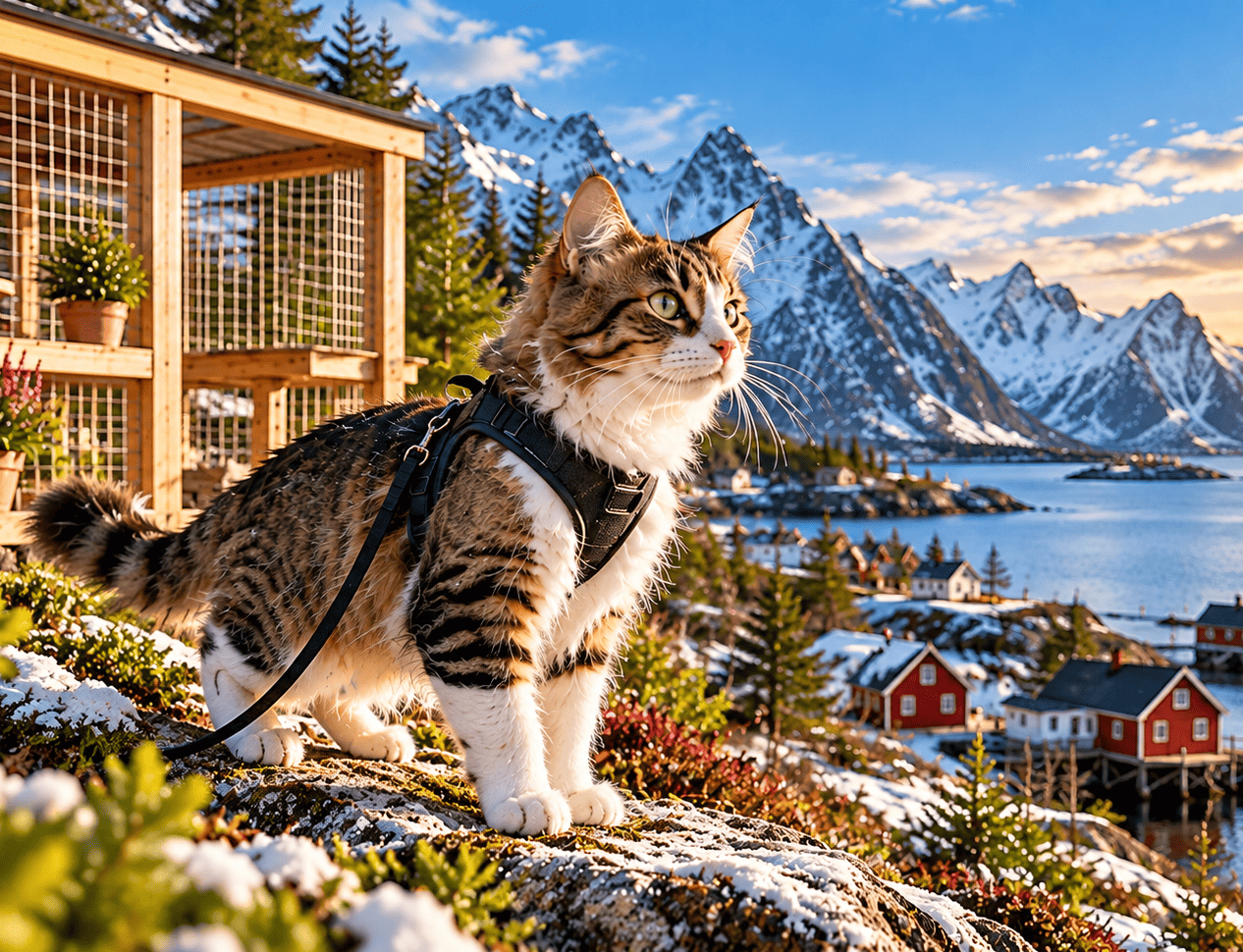
Harness walks suit cats that are curious, comfortable with handling and able to recover from unfamiliar sounds. Training is gradual: the cat should first accept the harness indoors, then move around wearing it, and only later explore a quiet outdoor area. A leash is not a way to drag a frightened cat along a route. The cat should set the pace, and the owner should be ready to return home.
Option C: A cat-proof garden
A fully secure garden can offer more space than a small catio, but ordinary fences are rarely escape-proof. Cats climb, squeeze through gaps and dig under barriers. A cat-proof design may require inward-angled extensions, a purpose-built enclosure or a roofed section. Check the entire perimeter, gates, sheds and spaces behind outdoor furniture. Do not assume a fence is secure just because a cat has not escaped yet.
Option D: A secure balcony
Never assume a balcony is safe because it is several floors above the ground. Cats can fall while chasing insects or reacting to a sudden sound. Use a professionally installed, cat-safe mesh or enclosure that cannot collapse, and check building regulations, landlord permissions and shared-property rules before making changes. Do not leave a cat alone on an unsecured balcony.
3. Designing a Catio for Nordic Homes
Scandinavian design often values simplicity, durable materials and a close relationship between home and nature. Those ideas translate well to catios: a practical enclosure can be neat, weather-aware and visually compatible with a wooden deck, small garden or apartment patio. Appearance should never come at the expense of escape prevention or the cat’s comfort.
Start with location and access
Place the catio where the cat can enter and leave safely, ideally through a secure pet door or a supervised doorway. Consider prevailing wind, rain, direct summer sun, snow accumulation and drainage. A south-facing enclosure may be pleasant in cool weather but overheat during a sunny spell. Ensure the cat always has access to shade and a cooler retreat.
Choose safe, durable materials
Use rigid, weather-resistant framing and strong mesh designed to contain animals. Chicken wire may bend, break or create sharp edges and should not be treated as a universal solution. Fasten every panel securely and eliminate gaps at the roof, base, door and wall connection. Use outdoor finishes only after confirming that they are appropriate for animal environments and fully cured before access.
Create a three-dimensional space
Cats benefit from vertical territory. Install stable shelves, broad platforms, ramps and scratching posts, with enough room to turn and stretch. Avoid tall, narrow ledges that become slippery when wet or icy. Add a covered sleeping nook and a dry surface above ground level. For multiple cats, create several resting places and more than one route through the enclosure so individuals can avoid each other.
Plan for rain, snow and temperature changes
A roof section can provide protection from rain and snow, while open mesh maintains ventilation. The enclosure should not become a greenhouse in summer or a freezing trap in winter. Provide a dry, draft-protected resting area and ensure the cat can return to a suitable indoor environment. A catio is not a substitute for warmth, veterinary care or supervision in severe weather.
Make maintenance part of the design
Choose flooring that drains and can be cleaned. Avoid untreated surfaces that remain damp, accumulate waste or splinter. Keep food and water bowls clean, refresh water frequently, and remove uneaten food that could attract insects or rodents. Check fasteners, hinges, mesh, roof panels and the ground perimeter at the start of each season and after storms.
Small-space idea: In a townhouse or apartment, a compact window box or enclosed balcony can still provide a useful sensory space. A small enclosure with a shelf, hideaway, scratcher and weather cover is generally more useful than a larger but empty space. Always check local building and tenancy requirements before installing anything externally.
4. Harness and Leash Training: A Step-by-Step Plan
Not every cat will enjoy a harness. The aim is to create a positive association, not to prove that the cat can be made to walk. Choose a well-fitted cat harness that is difficult to back out of, and attach the leash to the harness—not to a collar. Check the fit according to the manufacturer’s guidance and inspect it before every outing.
- Let the cat investigate. Place the harness near a favourite resting spot and reward calm sniffing with a treat or gentle play. Do not immediately fasten it.
- Introduce brief contact. Touch the harness to the cat’s body for a moment, then reward. Stop if the cat crouches, struggles, hides or shows escalating distress.
- Fasten it indoors. Begin with a very short session. Offer treats, food or a favourite activity, then remove the harness before the cat becomes upset.
- Build comfortable movement. Let the cat walk around indoors while wearing the harness. Increase duration gradually only when the cat appears relaxed.
- Add the leash indoors. Attach it and let it trail only under close supervision, or hold it loosely while following the cat. Never leave a harnessed cat unattended.
- Try a quiet threshold. Choose a calm, enclosed outdoor area near home. Keep the first outing short and allow the cat to observe, sniff and retreat.
- End on a positive note. Return inside before the cat becomes overwhelmed. Repeat only when the cat remains comfortable, and do not pull it toward interesting objects.
Watch body language closely. Flattened ears, a tucked tail, freezing, frantic escape attempts, panting or persistent vocalisation can indicate fear or stress. Stop and return to a familiar safe place. Never tie a cat’s leash to a fixed object, leave the cat unattended outdoors, or use the harness as a restraint while the cat is unsupervised.
Before outdoor activity, discuss preventive care with a veterinarian. Depending on the cat’s lifestyle and local risks, this may include identification, vaccination, parasite prevention and neutering. Microchipping and keeping contact details current can help if a cat becomes lost, but they do not make roaming risk-free.
5. Cold-Weather and Winter Care
Nordic winter conditions vary greatly by region and day. Coastal weather, inland frost, wind chill, wet snow and sudden temperature changes can affect a cat differently. There is no single temperature that is safe for every cat: age, body condition, coat, health, acclimatisation, wind, moisture and access to shelter all matter.
Do not assume that a thick coat makes a domestic cat safe outdoors in severe cold. The Norwegian Food Safety Authority warns that cats can suffer frostbite and dangerous cold exposure, and advises access to an insulated, suitable warm resting place when cats spend time outside in winter. When conditions are harsh, keep outdoor sessions brief or skip them altogether.
Practical winter precautions
- Keep the outing optional and short. Let the cat return indoors immediately. Do not force a cat to remain outside to complete a walk.
- Provide a dry, sheltered retreat. A cold, unheated shed or garage may not be adequate shelter. A cat spending time outdoors needs a dry, protected place suited to the weather.
- Check paws and coat. Snow, ice and grit can collect between toes. Wipe paws after walks and look for irritation, limping or unusual sensitivity.
- Watch for discomfort. Shivering, lifting paws repeatedly, crouching, seeking escape or becoming unusually quiet are reasons to end the outing. Severe cold exposure is an emergency.
- Maintain fresh water. Check that outdoor water has not frozen and that the cat can drink easily.
- Be careful around cars. In cold weather, cats may shelter near or under vehicles. Check around the car before starting it.
- Never leave a cat in a vehicle. A parked vehicle can become dangerously cold or hot depending on conditions.
Indoor enrichment becomes especially valuable during long, dark periods. Rotate toys, use short hunting-style play sessions, hide small portions of food in safe puzzle feeders and offer window perches. A catio can remain useful in mild conditions, but access should be supervised and the cat must be able to retreat to a warm indoor area. Do not use outdoor heat lamps or electrical equipment unless it is professionally installed and specifically suitable for the environment.
6. Garden Safety, Plants and Wildlife
A garden can appear peaceful and still contain hazards. Before allowing a cat to explore, inspect the space from the cat’s perspective: low gaps, open water containers, chemicals, sharp tools, loose netting, toxic plants and hiding places where an animal could become trapped.
Plants and chemicals
Lilies are particularly dangerous to cats; exposure to parts of a true lily or daylily can cause severe kidney injury. If you suspect a cat has chewed or contacted a lily, contact a veterinarian or emergency veterinary service immediately rather than waiting for symptoms. Other garden plants may also be toxic. Identify plants before bringing them into the home or planting them where a cat can reach them.
Store pesticides, slug treatments, antifreeze, fertilisers and other garden products securely and follow the label’s pet-safety instructions. Avoid allowing a cat onto treated areas until the product guidance confirms it is safe. Do not assume that a product marketed as natural is harmless to animals.
Protecting birds and small wildlife
Outdoor cats can hunt birds and small mammals, even when well fed. Enclosed outdoor access and supervised leash time can reduce hunting opportunities while still providing stimulation. If a cat wears a collar, choose a quick-release design that can open if it catches on something; collars do not replace microchipping or secure outdoor design.
Reduce escape and injury risks
Keep gates closed, repair holes promptly and remove objects that could help a cat jump over an enclosure. Inspect climbing structures for unstable boards, exposed nails and slippery surfaces. If several cats share a catio, watch for blocking, chasing or guarding of the entrance and add separate resting places or routes when necessary.
7. Country Notes: Sweden, Norway and Denmark
These countries share some seasonal challenges, but they are not interchangeable. Rules and recommendations can also change, and municipal, housing-association or rental requirements may apply to particular installations. Check current official guidance for the country where you live rather than relying on a general online article.
Sweden
Swedish cat guardians should plan for the cat’s daily needs, safe resting places and appropriate care, while also considering local traffic, wildlife and the type of housing. In urban areas, a secure balcony enclosure or compact catio may be more practical than free roaming; in houses, inspect gates, sheds and the full garden boundary. Leash use can be a practical option for supervised outings, but the cat should be gradually trained and never left tethered unattended. Before building a balcony enclosure or modifying a facade, check with the landlord or housing association and any applicable local requirements.
For official care guidance, consult the Swedish Board of Agriculture’s information on cat care and welfare. The requirements and advice are more useful than assumptions about what all Swedish cat owners do.
Norway
Norway’s climate ranges from relatively mild coastal areas to places with substantial snow and prolonged cold. Outdoor plans should be based on the actual local weather, not the country name alone. Wind, dampness and icy surfaces can make a short outing uncomfortable even when the temperature does not seem extreme. Norwegian official guidance emphasises that cats are vulnerable to cold and need a suitable dry, insulated shelter if they are spending time outdoors in winter. For pet cats, make sure there is a reliable way back to a warm, safe indoor environment; do not treat an outdoor shelter as permission to leave a cat exposed for long periods.
Denmark
In Denmark, as elsewhere, the right arrangement depends on the cat, the property and local conditions. Wind and wet weather can be as important as the thermometer, and a secure balcony or garden enclosure can be a practical way to offer fresh air in dense residential areas. Check that mesh, fasteners and doors remain secure during windy weather, and make sure the enclosure has shade and a dry retreat. Confirm any enclosure’s safety and check relevant animal-welfare guidance rather than assuming that every cat is suited to living outdoors full-time.
Important: This article is general educational information, not legal advice or a substitute for a veterinarian’s assessment. Check current official national guidance, especially before keeping a cat outdoors for long periods or making structural changes to a rented or shared property.
Before you choose a setup: a quick checklist
- Can your cat return indoors whenever it wants, especially when weather changes?
- Are doors, mesh, roof panels, gates and the connection to the home escape-resistant?
- Is there shade in warm weather and a dry, sheltered place to rest?
- Have you checked rental, building or housing-association rules before installing an enclosure?
- Have you discussed identification, vaccinations and parasite prevention with your veterinarian?
- Does the plan suit this cat’s confidence and health, rather than an idealised picture of outdoor life?
8. A Realistic Daily Routine for an Outdoor-Enrichment Cat
A routine helps cats predict what will happen and gives owners a chance to check equipment and weather. Adapt this example to your cat’s age, health, confidence and preferences.
- Morning: Check the weather, inspect the catio or harness, refresh water and offer a short play or exploration session if conditions are suitable.
- Midday: Offer a resting period indoors or in a sheltered enclosure. Provide a window perch, puzzle feeder or quiet observation spot.
- Late afternoon: Try another short play session, scent-based enrichment or a harness outing if the cat enjoys it and the environment is calm.
- Evening: Bring the cat indoors, check paws and coat after outdoor activity, provide food according to its normal feeding plan and make sure it has a warm, comfortable sleeping area.
Consistency matters more than the length of an outing. Five calm minutes can be a better experience than half an hour spent frightened or overstimulated. Keep a simple note of what the cat enjoys, what triggers stress and how it responds to changing weather. If behaviour, appetite or mobility changes, consult a veterinarian rather than assuming the problem is simply a dislike of the outdoors.
9. Common Mistakes to Avoid
- Rushing harness training: forcing a harness on a frightened cat can create a lasting negative association. Go at the cat’s pace.
- Assuming a normal fence is secure: cats can climb, squeeze through small gaps or exploit nearby furniture.
- Leaving the cat unattended: a leash, balcony or enclosure still needs regular checks and suitable supervision.
- Ignoring cold, wind or wet fur: coat thickness alone does not guarantee safety. End the outing when conditions or body language suggest discomfort.
- Using a collar as the leash attachment: use a correctly fitted harness designed for cats.
- Forgetting local rules: check rental agreements, housing-association rules and current official animal-welfare guidance.
- Prioritising aesthetics over welfare: a beautiful catio is not useful if it overheats, leaks, has unsafe mesh or offers no sheltered resting place.
- Believing every cat wants outdoor adventures: some cats prefer indoor enrichment. Respecting that preference is responsible care.
Conclusion: A Safer Way to Enjoy the Outdoors
The best Scandinavian outdoor lifestyle for a cat is not defined by whether it roams freely. It is defined by whether the cat can explore, exercise, rest and express natural behaviours without unnecessary risk. For one household, that may mean a thoughtfully built catio; for another, short harness sessions in a quiet garden; for another, an enriched indoor environment with secure window views.
Start with your cat’s temperament and health, design around the local climate, check the enclosure carefully and follow current official guidance in Sweden, Norway or Denmark. Introduce changes gradually, observe the cat’s behaviour and be willing to adapt. A safe outdoor experience should leave the cat curious and relaxed—not frightened, cold or trapped.
Frequently Asked Questions
Are cats allowed to go outdoors in Scandinavia?
Outdoor access is common in some areas, but rules, guidance and practical risks differ by country and municipality. Owners should check current official guidance and consider traffic, wildlife, weather, identification and the individual cat’s needs. This article is not legal advice.
Can cats stay outside during a Scandinavian winter?
There is no universal safe temperature for every cat. Cold, wind, moisture, age and health all matter. Cats should have access to a suitable warm, dry shelter and be able to return indoors. Avoid prolonged exposure during severe weather and contact a veterinarian if you are concerned about cold injury.
What is a catio, and is it suitable for an apartment?
A catio is a secure outdoor enclosure for cats. Apartment options may include a professionally secured balcony enclosure or a small window-mounted structure, subject to building and tenancy rules. The design must prevent falls and escapes while providing shade, shelter and ventilation.
How long does it take to train a cat to wear a harness?
It varies from cat to cat. Some accept a harness after repeated short sessions; others never become comfortable with it. Reward calm behaviour, progress gradually and stop if the cat shows persistent fear. A catio or indoor enrichment may be a better alternative.
Should I walk my cat on a leash in a public park?
Only if your cat is comfortable with a harness, the location permits it and the environment is suitable. Dogs, traffic, crowds and unfamiliar noises can cause distress. Start in a quiet, enclosed area near home, and do not force the cat to continue if it wants to retreat.
How can I make my garden safer for cats?
Check fencing and gates for escape gaps, remove hazards and sharp objects, secure chemicals, identify toxic plants and provide shade and shelter. Ordinary fencing may not contain a determined climber. A roofed enclosure is often easier to secure than an entire garden.
Do indoor cats need outdoor access to be happy?
No. Many indoor cats thrive when their environment provides play, climbing, scratching, hiding, observation, food puzzles and social interaction. Outdoor access should be a positive option, not a forced activity or a substitute for daily enrichment.
What should I do if my cat seems cold outside?
End the outing and move the cat to a warm, dry place. Do not rub potentially frostbitten tissue or use intense direct heat. If the cat is weak, unusually quiet, painful, shivering severely or otherwise unwell, seek urgent veterinary advice.
References and Further Reading
The following sources are useful starting points for checking animal-welfare guidance and search-friendly publishing practices. Verify that each page is current and directly supports the claim you cite before publication; add a veterinarian-reviewed source where a medical claim needs further support.
- Norwegian Food Safety Authority (Mattilsynet). Can cats be outside in the cold? Guidance on cold exposure, frostbite and suitable shelter. Read the official guidance.
- Norwegian Food Safety Authority (Mattilsynet). Living environment for cats. Guidance on shelter, resting areas and outdoor housing. Read the official guidance.
- Swedish Board of Agriculture (Jordbruksverket). How to care for your cat. Official Swedish information about cat care and welfare. Read the official guidance.
- Danish Veterinary and Food Administration (Fødevarestyrelsen). Animal welfare guidance and information on animals kept outdoors. Read the official guidance.
- Google Search Central. Creating helpful, reliable, people-first content. Guidance for creating useful, trustworthy pages rather than content written only to manipulate rankings. Read the guide.
- Google Search Central. Google Images best practices. Recommendations for relevant, high-quality images and descriptive image information. Read the guide.
Editorial note: This guide provides general information and is not a substitute for veterinary advice. If your cat has a medical condition, is very young or old, or has previously struggled with cold or outdoor stress, ask your veterinarian for tailored guidance.