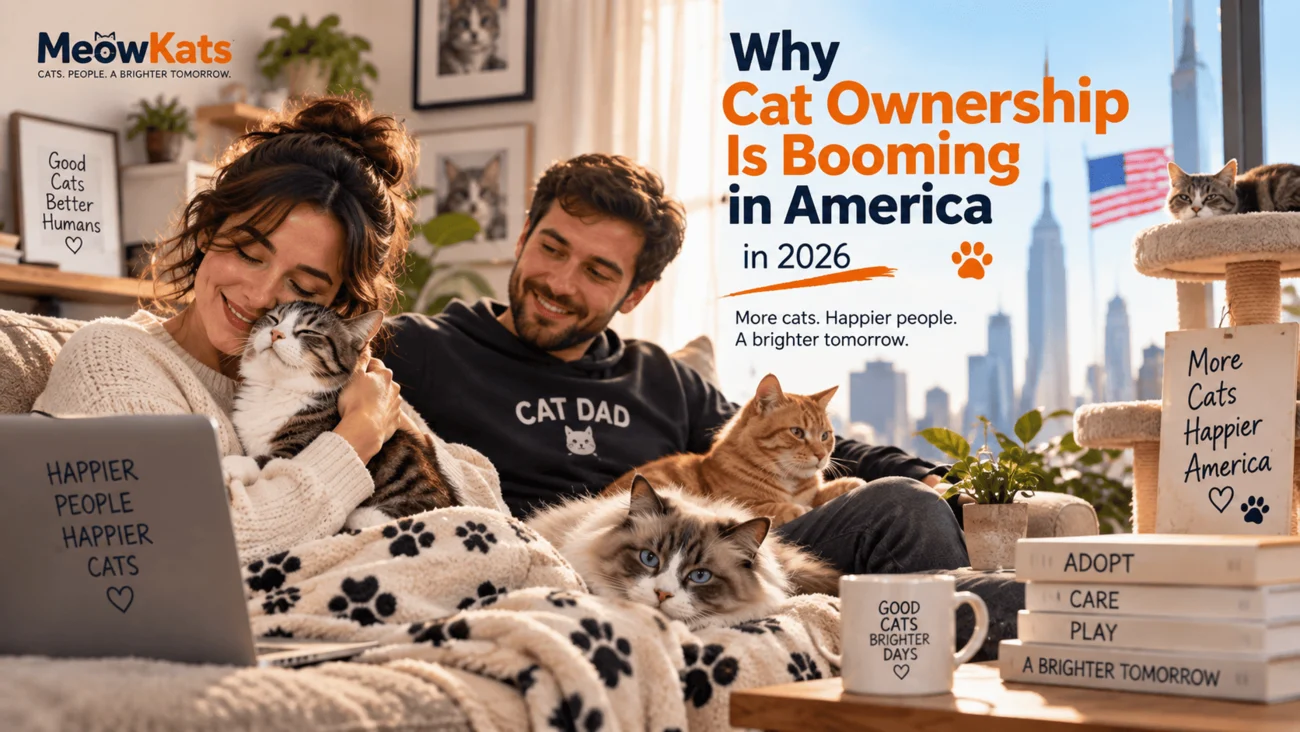
Cats are having a moment in America, and the latest numbers suggest this is much more than another internet trend. New research from the American Pet Products Association (APPA) shows that 53 million U.S. households owned at least one cat in 2025, representing about 39% of American households and a 5% increase from the previous year.
But the most interesting part of the story is not simply that more Americans are living with cats. The people bringing cats into their homes are changing. Younger adults are becoming a larger part of the cat-owning population, more men are openly embracing life as “cat dads,” and multi-cat households are becoming more common.
At the same time, owners are paying closer attention to nutrition, enrichment, comfort, behavior, and the emotional bond they share with their cats. Together, these changes are reshaping cat ownership in America.
So why are cats becoming increasingly popular in the United States, and what does this shift tell us about the changing relationship between Americans and their feline companions?
Outline Preview — What You’ll Learn
- America Is Becoming More Feline
- Gen Z Is Changing Cat Ownership
- Why Cats Fit Modern American Life
- The Rise of the American Cat Dad
- Multi-Cat Households Are Growing
- Americans Are Spending Differently on Their Cats
- Social Media and America’s Cat Culture
- Adoption Remains Part of the Story
- Choosing the Right Cat Matters More Than Following a Trend
- Modern Cat Care Is Becoming More About Enrichment
- The Human-Cat Bond Is Becoming More Visible
- What Comes Next for America’s Cat Boom?
- Frequently Asked Questions
America Is Becoming More Feline
For generations, the United States has often been portrayed as a dog-loving country. Dogs remain extremely popular, but cats are gaining ground in millions of American homes. According to APPA’s 2026 Cat Report, which draws on its 2025 National Pet Owners Survey, 53 million U.S. households owned cats in 2025. That figure represented 39% of American households and a 5% year-over-year increase.
The growth followed an especially strong 2024, when the number of cat-owning households increased significantly. This rise is happening within an enormous American pet economy. APPA reports that total U.S. pet industry expenditures reached approximately $158 billion in 2025, with spending projected to continue growing in 2026.
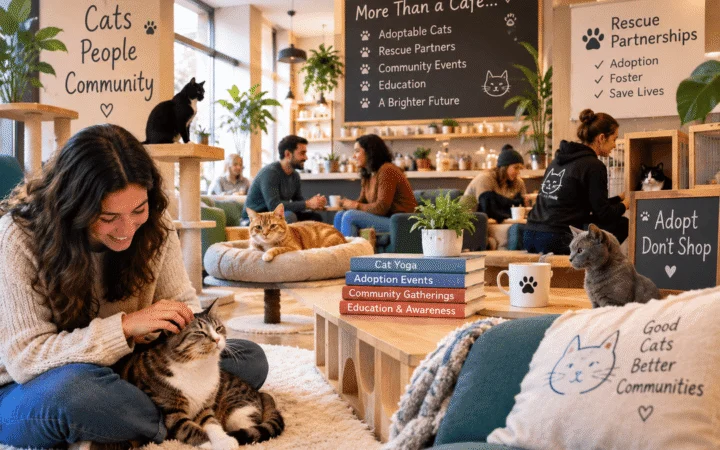
Yet the story is bigger than sales. For many Americans, cats are increasingly viewed as family members rather than simply animals that live in the home. People are thinking more carefully about where their cats sleep, what they eat, how they play, how they experience the home, and what makes them feel secure.
That represents a meaningful cultural shift. Owning a cat today is increasingly connected with understanding the animal behind the adorable photos, funny videos, and internet memes.
Gen Z Is Changing What Cat Ownership Looks Like
One of the clearest findings in the latest American cat ownership data involves Generation Z. APPA reports that Gen Z now represents about 22% of U.S. cat owners, with the number of Gen Z cat owners increasing year over year.
This matters because younger adults are not simply adding more cats to American households. They are also helping change the culture surrounding cat care. For many younger owners, a cat can be a companion, family member, social-media personality, source of comfort, and part of daily life all at once.
They are also growing up in an environment where information about feline behavior is widely accessible. A new owner can watch a veterinarian explain hydration, learn how to introduce two cats, discover why scratching is normal behavior, compare litter systems, or learn how to recognize subtle feline body language.
That access to information has the potential to create more informed owners, but it can also create confusion. Social media mixes useful advice with trends, marketing, personal opinions, and sometimes misinformation. Younger owners therefore face a new challenge: deciding which advice is genuinely useful for their cat.
The strongest trend may not be that Gen Z spends differently. It may be that younger cat owners increasingly want to understand why their cats behave the way they do. That curiosity can ultimately improve the relationship between cats and people.
Why Cats Fit Modern American Life
There is no single explanation for the rise of cat ownership in America, but modern lifestyles are probably one part of the picture. Cats can adapt successfully to many types of homes when their physical and behavioral needs are properly met. They can live in houses, condos, apartments, and other indoor environments without requiring outdoor walks several times every day.
That does not mean cats are “no-maintenance” pets. A healthy cat still needs appropriate food, clean water, veterinary care, litter-box maintenance, exercise, interaction, safe places to rest, opportunities to scratch, and regular mental stimulation.
However, their daily routine may fit naturally into the lives of many Americans who work long hours, live in apartments, work from home, travel occasionally, or balance several responsibilities. Cats can also be remarkably flexible companions. Some enjoy sitting beside a person working at a computer, while others spend the afternoon sleeping near a sunny window and become active when their family returns home.
Many cats learn household routines and seem to know exactly when breakfast, playtime, or bedtime should happen. That ability to share human spaces without requiring constant direct interaction is one reason cats can fit so well into modern life.
But convenience should never be confused with simplicity. A cat may look independent while still depending heavily on its human family for safety, health, enrichment, and social connection.
The Rise of the American “Cat Dad”
Another notable change is happening among male cat owners. According to APPA, men account for about 43% of U.S. cat owners, while cat ownership among Gen Z men has also increased substantially year over year.
That challenges an old stereotype. For years, popular culture often presented cats as pets primarily associated with women, while dogs were more frequently marketed as companions for men. Real households were always more complicated than that stereotype, and today the image is becoming increasingly difficult to sustain.
Men post videos of their cats, build climbing walls, foster kittens, volunteer with rescues, compare foods, buy cat furniture, and learn about feline behavior. Some even run entire social-media accounts dedicated to their cats.
The modern American “cat dad” can be a college student, father, gamer, office worker, remote employee, retiree, creator, or someone living alone. There is no single profile.
That broader acceptance may be beneficial for cats because it removes unnecessary cultural barriers around who is “supposed” to enjoy feline companionship. A meaningful relationship with an animal is not gender-specific.
One Cat Is Increasingly Becoming Two—or Three
America’s cat boom is not only being driven by people getting their first cat. Many existing cat owners are adding another feline to the household. APPA reports that ownership of two cats has increased compared with previous years, while the number of households with three or more cats has risen sharply since 2018.
It is easy to understand the appeal. Someone who has built a strong relationship with one cat may naturally begin thinking about adopting another. Some owners also hope their cat will enjoy feline companionship while they are away from home.
But adding another cat is not automatically simple. Cats are individuals. One cat may immediately become curious about a newcomer, while another may find the change stressful. Age, temperament, socialization, previous experiences, energy level, health, territory, and available space can all affect how two cats respond to each other.
Successful multi-cat households usually require enough resources for everyone. That can mean multiple litter boxes, separate feeding areas when necessary, several sleeping locations, scratching surfaces, hiding spaces, vertical territory, toys, and places where each cat can retreat without being followed.
Introductions should also be gradual rather than forced. The growing popularity of multi-cat homes makes feline behavior education more important than ever. Living with several cats can be deeply rewarding, but the goal should be creating a home where each cat feels secure.
Americans Are Spending Differently on Their Cats
The rise in cat ownership is also changing consumer behavior. APPA found that U.S. cat owners spent an average of approximately $337.53 on cat food in 2025, an increase from the previous year.
But the changing cat-care market is about more than buying additional bags or cans of food. American owners now encounter an enormous range of products, including wet food, dry food, freeze-dried options, toppers, treats, fountains, automatic feeders, interactive toys, scratching furniture, cat trees, window beds, tracking devices, cameras, grooming products, litter systems, and enrichment tools.
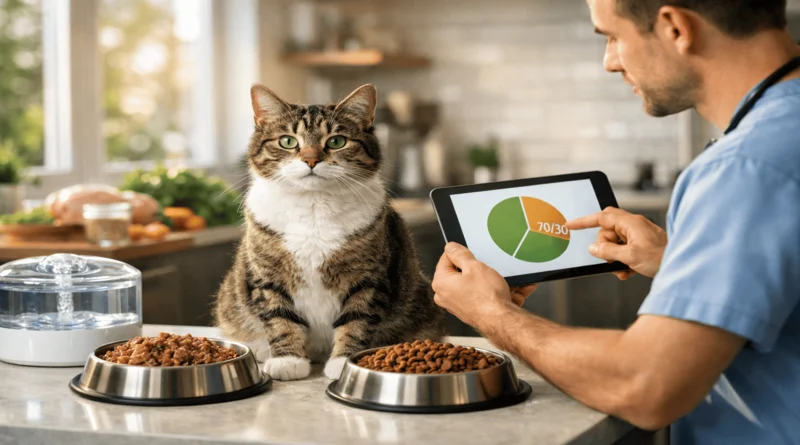
That variety gives owners more choices, but more choices are not always better choices. A higher price does not automatically mean a product is healthier or more appropriate for a particular cat. Good cat care should be based on the animal’s actual needs.
A young active cat may need different feeding and enrichment strategies from a senior cat. A long-haired breed may require more grooming, while a cat with a medical condition may need veterinary guidance before any major dietary changes.
Owners should also remember that some of the best enrichment tools are inexpensive. A cardboard box, simple wand toy, secure window perch, or rotated collection of familiar toys can provide plenty of entertainment. Responsible ownership is not measured by how much money someone spends; it is measured by whether the cat’s physical and behavioral needs are being met.
Social Media Helped Turn Cats Into Cultural Stars
Cats were famous online long before the current increase in American ownership. From early internet memes to today’s TikTok clips, Instagram Reels, YouTube Shorts, Reddit communities, and viral rescue stories, cats have become some of the internet’s most recognizable personalities.
Their appeal works especially well in short-form video. A cat staring dramatically at an empty food bowl, racing through the house at midnight, squeezing into a tiny box, chirping at birds, or interrupting a video call can tell an entire story in seconds.
But online cat culture does more than entertain. It exposes millions of people to everyday feline behavior. Someone who has never owned a cat can watch kittens grow, follow a foster cat through adoption, learn how cats communicate, discover breeds they have never encountered, or see how another owner has created an enriching indoor environment.
This creates a powerful cultural loop. People live with cats and share those cats online. Other people become interested, and some eventually adopt cats of their own and begin sharing their experiences too.
Social media should not be treated as the sole explanation for rising cat ownership. However, it clearly contributes to the visibility of cats in American culture.
Adoption Remains an Important Part of the Story
Growing interest in cats also matters for animal shelters and rescue organizations. According to ASPCA and Shelter Animals Count data, approximately 3 million cats entered U.S. shelters and rescues in 2025, while about 2.2 million cats were adopted during the same year.
Those are large numbers, and they remind us that America’s growing affection for cats exists alongside continued pressure on shelters and rescue groups. For someone who is genuinely ready to welcome a cat, shelters and rescues can offer animals with many different personalities, ages, coat types, energy levels, and backgrounds.
Kittens naturally attract attention, but adult cats can be excellent companions too. An adult cat may already have a more established personality, making it easier for adopters to understand whether that cat prefers a quiet environment, enjoys other animals, seeks frequent attention, or values personal space.
Senior cats also deserve consideration. Many are calm companions that can thrive in the right home. Adoption should never happen simply because cats are currently popular.
A cat may live well into its teens, and some live for around two decades. Bringing one home means accepting responsibility that can continue through moves, job changes, relationships, family changes, financial challenges, and different stages of life.
The best adoption is not the fastest adoption. It is the one that creates a stable and compatible home for the cat.
Choosing the Right Cat Matters More Than Following the Trend
The growth of cat ownership is exciting, but popularity should never replace preparation. The right cat for one household may be completely wrong for another.
Some people want an energetic companion that follows them through the house and constantly looks for play. Others prefer a calmer cat that is comfortable spending more time independently. Some cats thrive in active family homes, while others do better in quiet environments. Some enjoy other cats, while others prefer being the only feline in the house.
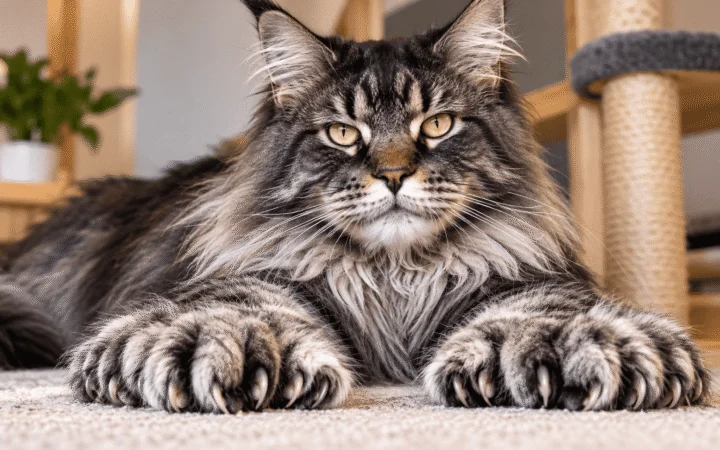
Breed can provide useful information about physical characteristics and general tendencies, particularly with pedigreed cats. However, breed never guarantees an individual personality. Age, health, socialization, early experiences, environment, and temperament all matter.
Before choosing a cat, consider your daily routine, living space, activity level, other pets, children, grooming preferences, budget, and the amount of interaction you want. It is also worth asking whether your home offers enough opportunities for climbing, hiding, resting, scratching, and play.
MeowKats tools such as the Cat Breed Finder, Cat Breed Directory, and Cat Breed Comparison can help potential owners explore these differences before making a decision.
The objective is not to identify the “best” cat. It is to understand which type of feline companion is most compatible with a person’s real lifestyle.
Modern Cat Care Is Becoming More About Enrichment
One of the most positive developments in modern cat ownership is growing interest in enrichment. For years, indoor cat care was sometimes reduced to a short checklist: food, water, litter box, and somewhere to sleep. Those things are essential, but they are not the whole picture.
Cats are active predators with complex behavioral needs. They climb, scratch, chase, hide, observe, explore, stalk, pounce, rest in protected spaces, watch movement from high places, investigate smells, interact with people, and develop routines.
A good indoor environment gives them safe ways to express those behaviors. That may include scratching posts, cat trees, shelves, window perches, tunnels, puzzle feeders, hiding spots, cardboard boxes, rotating toys, and daily interactive play.
Vertical space is particularly valuable because cats experience a room differently from humans. A bookshelf, cat tree, secure wall shelf, or high resting platform can effectively make a small room feel much larger to a cat.
Play also deserves attention. A few focused play sessions with a wand-style toy may provide more stimulation than leaving dozens of toys on the floor all day. Enrichment does not need to be complicated or expensive; it simply requires looking at the home from the cat’s perspective.
The important question is no longer only, “Does my cat have everything needed to survive?” A better question is, “Does my cat have opportunities to behave like a cat?”
The Human-Cat Bond Is Becoming More Visible
Perhaps the most important part of America’s cat boom cannot be measured through household counts or spending statistics. It is the relationship itself.
Cats have often been described as distant, mysterious, or less attached to people than dogs. That stereotype misses much of what happens inside real homes.
A cat may follow its favorite person from room to room, sleep beside them every night, wait near the door when they return home, chirp when spoken to, sit beside them while they work, bring a toy, rub against their legs, or simply choose to remain nearby.
Feline affection can be subtle. Some cats enjoy being held, while others dislike being picked up but constantly remain within a few feet of their person. Some are vocal, while others communicate primarily through posture, eye contact, movement, and routine.
Learning those differences is part of building a strong relationship. APPA’s latest research indicates that younger owners report particularly strong emotional connections with their cats.
A cat may be present during remote work, career changes, moves, relationships, family changes, celebrations, and ordinary quiet evenings at home. Cats do not solve human problems, but companionship has value, and more Americans appear comfortable acknowledging just how meaningful that companionship can become.
What Comes Next for America’s Cat Boom?
It is tempting to describe 2026 as the beginning of an American “cat era.” The numbers certainly show momentum. More households are living with cats, younger Americans represent a growing part of the cat-owning population, male cat ownership is increasingly visible, and multi-cat households are more common.
Yet the most valuable outcome would not simply be more cats in more homes. It would be better-informed cat ownership.
Growing popularity creates an opportunity for owners to learn more about feline behavior, nutrition, health, enrichment, adoption, breed characteristics, responsible introductions, and long-term care. It can also help challenge old myths.
Cats are not completely solitary animals that never need attention. They do not misbehave out of revenge. Scratching is normal feline behavior. A cat that hides may be communicating fear, discomfort, or a need for space. Changes in appetite, litter-box habits, energy, or behavior can matter.
The more people understand those details, the better life becomes for both cats and the humans who live with them.
America’s current cat boom may have been influenced by changing lifestyles, demographics, social media, and broader cultural trends. Where it goes next depends on what people do with that interest.
If popularity leads to more thoughtful adoption, stronger human-animal relationships, better enrichment, responsible health care, and greater understanding of feline behavior, then the real story will not simply be that America has more cat owners.
It will be that America is learning how to become better at living with cats.
Frequently Asked Questions
How many American households own cats?
The latest APPA data available in 2026 reports that approximately 53 million U.S. households owned cats in 2025. That represents about 39% of American households.
Is cat ownership increasing in the United States?
Yes. APPA reported a 5% year-over-year increase in cat-owning households in 2025. Multi-cat ownership has also grown compared with earlier years.
Are younger Americans becoming more interested in cats?
Yes. Gen Z represents approximately 22% of U.S. cat owners in APPA’s latest report, and the number of Gen Z cat owners increased year over year.
Are more men becoming cat owners?
Yes. APPA reports that approximately 43% of U.S. cat owners are men. Cat ownership among Gen Z men has also increased.
Are multi-cat households becoming more common?
Yes. APPA data shows growth in households with two cats as well as households with three or more cats. The increase in multi-cat homes has been especially notable since 2018.
Why are cats becoming more popular in America?
There is probably no single reason. Modern living arrangements, companionship, social-media visibility, changing attitudes toward cats, and greater awareness of feline behavior may all contribute.
Are cats really low-maintenance pets?
Cats may require a different daily routine from dogs, but describing them as low-maintenance can be misleading. They still need veterinary care, good nutrition, clean litter boxes, enrichment, exercise, scratching opportunities, and regular social interaction.
How many cats were adopted from U.S. shelters in 2025?
According to ASPCA and Shelter Animals Count data, approximately 2.2 million cats were adopted from U.S. shelters and rescues in 2025. Around 3 million cats entered shelters and rescues during the year.
Should I adopt a cat because cats are trending?
No. Adoption should be based on long-term readiness, lifestyle compatibility, housing stability, financial responsibility, and the ability to care for the cat throughout its life.
How can I choose the right cat for my lifestyle?
Consider your daily routine, living space, activity level, other pets, children, grooming preferences, budget, and the amount of interaction you want. Breed information can help, but age, temperament, health, socialization, and individual personality are equally important.
References
American Pet Products Association (APPA). “Gen Z and Cat Dads Are Leading Cat Ownership’s Cultural Boom: New APPA Report Reveals What’s Driving Growth in America’s Feline Household.” Published September 14, 2026.
American Pet Products Association — 2026 Cat Report
American Pet Products Association (APPA). “2026 State of the Industry Report.” U.S. pet industry expenditures reached $158 billion in 2025.
American Pet Products Association — State of the Industry
ASPCA / Shelter Animals Count. U.S. Animal Shelter Statistics. National estimates for shelter intake and adoption.
ASPCA — U.S. Animal Shelter Statistics
Last reviewed: September 2026. Statistics cited in this article reflect the most recent national data available from the sources listed above at the time of publication.