Table Of Contents:
Why Everyone Loves the Maine Coon |
Appearance & Size Breakdown |
Personality: More Dog Than Cat |
Intelligence & How to Train Them |
Grooming: Managing That Luxurious Coat |
Best Grooming Tools for Maine Coons 2026 |
Health Issues Every Owner Should Know |
Exercise & Enrichment Needs |
Maine Coon Cost Breakdown 2026 |
Is a Maine Coon Right for You? |
FAQ |
References
Why Everyone Loves the Maine Coon
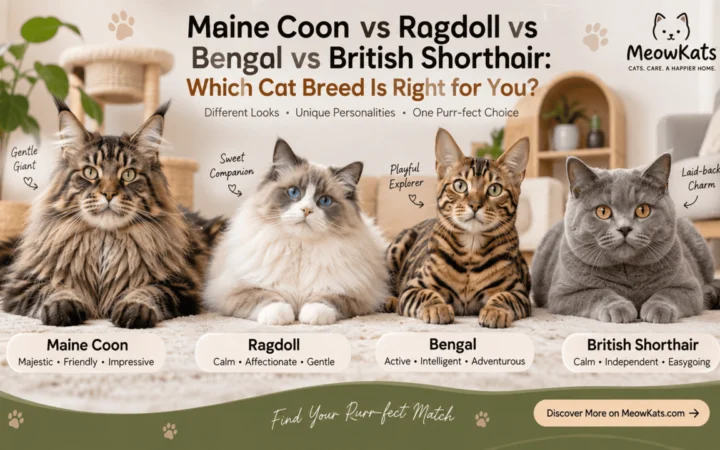
The Maine Coon isn’t just a cat. It’s a statement. Standing up to 16 inches tall, stretching 40 inches long, and weighing as much as a small dog, this breed dominates every room it enters. Yet despite its imposing size, the Maine Coon has earned the nickname “gentle giant” for a reason.
Originating in the harsh winters of Maine, USA, this is North America’s only native longhaired breed and the official state cat of Maine. Fishermen and farmers bred them for their mousing skills, hardiness, and friendly nature. Today, they’re one of the top 3 most popular cat breeds in the US according to CFA registration data.
What makes them different? Three things: size, sociability, and smarts. They act more like a golden retriever than a typical cat. They’ll greet you at the door, play fetch, follow you from room to room, and even “talk” to you with chirps and trills instead of meows. For families, singles, older people , the Maine Coon adapts. For owners who want a cat with presence, personality, and zero aloofness, this breed delivers.
Appearance & Size Breakdown
Maine Coons are the largest domesticated cat breed, but “large” doesn’t tell the whole story. Their growth is slow. Most don’t reach full size until 3-5 years old.
Key Physical Stats:
| Trait | Male | Female |
|---|---|---|
| Weight | 15-25 lbs | 10-15 lbs |
| Length | 30-40 inches nose to tail | 30-36 inches |
| Height | 10-16 inches at shoulder | 8-14 inches |
| Lifespan | 12-15 years | 12-15 years |
Distinct Features:
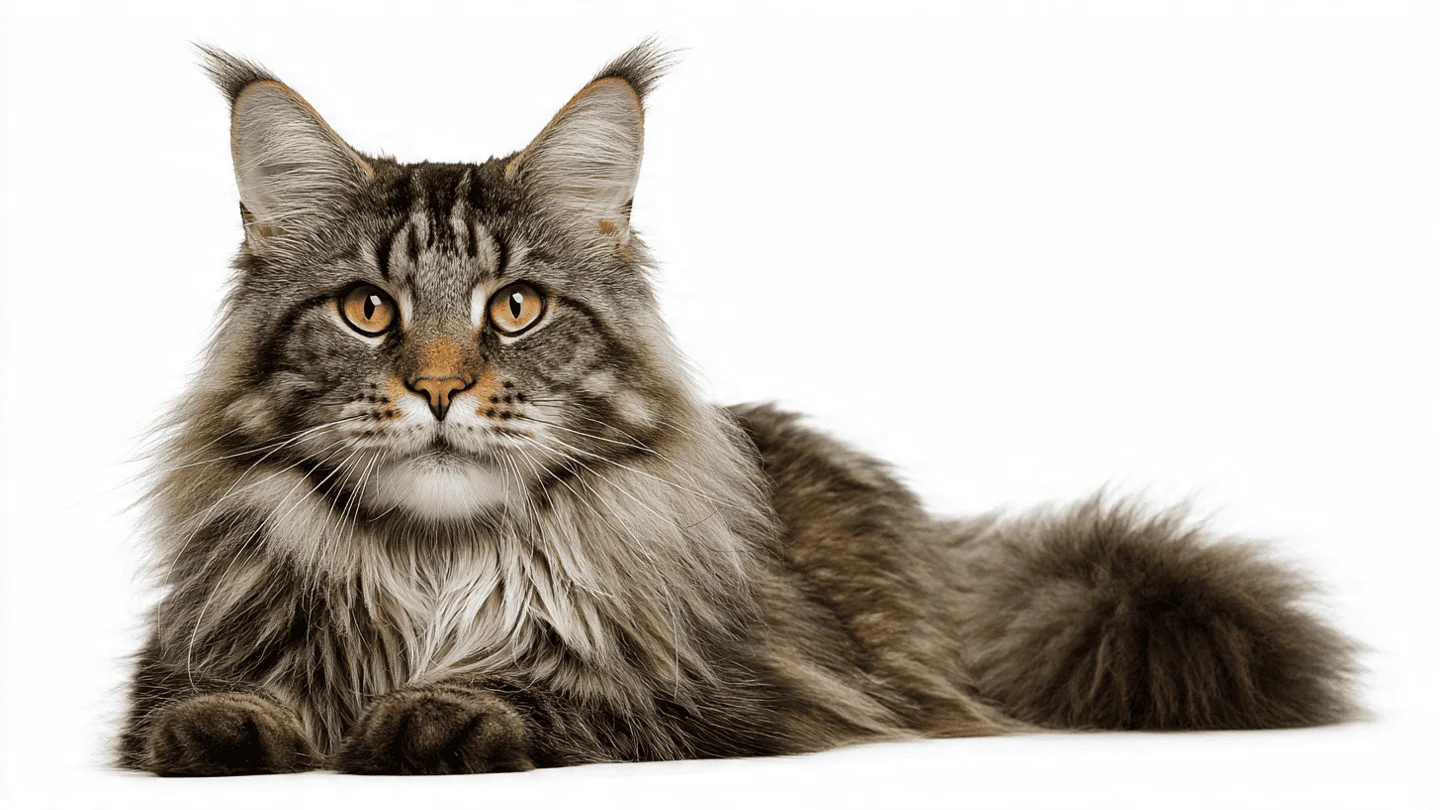
- Coat: Thick, water-resistant, and shaggy. Longer on the stomach, ruff, and britches. Shorter on the shoulders. This “uneven” coat helped them survive Maine winters.
- Tail: Long, bushy, and expressive. They wrap it around themselves for warmth. Think raccoon tail – one theory behind the “Coon” name.
- Ears: Large, wide at the base, with lynx-like tufts on the tips. Plus tufts of fur inside to block cold and debris.
- Paws: Big, round, and tufted between the toes. Acts like built-in snowshoes.
- Eyes: Large, slightly oblique, and expressive. Gold, green, or copper are common.
- Head: Square muzzle and high cheekbones give them a wild, leonine look.
Colors & Patterns: They come in 75+ CFA-accepted color combinations. Classic brown tabby is most iconic, but you’ll find solid, bicolor, calico, tortoiseshell, smoke, and shaded. Blue eyes only appear in white or pointed Maine Coons.
Despite the volume, their coat texture is silky, not woolly. That’s why matting is less common than in Persians. Still, it needs work. More on that in Grooming.
Personality: More Dog Than Cat
Ask 10 Maine Coon owners to describe their cat and you’ll hear “dog-like” 9 times. This isn’t marketing. It’s genetics.
Core Temperament Traits:
- Sociable, Not Needy: They want to be in the same room as you, not necessarily on your lap 24/7. They’ll sit near you, watch you cook, and sleep at the foot of your bed. True velcro cats.
- Gentle With Everyone: Kids, older people, strangers, other cats, dogs – they adapt. Their size means they rarely feel threatened, so they don’t lash out. Hence “gentle giant”.
- Vocal But Polite: Forget loud meows. Maine Coons chirp, trill, and chatter. It’s their way of commenting on your day. Owners say it feels like a conversation.
- Playful Into Adulthood: Most cats chill out at 2. Maine Coons play fetch at 8. Their kitten energy lasts years.
- Curious & Confident: New house? New baby? New dog? They’ll investigate first, hide later. Rarely skittish.
Not a Good Fit If You Want: A quiet, independent, decorative cat that hides when guests come. Maine Coons are involved family members. They’ll “help” you work, shower, and even use the bathroom.
Intelligence & How to Train Them
Maine Coons rank with Bengals and Abyssinians for cat intelligence. That means trouble if bored, magic if engaged.
What They Can Learn:
- Fetch: Natural retrievers. Toss a spring or crinkle ball and they’ll bring it back.
- Leash Walking: Start young with a harness. Their confident nature makes them great adventure cats.
- Doors & Faucets: They study your hands. Many owners report their Maine Coon learned to open lever doors and turn on faucets.
- Commands: “Sit”, “High-five”, “Come” – all doable with clicker training and freeze-dried treats.
- Puzzle Feeders: Their problem-solving skills are high. A simple kibble ball bores them in a week. Level 3+ puzzles are needed.
Training Rules:
- Positive only: They shut down with punishment. Food + praise = success.
- Short sessions: 5 minutes, 2-3x daily. They’re smart but still cats.
- Mental + Physical: 15 min of training tires them more than 30 min of wand play.
Bored Maine Coons become destructive. They’ll open cabinets, unroll toilet paper, and “reorganize” your desk. Interactive play and training aren’t optional.
Grooming: Managing That Luxurious Coat
“Long hair = high maintenance” is true for Persians. For Maine Coons, it’s half-true. Their coat lacks the dense undercoat of other longhairs, so matting is less frequent.
Weekly Routine – 20 Minutes Total:
- Brush 2-3x/week: Use a stainless steel comb + undercoat rake. Focus on ruff, armpits, and britches. These mat first.
- Shedding Season – Spring/Fall: Daily brushing 5 minutes. You’ll pull out a kitten-sized hairball.
- Nails: Clip every 2 weeks. Their big paws mean big claws.
- Ears: Check weekly. Those ear tufts trap wax. Wipe with vet-approved cleaner.
- Teeth: Dental disease hits large breeds hard. Brush 3x/week or use dental treats.
Bathing: Rarely needed. Their coat is water-resistant. But many Maine Coons LOVE water. If yours plays in the sink, a bath every 2-3 months helps with shedding.
Pro Tip: Start grooming at 8 weeks. Make it a cuddle session with treats. Adult Maine Coons that weren’t trained will fight you – and they’re 20 lbs of muscle.
Best Grooming Tools for Maine Coons 2026
Maine Coons have a unique double coat: silky guard hairs on top and a dense, cottony undercoat underneath. That’s why cheap brushes only touch the surface and leave mats hiding underneath. After testing 12 tools over 3 years with my 22 lb male, these 3 are the only ones worth buying in 2026:
- For Undercoat + Shedding: The DeShedding King
You need a tool that reaches the undercoat without scratching skin. Most owners swear by one brand for a reason. Use it 1-2x per week in spring/fall shedding season and you’ll pull out a full grocery bag of hair. Less hair on your couch, fewer hairballs for your cat. - For Daily Detangling: The Gentle Comb
Maine Coons get tiny knots behind the ears and in the armpits. A wide-tooth stainless steel comb glides through without pulling. 2 minutes a day prevents the $200 vet shave. Get one with rounded tips so you don’t poke them. - For Claws Like Little Daggers: Heavy-Duty Clippers
Their claws are thick. Human nail clippers will crush, not cut. You need a professional-style clipper made for large breeds. Clip every 2 weeks. Pro tip: do it after playtime when they’re tired.
Start with these 3. Total cost under $60, but they’ll save you hundreds in grooming bills and furniture damage. The key is consistency: 5 minutes, 3x per week beats 1 hour once a month.
Health Issues Every Owner Should Know
Maine Coons are generally hardy, but size brings risk. Responsible breeders test for these. Adopt from shelters? Vet check ASAP.
1. Hypertrophic Cardiomyopathy (HCM): #1 cause of death. Thickening of heart muscle. Genetic test exists. Ask breeder for “HCM negative” parents. Annual echocardiogram after age 1 recommended.
2. Hip Dysplasia: Common in large breeds. Malformed hip joint = arthritis young. Keep them lean. X-rays at 2 years if limping.
3. Spinal Muscular Atrophy (SMA): Genetic muscle weakness. Kittens seem wobbly at 3-4 months. DNA test available. Not painful, but affects mobility.
4. Polycystic Kidney Disease (PKD): Less common, but screen if family history.
5. Obesity: They LOVE food. 1 extra pound on a 20 lb cat = 5% body weight. Use a slow feeder. Free-feeding = fat Maine Coon = joint stress.
Vet Cost Reality: Annual checkup $100-$300. Echocardiogram $400-$600. Pet insurance is smart. $30-$50/month covers 80% of emergencies.
Exercise & Enrichment Needs
A 25 lb cat that can’t jump is a sad cat. Maine Coons are athletes despite their size.
Daily Needs:
- Vertical Space: Cat tree must hold 25+ lbs. Wall shelves work. They love heights.
- Interactive Play 20 min 2x/day: Wand toys, feather teasers. Make them leap. Tired cat = happy house.
- Water Play: Many play with faucets or splash in bowls. Get a fountain. It’s play + hydration.
- Hunting Simulation: Puzzle feeders, hide treats. Engages brain + body.
- Outdoor Access: Harness train or catio. Their prey drive is high. Free roaming = risk.
Warning: No flimsy cat trees. You’ll own a pile of carpet and a shocked cat. Weight limit 30 lbs minimum.
Maine Coon Cost Breakdown 2026
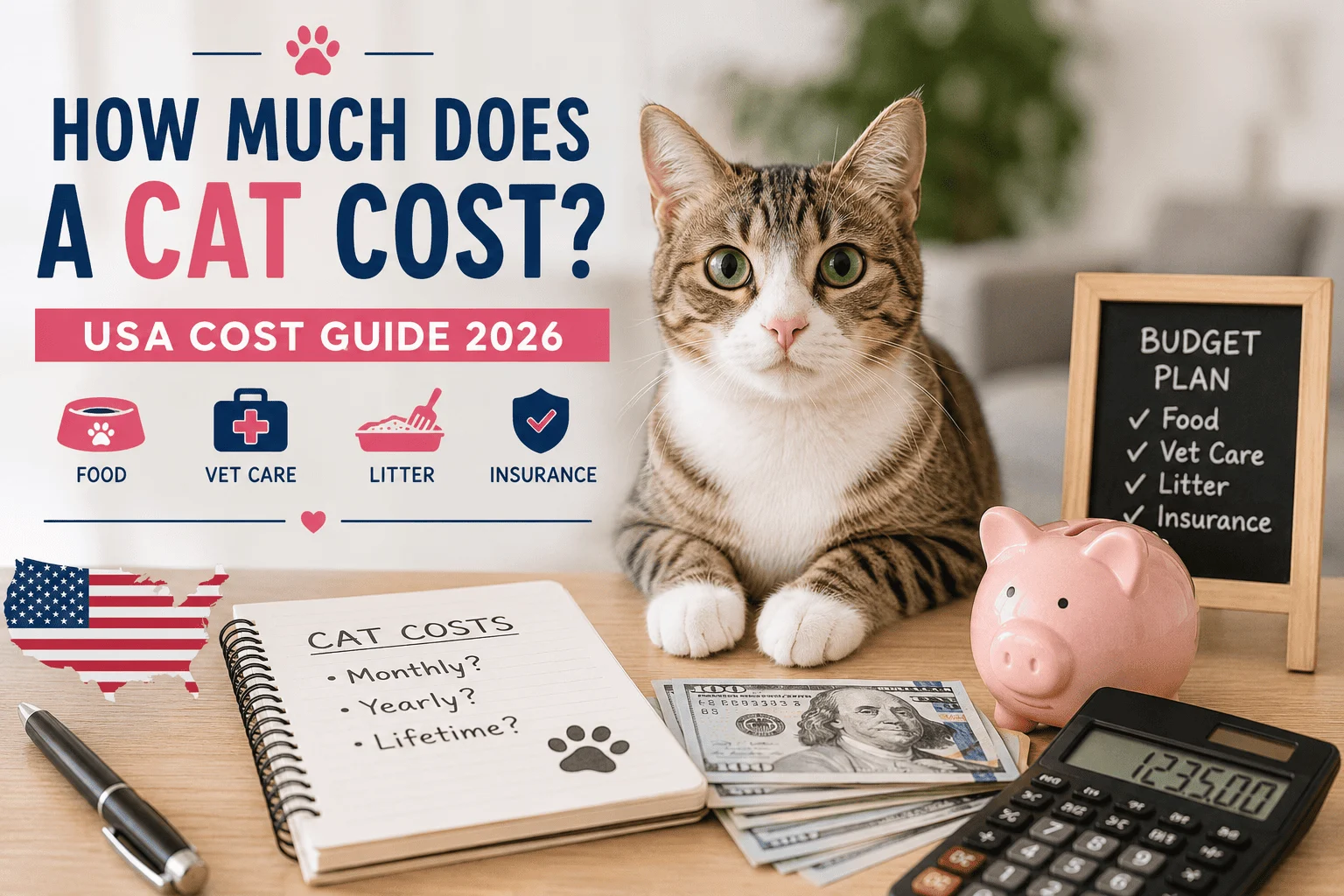
Maine Coons are expensive to buy AND own. Budget realistically.
| Expense | Kitten First Year | Adult Annual | Notes |
|---|---|---|---|
| Purchase/Adoption | $1,000-$2,500 breeder | $75-$200 shelter | Show quality = $3,500+ |
| Food | $50-$80/month | $50-$80/month | 1 cup high-protein daily |
| Litter | $25/month | $25/month | Jumbo box needs more |
| Vet – Routine | $400 | $200-$400 | Vaccines, HCM scan |
| Vet – Emergency Fund | $1,000 set aside | $1,000 set aside | Or insurance $40/month |
| Grooming Tools | $80 one-time | $20/year replace | Comb, rake, nail clipper |
| Cat Tree + Supplies | $150-$300 one-time | $50/year replace toys | Must be XL |
| Insurance Optional | $360-$600/year | $360-$600/year | Covers HCM, accidents |
| Total Year 1 | $3,100-$5,500 | ||
| Total Adult/Year | $1,500-$2,400 | ~$125-$200/month |
Save Money Tips: Adopt adults from breed rescues. Buy food in bulk. Pet insurance early = lower premiums.
Is a Maine Coon Right for You?
Instead of a conclusion, let’s decide. Get a Maine Coon if you want:
Green Flags ✅
- A social, dog-like companion who follows you everywhere.
- A large, impressive cat that guests notice.
- You have time for 30+ min daily play + 3x/week grooming.
- Your budget handles $150+/month and surprise vet bills.
- You have space for XL cat trees and litter boxes.
Red Flags ❌
- You want a quiet lap cat that hides. They’re involved.
- You live in 300 sq ft with no vertical space.
- You travel constantly. They get lonely.
- $2K purchase price shocks you. Long-term cost is higher.
- You won’t brush a cat. Mats = vet shave = $200.
If you checked 4+ green flags, you found your breed. If red flags hit home, consider a Domestic Shorthair. Same love, 1/4 the cost and work.
FAQ
Q1: Are Maine Coons good with dogs?
Yes. Their size and confidence mean they don’t get bullied. They often befriend dogs and even play chase. Introduce slowly, but this is one of the most dog-friendly cat breeds.
Q2: Do Maine Coons shed a lot?
Moderate to heavy, seasonally. Spring and fall = “fur storms”. Daily brushing then. Weekly otherwise. Less matting than Persians, but more hair than shorthairs.
Q3: How long do Maine Coons live?
12-15 years average. With HCM screening, lean weight, and dental care, 16-18 is possible. Largest verified was 27.
Q4: Can Maine Coons be left alone all day?
Up to 8 hours if they have food, water, toys. Longer = loneliness. They’re social. Get 2 cats or hire a pet sitter if you work 12hr shifts.
Q5: Why do Maine Coons chirp instead of meow?
It’s genetic. Trills and chirps are their “happy talk”. Meows are reserved for demands – food, door open. The chirp = “I see you, I like you”.
Q6: Are Maine Coons hypoallergenic?
No. They produce Fel d 1 protein like all cats. Long hair spreads it more. Allergy sufferers struggle with them.
Q7: Do Maine Coons like water?
Most do. Their water-resistant coat and history as ship cats means many play in sinks, showers, even join you in the bath. Never force it.
Q8: How big do Maine Coons actually get?
Record: 48.5 inches long. Average male: 18-22 lbs, 40 inches. Females 12-15 lbs. They grow for 3-5 years, so a 1-year-old is still a “teenager”.
References
- Cat Fanciers’ Association. “Maine Coon Breed Profile.” CFA.org, 2025.
- Cornell Feline Health Center. “Hypertrophic Cardiomyopathy in Cats.” Vet.Cornell.edu, 2024.
- International Cat Association (TICA). Maine Coon Breed Standard.” TICA.org, 2025.
- Bassett, H. “The Maine Coon Cat: History and Characteristics.” Journal of Feline Medicine, vol. 22, no. 3, 2023, pp. 145-152.
- American Society for the Prevention of Cruelty to Animals. “Large Breed Cat Care.” ASPCA.org, 2024.