Article Outline
- Here’s the Truth About Indoor Cats
- Safe Does Not Always Mean Stimulating
- What an Indoor Cat Actually Needs
- 7 Signs Your Indoor Cat May Be Struggling
- Lifespan vs. Quality of Life
- Outdoor Risks vs. Indoor Risks
- What Cat Care Can Cost in the USA
- The Hidden Costs of Cat Care
- 5 Ways to Make Indoor Life Better
- DIY Cat Enrichment for $20 or Less
- The Bottom Line
- Frequently Asked Questions
- References
Here’s the Truth About Indoor Cats
Keeping a cat indoors can dramatically reduce exposure to traffic, animal fights, parasites, predators, toxins, and infectious disease. For that reason, many veterinarians and animal-welfare organizations recommend an indoor lifestyle or controlled outdoor access.
However, physical safety is only one part of feline welfare. Cats also need opportunities to climb, scratch, hide, explore, play, hunt, forage, rest, and interact on their own terms.
Therefore, the real question is not simply, “Should cats live indoors or outdoors?” A better question is: “Does my cat’s environment meet both its physical and behavioral needs?”
Fortunately, an indoor cat does not need a huge house or an expensive collection of toys to enjoy a good life. Instead, thoughtful environmental design can transform even a small apartment into an interesting feline territory.
This guide looks at the risks on both sides. It also explains warning signs of chronic stress or low engagement, practical enrichment ideas, and the real costs associated with keeping a cat healthy in the United States.
Safe Does Not Always Mean Stimulating
Cats may spend much of the day resting, yet they are still active predators by nature. Their behavior includes stalking, chasing, climbing, scratching, scent marking, hiding, observing, and searching for resources.
Consequently, an indoor environment can become frustrating when everything stays exactly the same. A food bowl appears in the same place. The same toys remain on the floor. There is nowhere new to climb, explore, or investigate.
Predatory behavior matters
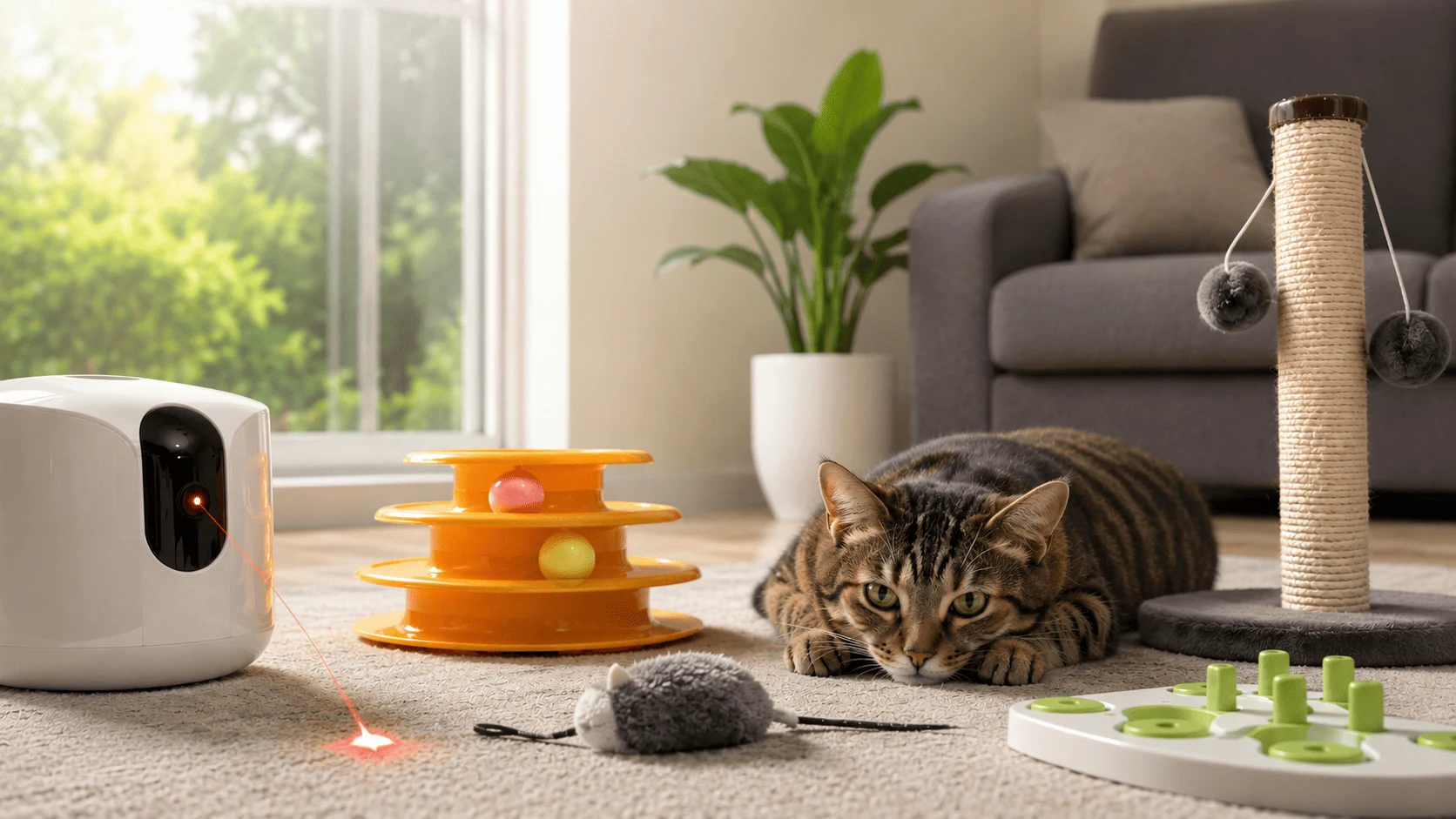
Cats are naturally motivated to stalk and capture prey. Of course, a pet cat does not need to hunt wildlife to satisfy this behavior. Wand toys, food puzzles, treat hunts, and short interactive play sessions can simulate parts of the hunting sequence safely indoors.
In addition, changing how food is offered can make daily life more interesting. Instead of serving every meal in one bowl, owners can occasionally use puzzle feeders or hide small portions in safe locations around the home.
Territory is three-dimensional
People often measure a home only by floor area. Cats see territory differently. Shelves, window perches, cat trees, furniture, hiding places, and elevated resting areas can dramatically increase the usable space available to them.
As a result, a relatively small apartment can still offer several distinct feline zones for sleeping, climbing, playing, watching, and hiding.
Choice provides a sense of control
A healthy feline environment also provides options. For example, a cat may want a quiet hiding place at one moment and a high observation point later.
Giving the cat several resting areas, scratching surfaces, water locations, and places to retreat can therefore improve its ability to control daily interactions with the environment.
What an Indoor Cat Actually Needs
Feline veterinary guidance emphasizes several core environmental needs. These needs apply whether a cat lives indoors, has controlled outdoor access, or spends time in another managed environment.
1. A safe place
Every cat should have access to an area where it can retreat without being disturbed. A cardboard box, covered bed, shelf, or quiet room may serve this purpose.
2. Separate key resources
Food, water, litter boxes, scratching areas, resting places, and play opportunities should not all be concentrated in one small location. This point becomes especially important in homes with more than one cat.
3. Opportunities for play and predatory behavior
Interactive toys can imitate prey movement. Meanwhile, puzzle feeders and food-search games encourage foraging and problem solving.
4. Positive social interaction
Many cats enjoy interaction with people, although preferences vary greatly. Some want frequent play and affection, while others prefer shorter interactions.
For that reason, the cat should usually have some control over when contact begins and ends.
5. Respect for feline senses
Cats rely heavily on smell, sound, touch, and visual information. Strong fragrances, frequent environmental changes, loud noise, or unfamiliar scents can be stressful for some individuals.
By contrast, familiar bedding, scratching areas, predictable routines, and quiet resting locations can help create a sense of security.
7 Signs Your Indoor Cat May Be Struggling
Cats cannot explain when something feels wrong. Moreover, they often hide pain and illness extremely well. Behavioral changes should therefore never be automatically blamed on boredom or “depression.”
If a change is sudden, severe, persistent, or accompanied by physical symptoms, contact a veterinarian.
1. Excessive grooming or hair loss
Over-grooming can occur when a cat is stressed. However, allergies, parasites, skin disease, pain, and other medical problems can cause similar signs.
Therefore, bald patches or persistent licking deserve veterinary assessment rather than an immediate behavioral diagnosis.
2. A major change in normal activity
Cats naturally sleep for many hours each day. Nevertheless, a noticeable change from your cat’s normal routine matters more than a specific number of sleeping hours.
A cat that suddenly stops exploring, greeting family members, playing, or responding to favorite activities may need attention.
3. Reduced interest in play
Some cats are naturally more playful than others. Still, a sudden loss of interest in previously enjoyable toys can signal stress, discomfort, illness, or pain.
4. Eating much more or much less
Changes in appetite should always be taken seriously. In particular, a cat that stops eating can become seriously ill and requires prompt veterinary advice.
On the other hand, excessive calorie intake combined with low activity can contribute to unwanted weight gain.
5. Hiding more than usual
A hiding place is an essential resource, and using it is normal feline behavior. However, persistent withdrawal that represents a clear change from the cat’s usual behavior may indicate fear, distress, pain, or disease.
6. Litter-box changes
Urinating or defecating outside the litter box is not revenge. Instead, medical problems, litter-box preferences, environmental stress, pain, or conflict with another cat may be involved.
Consequently, recurrent house-soiling should be discussed with a veterinarian.
7. Increased irritability or biting
A cat may bite when petting becomes uncomfortable or overstimulating. Pain, fear, frustration, and unwanted handling can also contribute.
Rather than punishing the cat, stop the interaction and look for patterns that may explain the behavior.
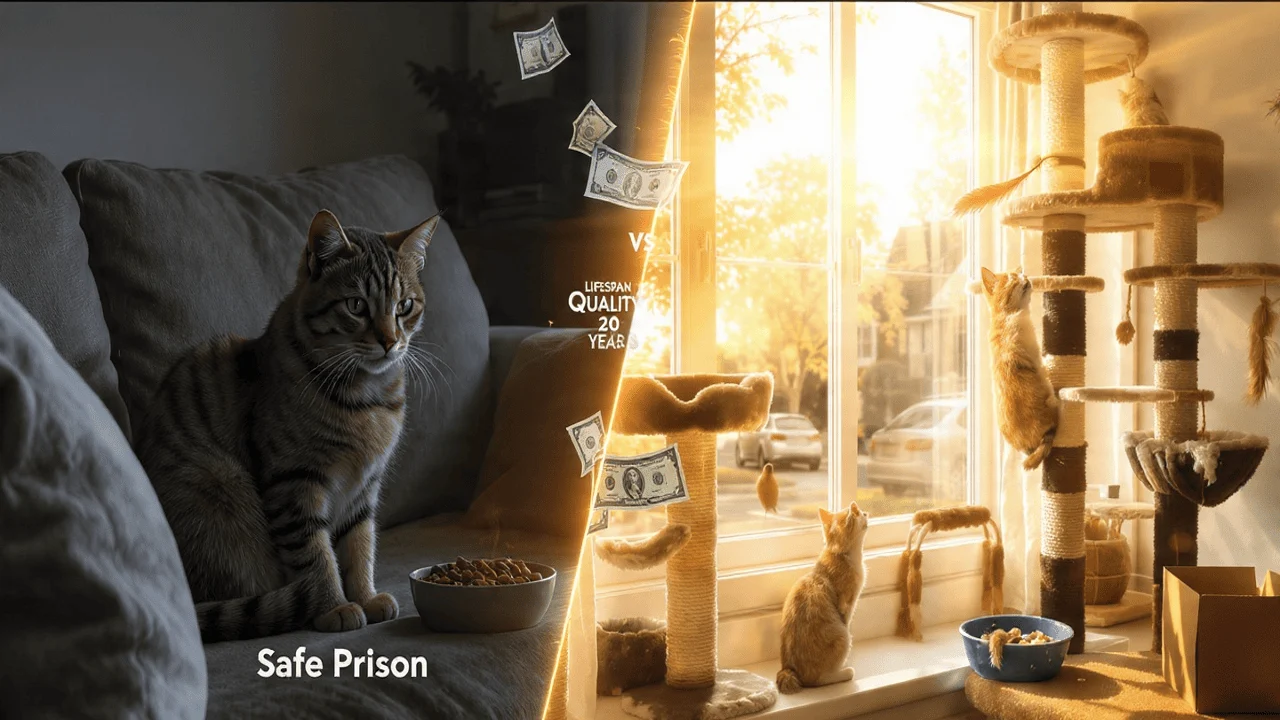
Lifespan vs. Quality of Life
The debate around indoor and outdoor cats is often reduced to lifespan statistics. Unfortunately, dramatic numbers are frequently repeated online without enough context.
What we can say with confidence is that unrestricted outdoor access exposes cats to additional hazards. These include vehicles, animal attacks, parasites, infectious disease, toxins, getting lost, and extreme weather.
At the same time, indoor-only life requires active environmental management. Recent feline-welfare guidance stresses that indoor cats need appropriate resources, stimulation, opportunities for normal behavior, and a sense of control.
Therefore, longevity and welfare should not be treated as competing goals. A responsible approach aims to protect the cat from preventable physical danger while also supporting behavioral and emotional wellbeing.
Controlled outdoor access can provide a middle option
For suitable cats and homes, a secure catio, cat-safe enclosure, fenced system, or carefully managed harness training may provide additional stimulation while reducing many of the risks associated with unrestricted roaming.
However, not every cat enjoys outdoor exposure or leash walking. Individual temperament should always guide the decision.
Outdoor Risks vs. Indoor Risks
Neither lifestyle should be described with slogans. Instead, owners should understand the actual risks and manage them realistically.
Common risks of unrestricted outdoor access
- Traffic: Vehicles can cause severe or fatal trauma.
- Animal encounters: Fights may lead to wounds, abscesses, and exposure to infectious diseases.
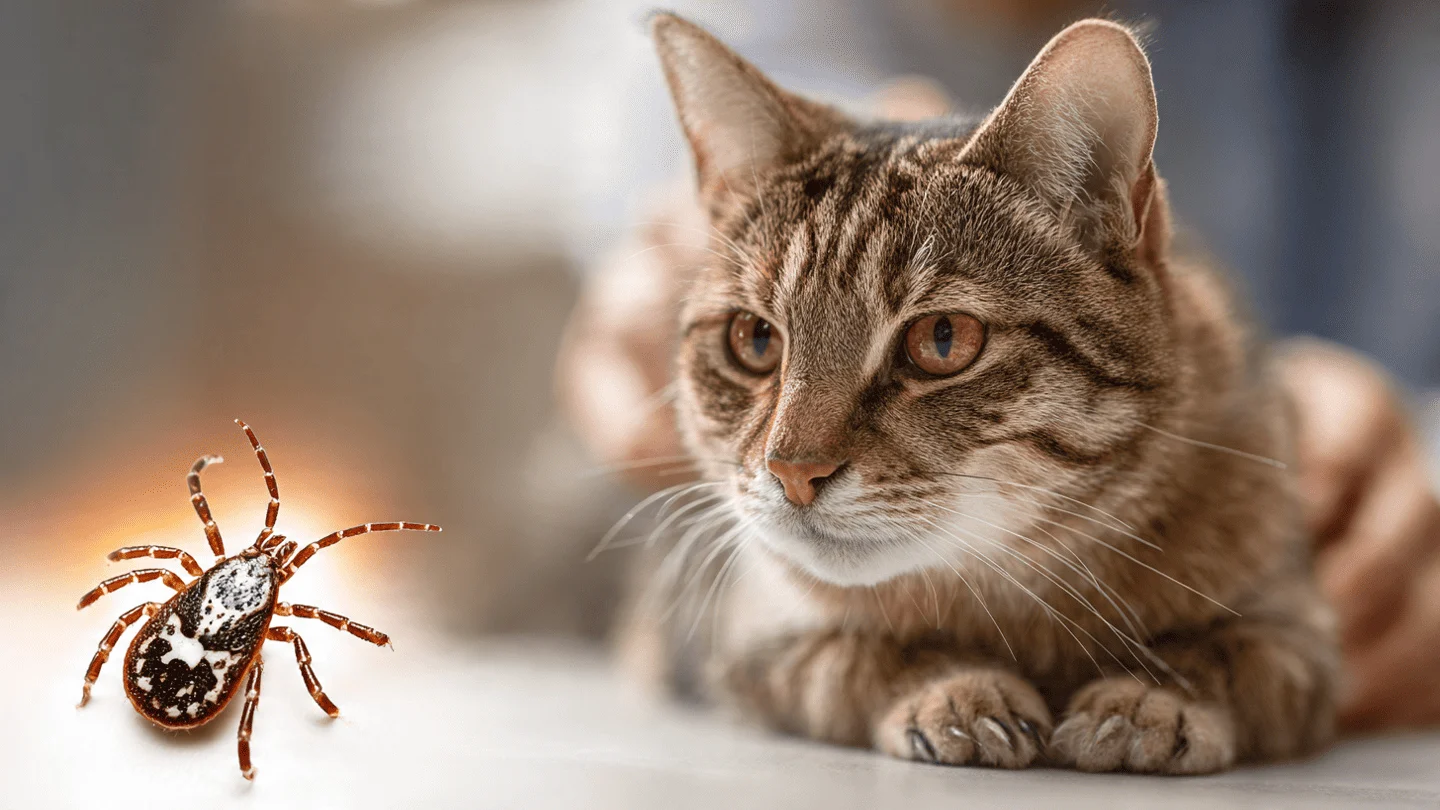
- Parasites: Fleas, ticks, worms, and other parasites may be more difficult to avoid.
- Toxins: Outdoor cats may encounter poisonous plants, chemicals, pesticides, or contaminated food.
- Getting lost: Even experienced outdoor cats can disappear after becoming frightened, injured, or displaced.
- Predators and wildlife: Risk varies greatly by region.
- Weather: Extreme heat, cold, storms, and other environmental conditions can become dangerous.
Common problems in a poorly designed indoor environment
- Low physical activity: Limited movement can contribute to excess weight when calorie intake is not adjusted.
- Insufficient stimulation: A predictable environment with few opportunities for exploration can contribute to frustration or inactivity.
- Resource conflict: In multi-cat homes, competition over food, litter boxes, resting areas, or territory may create tension.
- Limited scratching and climbing options: Natural behaviors need appropriate outlets.
- Overfeeding: Food may become one of the few available activities if enrichment is poor.
Importantly, obesity is not simply an “indoor cat problem.” Body condition is influenced by calorie intake, diet, age, neuter status, activity, health, and other factors.
In the United States, veterinary-assessed data from the Association for Pet Obesity Prevention found that excess weight is common among cats. Therefore, regular body-condition assessment and appropriate feeding matter regardless of lifestyle.
What Cat Care Can Cost in the USA
Cost comparisons between indoor and outdoor cats are often misleading. There is no reliable national price list showing that one lifestyle automatically costs a specific amount more than the other.
Instead, lifestyle changes where owners may spend money. Indoor households may invest more in litter, climbing structures, toys, and enrichment. Meanwhile, cats with outdoor access may require greater attention to parasite prevention, identification, vaccinations based on individual risk, and unexpected injury.
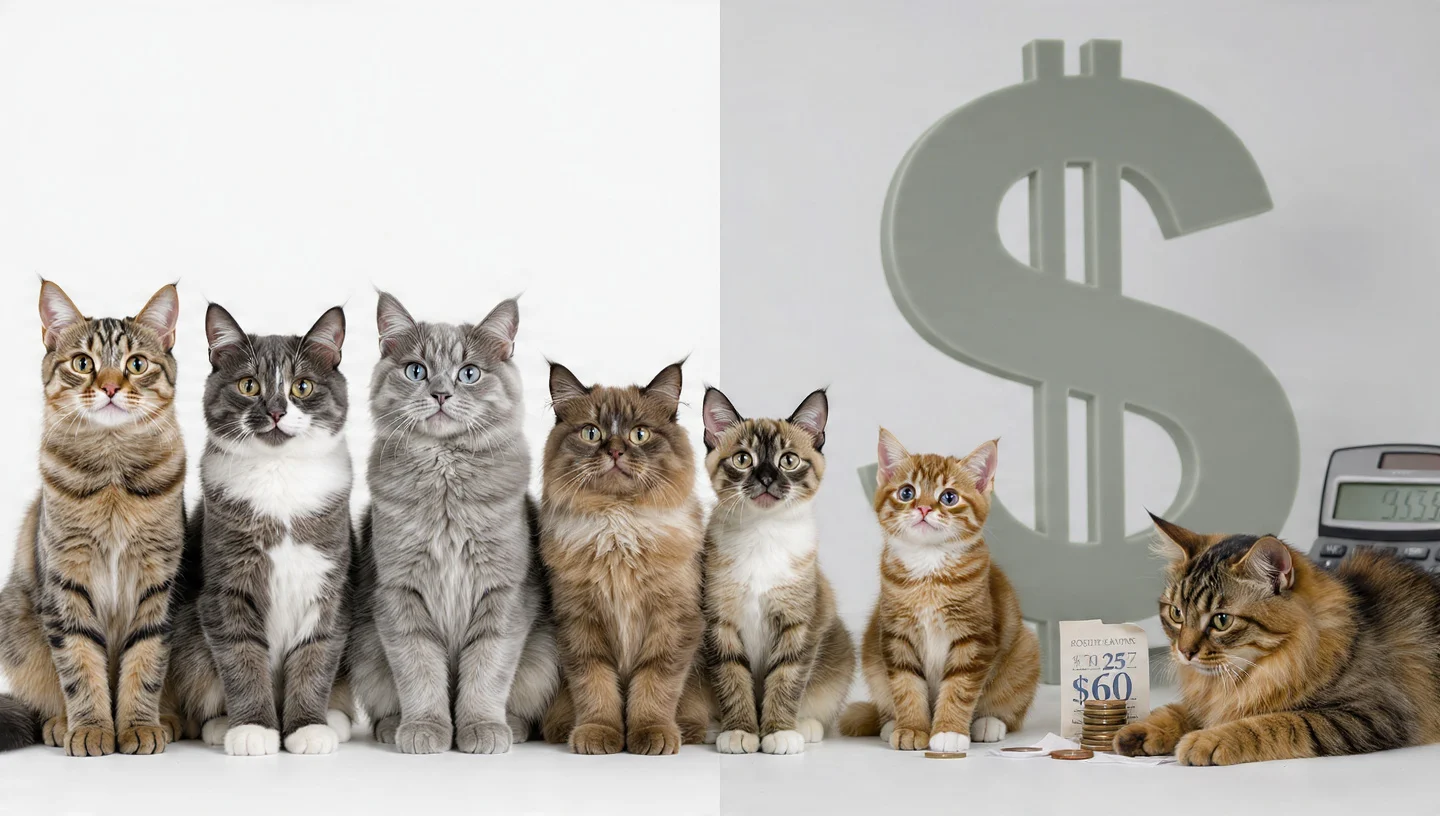
The following table uses recent U.S. pet-care cost guidance to provide realistic planning ranges. However, prices vary substantially by state, veterinary clinic, diet, age, insurance coverage, and medical needs.
Typical Annual Cat-Care Expenses in the USA
Planning ranges and lifestyle considerations for 2026 cat owners.
| Expense | Typical Cost | Indoor Consideration | Outdoor-Access Consideration |
|---|---|---|---|
| Food | $240–$960+/year | Portion control is important when activity is limited. | Energy needs may differ with activity, climate, and lifestyle. |
| Treats | $60–$240+/year | Treats can be incorporated into training and food puzzles. | Treat calories still count toward the daily diet. |
| Litter | $180–$480+/year | A major recurring cost for indoor households. | A litter box should still be available indoors. |
| Routine Exam | $40–$150+ | Indoor cats still need preventive veterinary care. | Exposure history may influence preventive recommendations. |
| Vaccinations | $60–$150+ | Vaccine plans depend on age, health, local regulations, and risk. | Outdoor exposure may change the veterinarian’s risk assessment. |
| Toys & Enrichment | $120–$1,200+/year | Play, climbing, scratching, and foraging are especially important. | Indoor enrichment is still beneficial even when outdoor access exists. |
| Dental Care | $100–$600+ | Lifestyle does not remove dental-care needs. | The same routine dental needs apply. |
| Pet Insurance | $120–$400+/year | Can help manage unexpected illness or injury costs. | May be especially useful where accident exposure is higher. |
| Unexpected Veterinary Care | Highly Variable | Illness and household accidents can still happen. | Trauma, fights, toxins, and infections can create large unexpected bills. |
Important: These figures are budgeting ranges, not guaranteed prices or an indoor-vs.-outdoor national average. Veterinary fees and pet-care costs vary widely across the United States.
What the numbers actually tell us
Indoor life is not automatically cheap. A well-designed indoor environment may require scratching posts, climbing areas, litter, puzzle feeders, and replacement toys.
Nevertheless, enrichment does not need to be expensive. Cardboard boxes, paper bags without handles, homemade food puzzles, furniture placement, and short interactive play sessions can provide substantial stimulation at very low cost.
Outdoor life is not automatically cheap either. One accident or serious illness can overwhelm years of savings on litter or toys.
Therefore, the smartest financial strategy is not choosing the “cheapest lifestyle.” It is preventing avoidable problems while maintaining an emergency fund, insurance, or another plan for unexpected veterinary expenses.
The Hidden Costs of Cat Care
Money is only one part of responsible cat ownership. Time, attention, and environmental management also have value.
Time
Interactive play, litter-box maintenance, grooming, feeding, veterinary visits, and monitoring all require time. Fortunately, enrichment sessions can be short.
Several brief play sessions may fit more naturally into a busy schedule than one long session.
Home setup
A cat without suitable scratching surfaces may use furniture because scratching is a normal behavior. Similarly, inadequate litter-box arrangements can contribute to house-soiling problems.
Consequently, spending modestly on appropriate resources can sometimes prevent much larger frustrations later.
Emotional responsibility
Owners naturally worry when a cat hides, stops eating, becomes aggressive, or appears uncomfortable. That concern is another reason to learn the cat’s normal routine and seek veterinary advice when something changes significantly.
5 Ways to Make Indoor Life Better
1. Create a safe window or outdoor-viewing area
A secure window perch gives many cats access to changing sights, sounds, and activity outside.
For even more stimulation, a properly constructed catio can provide controlled outdoor exposure without allowing unrestricted roaming.
However, screens, balconies, windows, and enclosures must be genuinely secure. Ordinary insect screens may not be strong enough to contain a determined cat.
2. Turn meals into an activity
Instead of placing every meal in the same bowl, consider using a puzzle feeder for part of the daily ration.
Alternatively, hide small portions in several safe locations. This encourages searching and can slow down cats that eat too quickly.
Remember to measure the total daily food allowance so enrichment does not accidentally increase calorie intake.
3. Use short interactive hunting games
A wand toy can imitate prey when it moves behind furniture, pauses, changes direction, and occasionally allows the cat to capture it.
For many cats, several short sessions work better than forcing a long play period.
Laser toys can encourage chasing, but it is useful to finish the game with something the cat can physically catch, such as a toy or food reward.
4. Add vertical territory
Cat trees are useful, but they are not the only solution. Secure shelves, sturdy furniture, window platforms, and elevated beds can also create valuable vertical space.
In multi-cat homes, multiple pathways and resting areas can be particularly helpful because one cat cannot easily control every important location.
5. Rotate rather than constantly buy
Leaving twenty toys on the floor for months can make them uninteresting. Instead, keep some toys stored away and rotate them periodically.
A cardboard box in a new location can also become an inexpensive hiding, resting, or play area.
As a result, novelty can be created without constantly spending money.
DIY Cat Enrichment for $20 or Less
Some of the best feline enrichment costs almost nothing. More importantly, simple activities can be changed frequently, which helps maintain interest.
- Cardboard treat puzzle: Place several toilet-paper tubes inside a small box and hide part of the cat’s measured food inside them.
- Box hideout: Cut safe entry holes into a clean cardboard box and place it in a quiet area.
- Paper-ball chase: A loosely crumpled paper ball can become a lightweight chase toy for supervised play.
- Paper-bag exploration: Use a plain paper bag with the handles removed to prevent entanglement.
- DIY food hunt: Hide a few pieces of the cat’s normal food around one room and encourage searching.
Always supervise homemade enrichment at first. In addition, avoid string, yarn, rubber bands, small objects, sharp materials, toxic plants, and anything the cat could swallow.
The Bottom Line
So, are indoor cats miserable?
No—not simply because they live indoors.
However, an indoor cat can experience distress, frustration, inactivity, or behavioral problems when essential environmental needs are consistently ignored.
Likewise, unrestricted outdoor access is not automatically a happier lifestyle. It introduces real hazards that owners cannot always control.
For many pet cats, the strongest approach combines physical safety with behavioral opportunity. That means safe resting places, climbing options, scratching areas, play, foraging, appropriate social interaction, clean litter boxes, predictable resources, and regular veterinary care.
Where practical, controlled outdoor options such as a secure catio may add another layer of stimulation.
Most importantly, pay attention to the individual cat in front of you. A confident young Bengal may have very different enrichment needs from a quiet senior Persian. Therefore, there is no single perfect setup for every cat.
Your goal is not to choose a social-media team called “Indoor” or “Outdoor.” Instead, build a life in which your cat can remain safe while still behaving like a cat.
FAQ: Indoor Cats, Outdoor Cats, and Happiness
Is it cruel to keep a cat indoors?
No. Indoor living can support excellent welfare when the cat’s environmental, physical, social, and behavioral needs are met. Problems arise when safety is provided without appropriate resources, play, choice, or stimulation.
Why does my cat cry at the door?
Several explanations are possible, including curiosity, learned behavior, mating-related behavior in an unneutered cat, a previous outdoor routine, or insufficient stimulation. Because persistent vocalization can also have medical causes, especially in older cats, discuss major behavioral changes with your veterinarian.
Can a cat be happy in a small apartment?
Yes. Floor area is only part of the environment. Vertical space, hiding areas, window views, scratching surfaces, play opportunities, food puzzles, and predictable resources can make a small home much more usable for a cat.
Should I build a catio?
A secure catio can be an excellent option for some cats because it provides controlled outdoor stimulation while reducing many risks associated with free roaming. Nevertheless, the enclosure must be escape-proof and appropriate for local weather conditions.
How much interactive play does my cat need?
There is no universal number that suits every cat. Age, health, personality, and activity level matter. Short, regular sessions that imitate stalking and capture often work well. Let your cat’s engagement guide the duration.
Does sunlight through a window provide cats with vitamin D?
Cats are different from humans in this respect. They cannot produce enough vitamin D through their skin and depend mainly on dietary vitamin D. Therefore, a complete and balanced diet—not sun exposure—is the primary nutritional source.
Should I worry if my cat suddenly stops playing?
Yes, particularly when the change is sudden or accompanied by hiding, appetite changes, weight changes, mobility problems, grooming changes, or litter-box problems. Behavioral changes can indicate stress, but they can also signal pain or illness.
References and Further Reading
- Feline Veterinary Medical Association. 2025 Meeting the Physical and Emotional Needs of Indoor Cats.
- Feline Veterinary Medical Association. 2024 Indoor/Outdoor Lifestyle Position Statement.
- AAFP/ISFM. Feline Environmental Needs Guidelines.
- Feline Veterinary Medical Association. Feline Feeding Programs: Addressing Behavioral Needs to Improve Feline Health and Wellbeing.
- ASPCA. General Cat Care.
- Association for Pet Obesity Prevention. 2022 U.S. State of Pet Obesity Report.
- Association for Pet Obesity Prevention. 2025 Pet Obesity and Nutrition Survey.
- Merck Veterinary Manual. Nutritional Requirements of Small Animals — Vitamin D.
- Chewy. How Much Does a Cat Cost? Updated 2025.
- International Cat Care. Resources on feline stress, welfare, and environmental needs.