
Leopardus tilcayo: Meet the First New Wild Cat Species Described in Over 100 Years
Deep inside the misty forests of the Bolivian Andes lives a tiny spotted cat that has forced scientists to redraw part of the feline family tree. Its name is Leopardus tilcayo, commonly known as the tilcayo cat.
In September 2026, an international team of researchers formally described Leopardus tilcayo as a distinct wild cat species. The finding attracted worldwide attention because scientists rarely identify previously unrecognized living species within the cat family.
However, the story needs an important clarification. Local communities already knew this small spotted cat and used the name tilcayo. Scientists did not suddenly discover an animal that nobody had ever seen. Instead, genomic research revealed its scientific identity and showed that the tilcayo represents its own evolutionary lineage rather than another population of an already recognized tiger cat.
Article Outline — Preview the Sections
What Is Leopardus tilcayo?
Leopardus tilcayo is a small wild cat associated with the Yungas region of Bolivia. It belongs to the genus Leopardus, an important group of small and medium-sized wild cats that live throughout Central and South America. The genus includes several well-known felines, including ocelots, margays, pampas cats, and different cats historically grouped under the general name tiger cats.
For many years, researchers placed several populations of small spotted South American cats within a relatively limited number of species. The problem was simple: many of these cats look remarkably similar. Modern genomic research has changed that picture by showing that some visually similar populations represent separate evolutionary lineages that developed independently over very long periods.
The tilcayo is one of those hidden lineages. Researchers presented the evidence in the study Phylogenomics and museomics reveal five distinct species of tiger cats in South America, which showed that South American tiger cats contain more evolutionary diversity than researchers previously recognized.
The Strange Story Behind the Discovery
The story of Leopardus tilcayo began several years before scientists formally described the species. A local resident reportedly found a small male kitten near forest habitat in Bolivia’s Nor Yungas region around 2016. Because of its size and appearance, the resident initially mistook the animal for an unusual domestic kitten and took it home.
As the kitten grew, its behavior made its wild nature increasingly obvious. The animal eventually reached La Senda Verde, a Bolivian wildlife sanctuary. In 2017, Bolivian biologist Paola Nogales-Ascarrunz learned about the unusual feline and examined it.
At first glance, the animal resembled a tiger cat. Yet several physical details did not match what researchers expected from known populations.
The Spots That Raised a Scientific Question
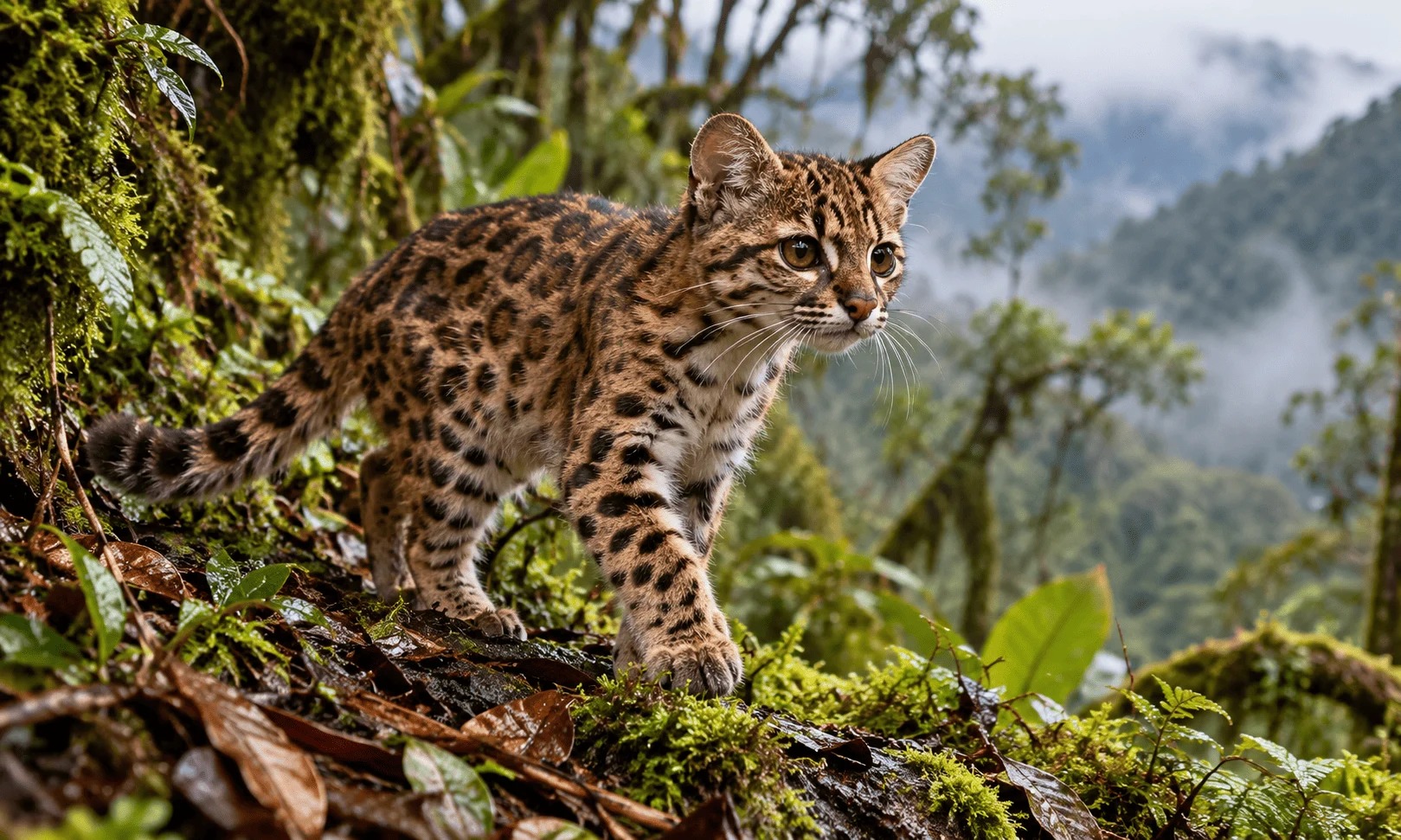
One of the tilcayo’s most noticeable characteristics is its coat. The cat carries dark spots and large irregular markings known as rosettes. When researchers compared photographs of the Bolivian cat with other South American tiger cats, they noticed several interesting differences.
The tilcayo showed unusually large and irregular rosettes, while its overall coat pattern also differed from the patterns researchers usually saw in closely related cats. Physical appearance alone could not prove that researchers had found a separate species because individual animals can vary considerably in size, color, and markings.
Nevertheless, the unusual appearance raised an important scientific question: Was this simply an unusual individual, or did the Bolivian cat belong to a distinct evolutionary lineage? Scientists needed genetic evidence to answer that question.
DNA Revealed a Hidden Species
Large-scale genomic analysis provided the decisive evidence. Researchers analyzed complete genomes from dozens of individual cats representing tiger-cat populations across different parts of South America. They also examined historical specimens stored in museum collections.
Scientists sometimes call this combination of modern genetics and preserved museum material museomics. Museum specimens can preserve valuable genetic information from animals collected many decades ago, allowing researchers to compare historical DNA with genomes from modern animals.
This approach helps scientists reconstruct evolutionary relationships that earlier researchers could not easily detect. The results showed that several populations once grouped closely together actually represented distinct evolutionary lineages. The Bolivian tilcayo stood apart, and its genetic profile gave researchers strong evidence to recognize it as a separate species.
Why Scientists Named It Leopardus tilcayo
Scientists did not simply invent the name tilcayo. Local communities in Bolivia already knew the animal and used the word for this small spotted cat. This gives the scientific name an important cultural dimension.
The animal may have entered zoological classification only recently, but people living in the region already knew of its existence. This distinction matters when we discuss wildlife discoveries because a species that is “new to science” is not always new to the people who share its habitat.
Local or Indigenous communities may know an animal for generations before researchers formally classify it. In this case, researchers preserved the familiar local name when they called the species Leopardus tilcayo.
What Does Leopardus tilcayo Look Like?
Leopardus tilcayo is a remarkably small wild cat. The individual associated with the discovery measured roughly 45 to 46 centimeters in head-and-body length and weighed around 1.3 to 1.4 kilograms. A tilcayo can therefore weigh less than many adult domestic cats.
Its compact size should not create the wrong impression. This animal is a genuine wild predator, not a miniature domestic breed. The tilcayo has a slender body with dark spots and irregular rosettes, while its generally brownish or tawny background coat helps it blend into dense forest vegetation.
Its face looks compact, with rounded ears and prominent whiskers. The cat also has a proportionally long tail, another characteristic that researchers can compare with related tiger cats. To an untrained observer, however, the tilcayo may still look extremely similar to other small spotted South American cats, and that resemblance helped conceal its distinct scientific identity for many years.
Where Does the Tilcayo Live?
Current evidence connects Leopardus tilcayo with the Yungas forests of Bolivia, particularly along the eastern slopes of the Andes. The Yungas form a spectacular ecological transition zone between high Andean landscapes and lower tropical forests.
Steep terrain, heavy moisture, dense vegetation, and frequent cloud cover characterize these forests. These conditions support extraordinary biodiversity, but they also make wildlife research difficult. A small cat can move quietly through thick vegetation and remain almost invisible even when researchers know it lives nearby.
Scientists still do not fully understand the complete geographic distribution of Leopardus tilcayo. Researchers will need additional surveys, camera traps, genetic sampling, and field observations to determine the species’ full range.
How Many Tilcayo Cats Exist?
Scientists do not yet know how many tilcayo cats exist. This remains one of the most important questions following the species’ formal description. Genetics can establish the identity of a species, but researchers still need extensive fieldwork to understand its population.
They need information about population size, geographic distribution, reproduction, survival, movements, home range, and habitat requirements. Camera traps will probably play an important role in this research because these motion-sensitive cameras allow scientists to monitor elusive animals without repeatedly disturbing them.
Researchers may also identify individual cats through distinctive coat patterns, which can make long-term monitoring especially valuable. Until scientists complete more surveys, claims about the total number of tilcayo cats would remain speculative.
What Does Leopardus tilcayo Eat?
Scientists have not yet studied the tilcayo’s diet in enough detail to provide a complete answer. Many small wild cats hunt rodents, birds, reptiles, and other small vertebrates. The tilcayo may follow a similar pattern, but researchers need direct field evidence before they can describe its diet confidently.
Many other aspects of its biology remain unclear. Scientists still need information about the animal’s hunting strategy, breeding season, litter size, territory, lifespan, daily activity, and interactions with other predators.
These unanswered questions make the species especially interesting to researchers. Science now recognizes the cat as a distinct species, but researchers still have much to learn about how it lives.
A Cat Lineage Around 1.4 Million Years Old
Although scientists formally described Leopardus tilcayo only in 2026, its evolutionary lineage is far older. Genetic analyses indicate that its ancestors separated from related tiger-cat lineages approximately 1.4 million years ago.
This illustrates an important principle in taxonomy. Scientists did not create a new species simply by giving the animal a new name. Instead, genomic research uncovered an evolutionary history that had already existed for an immense period.
The lineage followed its own evolutionary path long before modern zoology existed. New genetic technology finally gave researchers the evidence they needed to recognize that history.
One Tiger Cat Became Five
The recognition of Leopardus tilcayo formed part of a much larger reassessment of South America’s tiger cats. Researchers historically grouped several visually similar populations under a simpler taxonomic arrangement, but genomic research revealed a more complex picture.
The study identified five distinct species within the tiger-cat complex. This finding demonstrates why appearance alone can sometimes mislead scientists. Two cats can share similar spots, body proportions, and coat colors while carrying very different evolutionary histories.
Researchers often use the term cryptic species for distinct species that look extremely similar to one another. Modern genetics can reveal differences that traditional visual comparisons may struggle to detect.
Why This Discovery Matters for Conservation
Taxonomy does much more than give animals names. Correct classification can directly influence conservation decisions. Imagine that conservationists think one wild cat species occupies a huge territory across several countries. Its broad distribution might initially make the species appear relatively secure.
Now imagine that genomic research shows that this supposed single species actually consists of several separate species. Each one may occupy a much smaller range, and the conservation picture changes immediately.
A population once considered a small regional group within a widespread species could actually represent a major part of an entire species. That is why the recognition of Leopardus tilcayo matters. Researchers and conservationists can now evaluate the tilcayo according to its own population, distribution, habitat, and threats.
The Yungas Are Under Pressure
The discovery also brings attention to the ecosystem that supports the tilcayo. Bolivia’s Yungas forests contain exceptional biodiversity, but human activities can place these environments under increasing pressure.
Deforestation, agricultural expansion, road construction, mining, fires, and habitat fragmentation can alter forest ecosystems. A species with a limited geographic range may face particularly serious consequences when its habitat shrinks or becomes fragmented.
Small wild cats can also face risks from hunting, road traffic, disease transmission, and interactions with domestic animals. Researchers therefore need to determine how widely the tilcayo occurs before conservationists can properly evaluate its status.
Finding and naming a species creates scientific excitement, but protecting it requires long-term research, monitoring, and habitat conservation.
Is Leopardus tilcayo a Domestic Cat Breed?
No. Leopardus tilcayo is a wild cat species, not a domestic cat breed. Maine Coons, Siamese cats, Persians, Bengals, and British Shorthairs are breeds of the domestic cat, Felis catus, while the tilcayo belongs to a different genus: Leopardus.
It represents its own wild evolutionary lineage. People should therefore never treat or promote the tilcayo as a privately kept wild pet. Wild cats have behavioral, ecological, welfare, and conservation requirements that differ fundamentally from those of domestic cats.
The tilcayo’s story also shows why people should use caution when they encounter an unfamiliar kitten near wild habitat. A small feline may not always be an abandoned domestic cat. When people are uncertain, they should contact local wildlife authorities or qualified wildlife rescue organizations.
Why Did It Take So Long to Identify?
Several factors helped keep the tilcayo scientifically hidden. First, the cat lives in difficult mountainous forest environments. Second, it resembles other small spotted cats. Third, traditional taxonomy relies heavily on physical characteristics such as coat patterns, skull shape, teeth, body proportions, and geographic distribution.
Those methods remain extremely valuable, but some evolutionary divisions are difficult to see from appearance alone.
How Genomics Changed Cat Identification
Genome sequencing gave researchers a much deeper view of evolutionary relationships. Instead of comparing only visible characteristics, scientists can examine enormous numbers of genetic markers across complete genomes.
Museum collections provide another valuable source of evidence. Historical specimens can preserve DNA from animals that lived in populations or regions that scientists may find difficult to sample today. Researchers can combine these old specimens with modern DNA samples to compare animals across both geography and time.
Together, genomics and museomics can reveal evolutionary relationships that earlier generations of researchers could not easily detect.
Why Is the Discovery So Unusual?
Scientists describe new species every year. Many belong to groups such as insects, plants, fish, frogs, fungi, or microorganisms. Their size, habitat, or similarity to known organisms can make them difficult to recognize.
A newly recognized living member of the cat family is much more unusual. Wild cats attract enormous scientific and public attention, and zoologists, conservation organizations, wildlife photographers, museums, universities, and local communities study these animals around the world.
Despite that attention, the tilcayo’s distinct evolutionary lineage remained outside formal scientific recognition until 2026. That makes Leopardus tilcayo particularly significant and reminds us that scientists still do not fully understand feline biodiversity.
Could Scientists Discover More Cat Species?
Possibly. The tilcayo research demonstrates how modern genomic techniques can uncover hidden diversity within groups that scientists previously treated as single species. Researchers may eventually apply similar genetic studies to other small wild cats with broad geographic distributions.
However, scientists must approach such work carefully. Genetic differences alone do not automatically justify naming a new species. Taxonomists usually examine multiple forms of evidence, including evolutionary history, morphology, geography, ecology, and genetic differentiation.
Nevertheless, improvements in genome sequencing and museum DNA analysis continue to give researchers powerful tools for studying the feline family tree. The next surprising cat discovery may involve an animal that local communities already know but that still hides within an outdated scientific classification.
A Reminder That We Still Have Much to Discover
Perhaps the most fascinating part of the Leopardus tilcayo story is what it tells us about the natural world. Humans have studied cats for centuries, and researchers today use satellites, camera traps, genome sequencing, museum collections, artificial intelligence, and enormous biodiversity databases.
Yet a distinct feline lineage that may have followed its own evolutionary path for around 1.4 million years remained outside formal scientific recognition until 2026. Meanwhile, people living near its habitat already had a name for it.
The tilcayo therefore represents more than another entry in a zoological catalogue. It reminds us that biodiversity can sometimes hide in plain sight. Researchers must now determine how many tilcayos remain, where they live, what they eat, how they reproduce, what threats they face, and which habitats they need for survival.
For one of the world’s newest scientifically recognized wild cats, the story has only just begun.
Frequently Asked Questions About Leopardus tilcayo
Discovery and Classification
Is Leopardus tilcayo really a new cat species?
Yes. Researchers formally described Leopardus tilcayo as a distinct species in 2026 after genomic analysis showed that the Bolivian population represents an independent evolutionary lineage.
When did scientists recognize Leopardus tilcayo?
A local resident reportedly found the animal that helped trigger scientific interest around 2016. Researchers examined the unusual cat over the following years and formally recognized Leopardus tilcayo as a distinct species in 2026.
Why did scientists call the species tilcayo?
The name reflects a local term already used in Bolivia for the small spotted cat. Researchers retained the name when they formally described the species, recognizing that local communities knew the animal before science changed its classification.
How old is the Leopardus tilcayo lineage?
Genetic evidence indicates that the tilcayo lineage separated from related tiger-cat lineages approximately 1.4 million years ago. Scientists only formally recognized the species in 2026.
Habitat, Size, and Biology
Where does Leopardus tilcayo live?
Current evidence connects the species with the Yungas forests of Bolivia on the eastern slopes of the Andes. Scientists still need additional field research to determine its complete geographic range.
How big is the tilcayo cat?
The well-documented male associated with the discovery measured roughly 45 to 46 centimeters in head-and-body length and weighed around 1.3 to 1.4 kilograms. It therefore weighs less than many domestic cats.
What does Leopardus tilcayo eat?
Scientists do not yet have enough field data to describe its exact diet. Like many small wild cats, it may hunt rodents, birds, reptiles, and other small vertebrates. Researchers still need direct evidence to confirm its feeding habits.
Domestic Cats and Conservation
Is Leopardus tilcayo a domestic cat breed?
No. Leopardus tilcayo is a wild feline species in the genus Leopardus. It is not a breed of the domestic cat, Felis catus.
Can people keep Leopardus tilcayo as a pet?
The tilcayo is a wild animal, not a companion-animal breed. It has ecological, behavioral, welfare, and conservation needs that differ fundamentally from those of domestic cats.
Why is the discovery of Leopardus tilcayo important?
The discovery shows that important feline diversity can remain scientifically unrecognized even in the modern era. The new classification also matters for conservation because a distinct species may occupy a much smaller range than scientists previously assumed.
References
- Lescroart, J., Nogales-Ascarrunz, P., Cassatt-Johnstone, M., Bonilla-Sánchez, A., Sartor, C. C., Angulo, F., Ramirez, J. L., de Oliveira, L. R., de Oliveira, T. G., Shapiro, B., Aliaga-Rossel, E., Svardal, H., & Eizirik, E. (2026). Phylogenomics and museomics reveal five distinct species of tiger cats in South America. Current Biology. DOI: 10.1016/j.cub.2026.08.059.
- National Geographic. (2026). Meet the First New Cat Species Discovered in 100 Years.
- Pontifical Catholic University of Rio Grande do Sul (PUCRS). (2026). Team led by PUCRS professor discovers new species of wild cat in Bolivian forests.
- Nature. (2026). Scientific coverage of Leopardus tilcayo and the revision of South American tiger-cat taxonomy.
Scientific note: Scientists formally described Leopardus tilcayo only recently, so information about its population size, complete range, diet, reproduction, behavior, and conservation status remains limited. MeowKats will update this article as researchers publish additional peer-reviewed evidence.