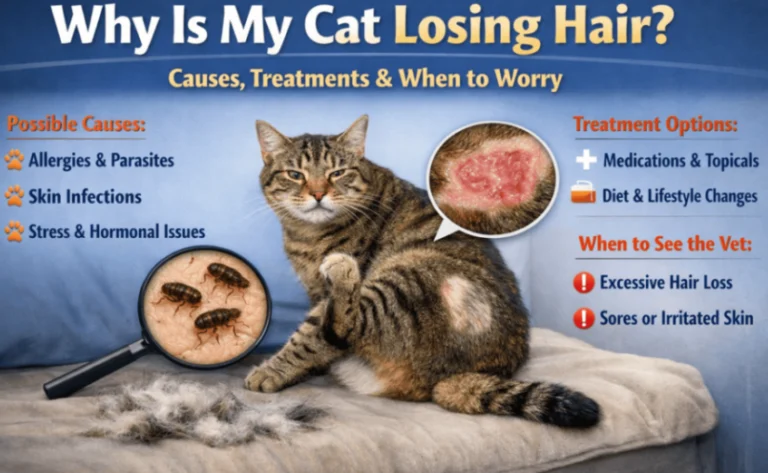
If you’ve noticed bald patches or excessive shedding, you’re likely asking: why is my cat losing hair? This is one of the most common concerns among cat owners worldwide. Hair loss in cats — medically known as alopecia — can range from a normal seasonal shed to a sign of a serious underlying condition. Understanding the difference is critical for your pet’s health. In this article, you will learn the most common causes of feline hair loss, how to identify symptoms early, what treatments are available, and exactly when you should visit a veterinarian. Whether your cat is losing fur around the neck, belly, or tail, this guide provides clear, actionable answers.
Key Takeaways
- Cat hair loss (alopecia) affects up to 30% of catsat some point in their lives.
- Common causes include allergies, parasites, stress, hormonal imbalances, and infections.
- Early diagnosis significantly improves treatment outcomes.
- Some hair loss is normal(seasonal shedding), while patchy or sudden loss requires veterinary attention.
- Treatments vary from topical medications to dietary changes and stress management.
- Never self-medicate your cat without professional guidance.
Common Causes of Hair Loss in Cats
1. Allergies
Allergies are among the leading causes of feline hair loss. Cats can develop reactions to food ingredients, environmental allergens (like pollen or dust mites), or contact substances. According to the Cornell Feline Health Center (2024), food allergies account for approximately 10–15% of all allergic skin diseases in cats. Symptoms include itching, redness, and over-grooming, which leads to noticeable bald patches. Common food triggers include beef, dairy, and fish proteins. Environmental allergens follow seasonal patterns. Identifying the specific trigger often requires an elimination diet or allergy testing conducted by a licensed veterinarian. Early intervention prevents chronic skin damage.
“Allergies in cats are frequently underdiagnosed because symptoms overlap with many other conditions.” — Dr. Susan Little, Feline Veterinary Specialist
2. Parasites: Fleas, Mites & Ringworm
Parasitic infestations are a highly prevalent cause of hair loss. Fleas cause intense itching, prompting cats to scratch and over-groom. Even a single flea bite can trigger flea allergy dermatitis in sensitive cats. Mange, caused by mites like Notoedres cati, results in crusty, thickened skin and severe hair loss, particularly around the ears and face. Ringworm (Microsporum canis), despite its name, is a fungal infection — not a worm — that causes circular bald patches with scaly borders. It is also zoonotic, meaning it can spread to humans. The American Veterinary Medical Association (AVMA) recommends immediate treatment upon diagnosis to prevent household spread.
3. Stress & Over-Grooming (Psychogenic Alopecia)
Cats are sensitive animals. Psychological stress from environmental changes — such as a new pet, moving homes, or owner absence — can trigger psychogenic alopecia. This condition causes cats to compulsively over-groom, stripping fur from the abdomen, inner thighs, and flanks. Studies suggest this affects roughly 2–5% of cats seen in dermatology practices. The pattern of hair loss is typically symmetrical and the skin underneath appears healthy. Addressing the root cause — such as environmental enrichment, pheromone diffusers (e.g., Feliway), or, in severe cases, anti-anxiety medications — is the most effective approach for recovery.
4. Hormonal Imbalances
Hormonal disorders significantly impact coat health. Hyperthyroidism, one of the most common endocrine disorders in older cats, can cause thinning, dull fur, and increased shedding. Conversely, hypothyroidism (rare in cats) leads to dry, brittle fur. Cushing’s disease (hyperadrenocorticism) causes fragile skin and symmetrical hair loss. A simple blood panel can detect most hormonal imbalances. According to Veterinary Clinics of North America (2023), hyperthyroidism affects approximately 1 in 300 cats over age 10.
| Hormonal Condition | Primary Hair Loss Pattern | Other Symptoms |
| Hyperthyroidism | Diffuse thinning | Weight loss, hyperactivity |
| Cushing’s Disease | Symmetrical, bilateral | Pot-belly, fragile skin |
| Hypothyroidism (rare) | Dry, brittle coat | Lethargy, weight gain |
5. Infections & Skin Conditions
Bacterial (pyoderma) and fungal infections can compromise skin integrity, leading to localized hair loss. These infections often develop secondary to other conditions like allergies or trauma. Sebaceous adenitis — an inflammatory skin disease — destroys hair follicles and is more common in certain breeds. Prompt antibiotic or antifungal treatment is essential. Left untreated, infections can become chronic and more difficult to resolve.
6. Nutritional Deficiencies
A poor diet lacking essential fatty acids, zinc, biotin, or protein directly affects coat quality. Cats are obligate carnivores; without adequate animal-based protein, fur becomes thin and brittle. Switching to a veterinarian-recommended, balanced commercial diet typically reverses nutritional hair loss within 8–12 weeks. Omega-3 supplements (fish oil) have also shown measurable benefits in clinical settings.
When Should You See a Vet?
Consult a veterinarian immediately if you observe:
- ✅ Sudden or rapid hair loss
- ✅ Circular or patchy bald spots
- ✅ Skin redness, sores, or crusting
- ✅ Excessive scratching or biting
- ✅ Hair loss combined with weight changes or lethargy
FAQs
Q: Is it normal for cats to lose hair seasonally?
Yes. Cats shed more heavily in spring and autumn. This is normal and not a cause for concern unless accompanied by bald patches.
Q: Can stress really cause my cat to lose hair?
Absolutely. Psychogenic alopecia is a well-documented condition triggered by anxiety or environmental change.
Q: How is feline alopecia diagnosed?
A vet may perform skin scrapings, fungal cultures, blood tests, or biopsy depending on suspected causes.
Q: Can I treat cat hair loss at home?
Minor shedding can be managed with grooming and diet. However, patchy loss or skin irritation always requires professional evaluation.
Q: What breeds are most prone to hair loss?
Sphinx cats are naturally hairless. Among haired breeds, Siamese and Burmese cats show higher rates of psychogenic alopecia.
To sum up
Understanding why your cat is losing hair is the first step toward effective treatment. Causes range from seasonal shedding and stress to allergies, parasites, and hormonal disorders. Each case requires a tailored approach. Early veterinary diagnosis remains the most reliable path to recovery. Monitor your cat’s coat regularly, maintain a balanced diet, reduce environmental stressors, and seek professional advice whenever hair loss appears sudden, patchy, or accompanied by other symptoms. Your cat’s coat is a direct reflection of its overall health — take it seriously.
References
- Cornell Feline Health Center – Skin Conditions in Cats
- American Veterinary Medical Association (AVMA) – Ringworm
- Veterinary Clinics of North America: Small Animal Practice – Feline Hyperthyroidism (2023)
- International Cat Care – Feline Alopecia Overview
- PetMD – Causes of Hair Loss in Cats