
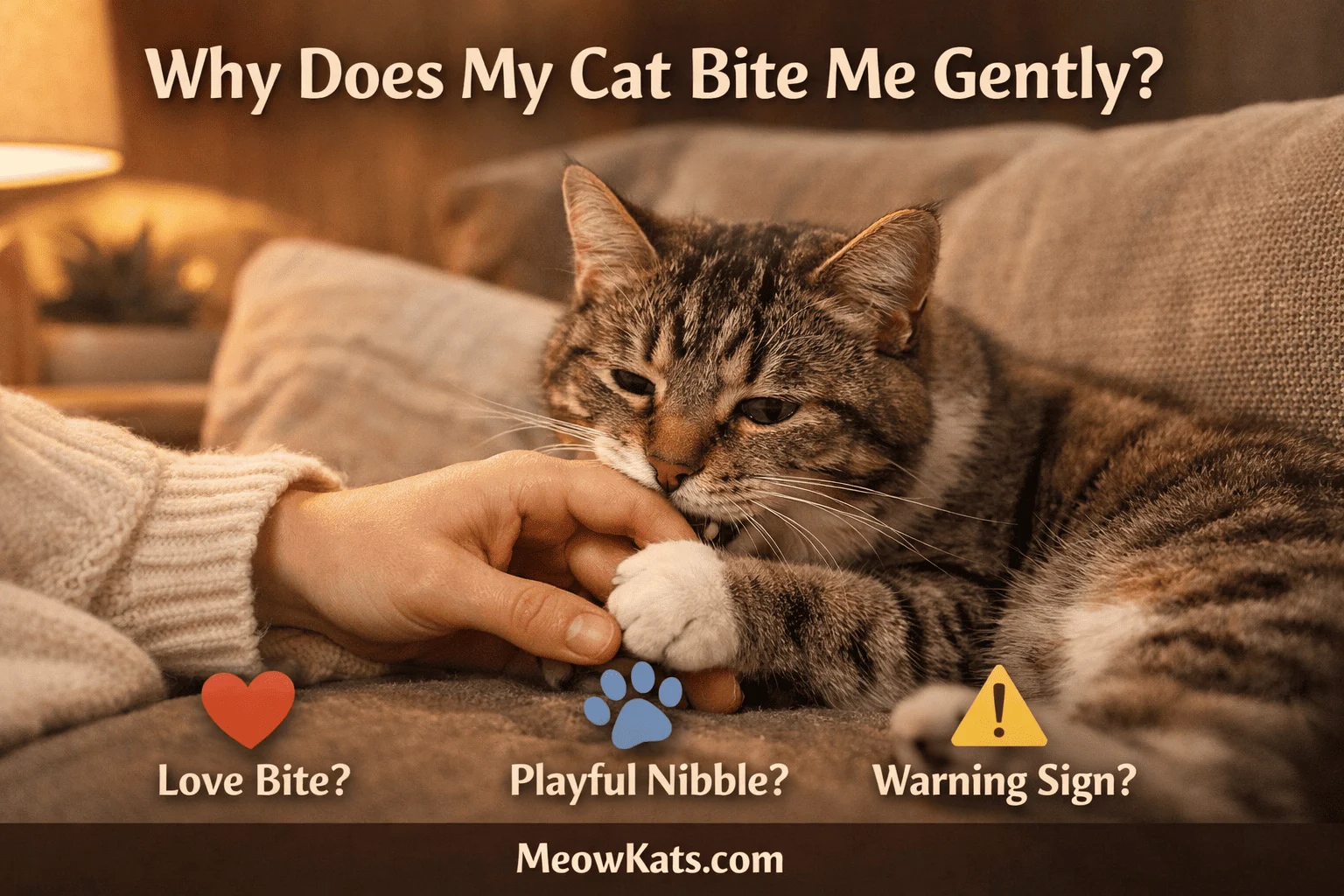
A gentle bite from your cat can feel confusing. One moment your cat purrs softly, and the next, it lightly nibbles your hand. Naturally, you may wonder: Is this affection, play, or a warning?
Understanding feline behavior helps you decode these mixed signals. Cats communicate differently than humans. Instead of words, they rely on body language, vocalizations, and subtle physical actions—like gentle biting.
In this comprehensive guide, you will learn why your cat bites you gently, what it means emotionally, and how to respond in a way that strengthens your bond instead of damaging it
What Is a Gentle Cat Bite?
A gentle bite—often called a “love bite”—is a soft nibble that does not break the skin. Unlike aggressive biting, it feels controlled and intentional.
Typically, your cat may:
- Use minimal pressure
- Combine it with purring or kneading
- Show relaxed body language
Because of this, gentle biting usually signals communication rather than aggression.
The Main Reasons Cats Bite Gently
First and foremost, many cats bite gently to express affection. In feline social behavior, cats groom and nibble each other. This behavior is called allogrooming.
So, when your cat gently bites you, it may treat you like family.
Signs it’s affection:
- Slow blinking
- Purring
- Relaxed ears and tail
In this case, the bite means:
👉 “You belong to me, and I feel safe with you.”
Cats are natural hunters. Even indoor cats retain strong instincts. As a result, your hands may sometimes become “prey.”
Gentle biting often appears during play sessions, especially if:
- You use your hands instead of toys
- Your cat is young or energetic
- The behavior happens suddenly
Although it feels harmless now, playful biting can escalate if not managed properly.
Not all cats enjoy long petting sessions. While your cat may start relaxed, repeated strokes can overwhelm it.
When that happens, a gentle bite acts as a warning signal.
Watch for these signs before a bite:
- Tail flicking
- Ears turning sideways
- Skin rippling
- Sudden stillness
The bite means:
👉 “Stop. I’ve had enough.”
-
Attention-Seeking
Sometimes, your cat bites gently simply to get your attention.
For example:
- You’re working on your laptop
- You ignore your cat
- It nudges, then lightly bites
This behavior works because you react. Even negative attention reinforces it.
Cats are excellent trainers—of humans. If your reaction to biting is predictable, your cat learns quickly.
For instance:
- Bite = you pet more → cat repeats it
- Bite = you give food → behavior increases
In other words, your cat may use gentle biting as a tool to control interactions.
-
Kitten Behavior That Never Stopped
Kittens learn bite control through play with siblings. If separated too early, they may not fully learn boundaries.
As a result, gentle biting persists into adulthood.
-
Stress or Mid Frustration
Although gentle bites are often harmless, they can sometimes reflect underlying stress.
Triggers include:
- Environmental changes
- Lack of stimulation
- Too much handling
In such cases, the bite is not aggressive but still signals discomfort.
How to Tell the Difference: Love Bite vs Warning Bite
Understanding context is essential.
| Behavior | Love Bite | Warning Bite |
| Pressure | Very light | Slightly firmer |
| Body Language | Relaxed | Tense |
| Tail | Calm | Flicking |
| Ears | Forward | Sideways/back |
| After Bite | Stays close | Moves away |
When in doubt, always respect your cat’s signals.
Should You Be Concerned About Gentle Biting?
In most cases, no. Gentle biting is a normal part of feline communication.
However, you should take action if:
- The bites become stronger
- Skin breaks
- Behavior escalates suddenly
These changes may indicate stress, health issues, or behavioral problems.
How to Respond the Right Way
-
Avoid Punishment
Never punish your cat for biting. It creates fear and damages trust.
Instead, stay calm and neutral.
- Stop Interaction Immediately
When your cat bites:
- Freeze your hand
- Slowly withdraw
- Avoid sudden movements
This teaches your cat that biting ends the interaction.
- Redirect to Toy
If your cat bites during play, introduce:
- Wand toys
- Feather teasers
- Interactive games
This satisfies hunting instincts safely.
- Learn Your Cat’s Limits
Every cat has a different tolerance level.
Observe:
- How long your cat enjoys petting
- Which areas trigger bites
Then adjust your behavior accordingly.
- Reward Gentle Behavior
Positive reinforcement works best.
For example:
- Give treats when your cat stays calm
- Praise soft interactions
Over time, your cat associates gentleness with rewards.
Common Mistakes Cat Owners Make
Using Hands as Toys
This is one of the biggest mistakes. It teaches your cat that biting skin is acceptable.
Ignoring Warning Signs
Many bites happen because early signals are missed.
Over-Petting
Even affectionate cats need breaks.
Reacting Dramaically
Pulling away quickly can trigger stronger biting due to prey instinct.
When to Seek Help
Although rare, some situations require professional advice.
Consider consulting a veterinarian or behaviorist if:
- Bites become aggressive
- Your cat shows sudden personality changes
- There are signs of pain or illness
Health issues can sometimes cause behavioral changes.
How to Prevent Gentle Biting Altogether
While you cannot eliminate all biting, you can reduce it significantly.
Build a Routine
Cats thrive on consistency:
- Regular playtime
- Scheduled feeding
- Calm environment
Provide Enrichment
Bored cats bite more. Add:
- Climbing trees
- Puzzle feeders
- Window perches
Respect Personal Space
Always let your cat initiate contact.
Understanding Feline Communication
Gentle biting is only one piece of the puzzle.
Cats also communicate through:
- Tail movement
- Ear position
- Eye contact
- Vocal sounds
When you combine these signals, you understand your cat better.
Emotional Meaning Behind Gentle Biting
Interestingly, gentle bites often reflect trust.
Your cat:
- Feels safe enough to interact physically
- Does not intend harm
- Uses instinctive behaviors in a controlled way
In short, it’s a mix of affection, instinct, and communication.
Real-Life Example
Imagine this situation:
You sit on the couch. Your cat jumps beside you, purring. You pet it slowly. After a few minutes, it gently bites your hand.
What happened?
Most likely:
- Your cat enjoyed the interaction
- Then became overstimulated
- Used a gentle bite to say “stop”
Understanding this moment prevents confusion and builds trust.
Quick Summary
Gentle biting may seem puzzling at first. However, once you understand feline behavior, it becomes clear.
In most cases, your cat bites gently because:
- It loves you
- It wants to play
- It needs a break
- It seeks attention
Therefore, the key is not to stop the behavior completely but to interpret it correctly and respond wisely.When you respect your cat’s signals, you create a stronger, more harmonious relationship.
📚 References (With Verified Sources & Links)
🐾 Primary Veterinary & Behavior Sources
- PetMD – Cat Love Bites: Why They Happen and How To Respond
👉 Read the full article
- Explains that love bites are gentle and usually harmless
- Identifies causes like affection, overstimulation, and play behavior
- Catster – Cat Love Bites: What They Mean
👉 Explore the guide
- Describes love bites as non-aggressive communication
- Notes they often signal a cat is done with interaction
- Cats.com – Cat Love Bites Guide
👉 View resource
- Confirms love bites are soft and don’t break the skin
- Emphasizes they are part of natural feline communication
- Homeaglow – Cat Love Bites Explained
👉 Read article
- States cats use gentle bites for attention, affection, or play
- Highlights their role in bonding and communication
- PetsCare – Why Cats Love Bite
👉 Access source
- Explains love bites occur during petting or interaction
- Connects behavior to social bonding instincts
- The Vets – Gentle Cat Love Bites
👉 Learn more
- Confirms biting is normal kitten and adult behavior
- Highlights importance of distinguishing affection vs aggression
❓ Frequently Asked Questions (FAQ)
Why does my cat bite me gently then lick me?
This usually indicates affection. Your cat is mixing grooming behavior (licking) with social bonding (gentle nibbling). It’s a sign of trust and comfort, similar to how cats interact with each other.
Are cat “love bites” dangerous?
No, gentle love bites are not dangerous. They do not break the skin and are usually a form of communication. However, if the pressure increases or the behavior changes suddenly, you should observe your cat more closely.
Why does my cat bite me when I pet it?
This is often due to overstimulation. Your cat may enjoy petting at first but then reach its tolerance limit. The bite is a way of saying, “I need a break.”
How do I know if my cat is playing or being aggressive?
Playful bites are light, controlled, and usually followed by relaxed body language. Aggressive bites are stronger, faster, and often come with tense posture, flattened ears, or growling.
Should I stop my cat from giving gentle bites?
You don’t need to stop it completely. Instead, manage it. Redirect biting to toys and learn your cat’s limits. The goal is to guide the behavior, not punish it.
Why does my kitten bite so much?
Kittens naturally explore the world through biting. They also learn bite control by playing with siblings. If a kitten was separated early, it may continue biting into adulthood.
Can gentle biting mean my cat is stressed?
Yes, sometimes. If gentle bites increase suddenly or come with other signs like hiding or agitation, it may indicate stress or discomfort in the environment.
How should I react when my cat bites me gently?
Stay calm and avoid pulling your hand away quickly. Stop interaction, give your cat space, and redirect attention to a toy. This teaches boundaries without creating fear.
Do cats bite to show affection?
Yes. In feline social behavior, gentle nibbling is part of grooming and bonding. Your cat may see you as part of its social group or family.
When should I worry about cat biting behavior?
You should be concerned if:
- Biting becomes painful or aggressive
- The behavior changes suddenly
- Your cat shows signs of illness or distress
In such cases, consult a veterinarian or behaviorist.