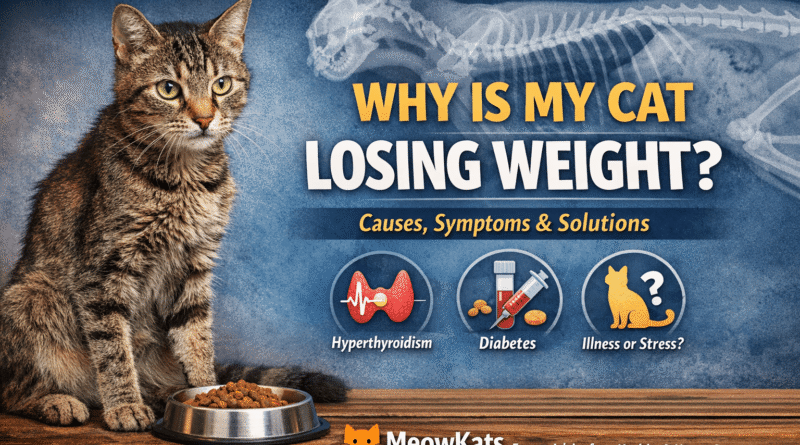
Cat Losing Weight? Causes, Symptoms, and What to Do?
If your cat is losing weight, you should not ignore it. Sudden or gradual weight loss often signals an underlying issue that needs attention. While some causes are harmless, others may indicate serious health problems.As a responsible pet guardian, you must understand why your cat is losing weight and how to respond quickly. Early detection can improve outcomes and even save your cat’s life.In this comprehensive guide, you will learn the most common causes, warning signs, and effective solutions to help your cat regain a healthy weight.
Perception Of Normal vs. Abnormal Weight Loss in Cats
Before you panic, you should determine whether your cat’s weight loss is normal or concerning.Cats may lose small amounts of weight due to:
- Aging
- Increased activity
- Minor diet changes
However, unexplained or rapid weight loss is never normal.
Signs Your Cat Is Losing Too Much Weight
- Visible ribs, spine, or hip bones
- Reduced muscle mass
- Loose or sagging skin
- Decreased energy levels
If you notice these signs, act quickly.
Common Causes of Weight Loss in Cats
- Poor Nutrition or Diet Changes
One of the simplest causes of weight loss involves diet.
If your cat:
- Eats low-quality food
- Experiences sudden diet changes
- Competes with other pets for food
It may not get enough nutrients.
What to Do
- Choose high-quality, protein-rich cat food
- Feed consistent meals
- Monitor food intake daily
Dental issues often cause hidden pain. As a result, your cat may avoid eating.
Common dental problems include:
- Gum disease
- Tooth decay
- Oral infections
Signs
- Drooling
- Bad breath
- Difficulty chewing
Solution
Schedule a veterinary dental checkup immediately.
- Parasites (Worms)
Internal parasites steal nutrients from your cat’s body.
Common parasites include:
- Roundworms
- Tapeworms
- Hookworms
Symptoms
- Weight loss despite normal appetite
- Diarrhea
- Bloated abdomen
Treatment
Deworming medication prescribed by a veterinarian.
- Hyperhyroidism
Hyperthyroidism is a common condition in older cats.
It increases metabolism, causing rapid weight loss even if your cat eats more.
Symptoms
- Increased appetite
- Hyperactivity
- Vomiting
- Increased thirst
Management
Medication, dietary therapy, or specialized treatments.
- Diabets Mellitus
Diabetes affects how your cat processes sugar.
Even if your cat eats well, its body cannot use nutrients properly.
Signs
- Increased thirst and urination
- Weight loss
- Lethargy
Solution
Insulin therapy and diet control.
Chronic kidney disease is common in aging cats.
It affects appetite and nutrient absorption.
Symptoms
- Weight loss
- Increased drinking
- Poor coat condition
- Vomiting
Management
Special diets and veterinary care.
7.Gastrointestinal Disorders
Digestive issues prevent proper nutrient absorption.
Common conditions include:
- Inflammatory bowel disease (IBD)
- Food intolerances
- Chronic diarrhea
Symptoms
- Weight loss
- Vomiting
- Loose stools
Treatment
Dietary changes and medication.
- Cancer
Cancer can cause severe weight loss in cats.
Tumors affect metabolism and appetite.
Warning Signs
- Rapid weight loss
- Lumps or swelling
- Loss of appetite
- Weakness
Next Step
Immediate veterinary diagnosis and treatment.
- Stress an Anxiety
Cats are sensitive animals. Stress can significantly affect appetite.
Common stress triggers:
- Moving homes
- New pets
- Loud environments
Signs
- Hiding
- Reduced eating
- Behavioral changes
Solution
Provide a calm, stable environment.
- Aging (Senior Cats)
Older cats naturally lose muscle mass over time.
However, excessive weight loss is not normal.
Support Tips
- Provide senior-specific food
- Schedule regular vet checkups
- Monitor appetite closely
When ShouldYou Worry?
You should seek veterinary help if:
- Your cat loses more than 10% of body weight
- Weight loss occurs suddenly
- Appetite changes significantly
- Other symptoms appear
Never wait too long. Early diagnosis improves treatment success.
How Veterinarians Diagnose Weight Loss
A veterinarian will perform:
- Physical Examination
- Body condition scoring
- Checking teeth, coat, and organs
- Blood Tests
- Detect diseases like diabetes or thyroid issues
- Stool Analysis
- Identify parasites
- Imaging (X-rays or Ultrasound)
- Detect internal problems or tumors
How to Help Your Cat Gain Weight Safely
- Improve Diet Quality
Choose:
- High-protein foods
- Wet food for hydration
- Nutrient-dense meals
- Feed Smaller, Frequent Meals
Instead of one large meal:
- Offer 3–4 smaller meals daily
- Encourage consistent eating habits
- Reduce Stress
Create a safe environment:
- Quiet feeding area
- Stable routine
- Comfortable resting spaces
- Monitor Food Intake
Track:
- Daily food consumption
- Weight changes
- Behavior
- Use Apetite Stimulants (If Needed)
Only under veterinary supervision.
- Treat Underlying Conditions
Always address the root cause:
- Medication
- Special diets
- Ongoing veterinary care
Preventing Weight Loss in Cats
Prevention remains the best strategy.
Key Tips
- Schedule regular vet visits
- Maintain a consistent diet
- Provide parasite control
- Monitor weight monthly
Frequently Asked Questions (FAQs)
Why is my cat losing weight but still eating?
This situation often indicates metabolic disorders like hyperthyroidism or diabetes. Your cat eats normally but cannot use nutrients effectively.
- Is weight loss normal in oler cats?
Mild muscle loss occurs with aging. However, noticeable or rapid weight loss requires veterinary evaluation.
- Can stres cause weight loss in cats?
Yes. Stress can reduce appetite and lead to gradual weight loss. Identifying and removing stressors helps restore normal eating.
- How quickly should I at if my cat loses weight?
You should act immediately if the weight loss is sudden or accompanied by other symptoms.
- What is the fastest way to help my cat gain weight?
Focus on high-quality nutrition, frequent meals, and treating any underlying medical issues.
- Should I change my cat’s food immediately?
Avoid sudden changes. Transition gradually to prevent digestive issues.
- Can indoor cats lose weight due to illness?
Yes. Indoor cats are still at risk of diseases like kidney issues, diabetes, and cancer.
In summary
Weight loss in cats is never something you should ignore. While minor changes may seem harmless, they often signal deeper health concerns. Therefore, you must observe your cat closely, act quickly, and seek professional guidance when needed.By understanding the causes, recognizing the symptoms, and taking proactive steps, you can protect your cat’s health and ensure a longer, happier life.
References
Veterinary & Academic Sources
- Cornell University College of Veterinary Medicine
- Feline Health Center
- Weight loss in cats
- https://www.vet.cornell.edu/departments-centers-and-institutes/feline-health-center
- American Veterinary Medical Association
- International Cat Care
- Weight loss in cats guide
- https://icatcare.org/advice/weight-loss-in-cats/
- Merck Veterinary Manual
- Disorders causing weight loss
- https://www.merckvetmanual.com
- VCA Animal Hospitals
- Causes of weight loss in cats
- https://vcahospitals.com
Disease-Specific References
Hyperthyroidism
- American Association of Feline Practitioners
- Hyperthyroidism guidelines
- https://catvets.com
- Cornell Feline Health Center
Diabetes in Cats
- PetMD
- Feline diabetes overview
- https://www.petmd.com/cat/conditions/endocrine
- Blue Cross UK
- Diabetes in cats
- https://www.bluecross.org.uk
Kidney Disease
- International Renal Interest Society
- CKD staging guidelines
- http://www.iris-kidney.com
- Royal Veterinary College
- Kidney disease in cats
- https://www.rvc.ac.uk
Parasites
- Centers for Disease Control and Prevention
- Parasites in pets
- https://www.cdc.gov/parasites
- Companion Animal Parasite Council
- Parasite control guidelines
- https://capcvet.org
Cancer in Cats
- National Cancer Institute
- Animal cancer basics
- https://www.cancer.gov
- Veterinary Cancer Society
Nutrition & Weight Management
- World Small Animal Veterinary Association
- Nutrition guidelines
- https://wsava.org
- Association for Pet Obesity Prevention
- Weight and body condition scoring
- https://petobesityprevention.org
Behavior & Stress
- ASPCA
- Humane Society of the United States
- Stress and environmental enrichment
- https://www.humanesociety.org