Last updated: June 7, 2026 at 3:00 PM GMT+1 • Simple answers for real cat parents
Cat food is one of the few pet expenses that owners pay every month. Unlike unexpected veterinary bills, food costs are predictable and easier to budget for. However, choosing the right food can still feel overwhelming.
Prices in 2026 remain higher than they were a few years ago. At the same time, shoppers face hundreds of options ranging from budget-friendly kibble to premium wet and raw diets. As a result, many cat owners struggle to determine how much they should realistically expect to spend each month.
I created this guide to provide practical and up-to-date cost estimates for cat food in the United States. To ensure accuracy, I reviewed current prices from Walmart, Target, and Chewy in June 2026. In addition, I examined data from multiple pet ownership cost studies.
Readers will learn about the monthly costs associated with dry food, wet food, and raw diets. Furthermore, you will find real-life examples, money-saving tips, and comparisons that can help you choose the most suitable feeding option for your cat.
Ultimately, the ideal cat food is one that your cat enjoys, supports long-term health, and fits comfortably within your household budget.
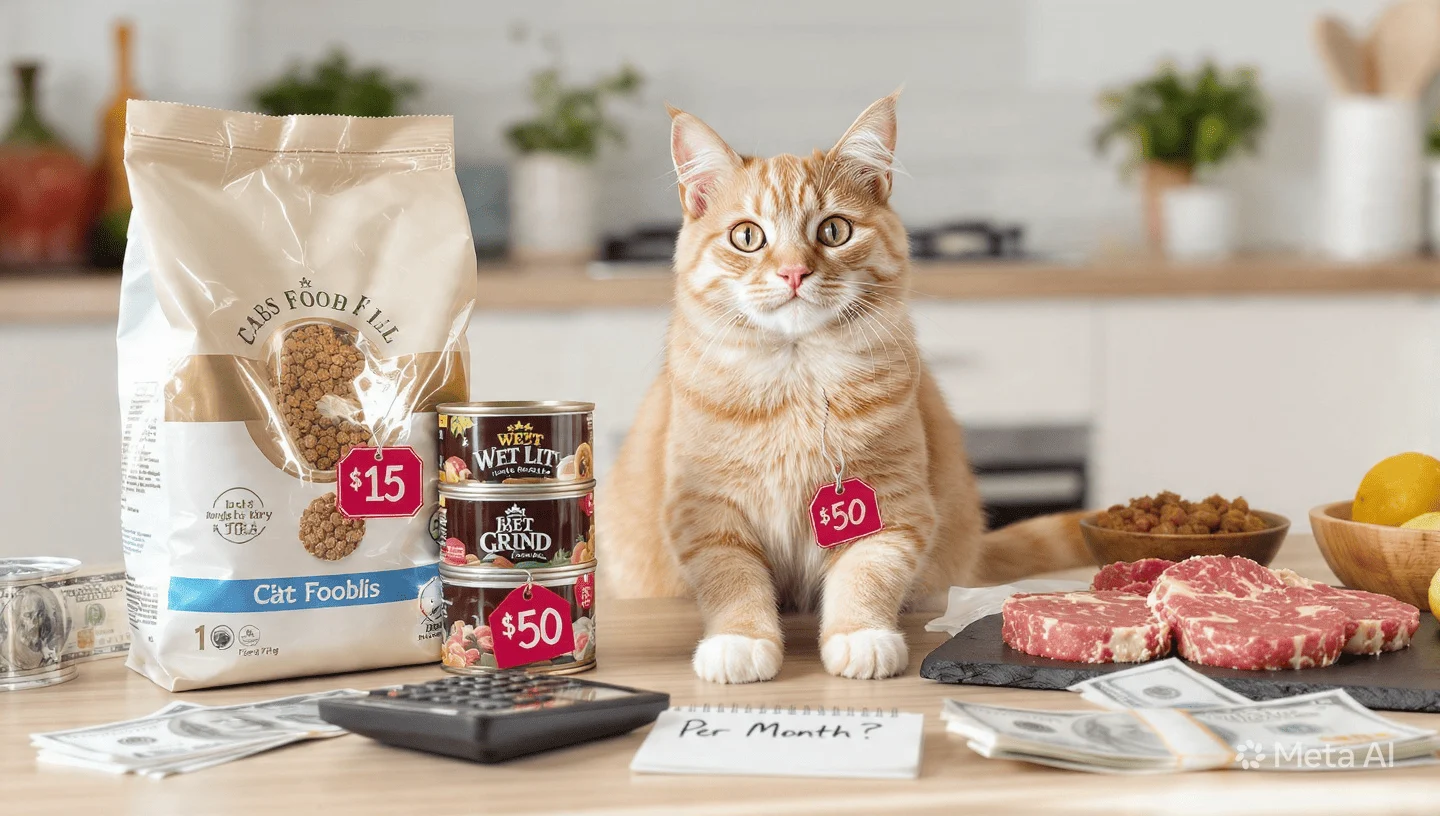
Quick Answer: Many people in the US spend $25 to $75 each month just on cat food. If you add litter and basic vet care, the total is about $65 to $125 per month. The exact number depends on whether you feed dry, wet, or raw.
Table of Contents – Jump to Section
- Introduction
- Dry Food: The Cheapest Option
- Wet Food: More Water, More Cost
- Raw Food: The Big Surprise
- Price Comparison Table
- Why Prices Are Different
- Three Real Family Budgets
- 9 Easy Ways to Save Money
- Common Mistakes to Avoid
- FAQ
- Bottom Line
- Conclusion
- References
1. Dry Food: The Cheapest Option
Dry food is also called kibble. It comes in big bags. You can leave it out all day and it does not go bad quickly. Therefore, many people in the US start with dry food.
Current prices in 2026 at Walmart, Target, and Chewy look like this:
- Budget brands like Cat Chow, Meow Mix, and 9Lives: $8 to $15 per month
- Mid-range brands like Purina Pro Plan, Iams, and Purina One: $18 to $28 per month
- Premium brands like Orijen, Blue Buffalo Wilderness, and Wellness CORE: $30 to $45 per month
Let’s break down how we calculate those numbers. First, a typical 10-pound indoor cat needs about 200 to 250 calories per day. That amount equals about half a cup of dry food. Next, half a cup weighs about 2 ounces. Over 30 days, it equals about 60 ounces, or 3.75 pounds.
For example, a 5-pound bag for $8 lasts about 40 days. That purchase works out to about $6 per month in food cost, but most people buy treats too, so $8 to $15 reflects real spending.
Meanwhile, a 16-pound bag of Purina Pro Plan for $32 lasts about 4 months. That bag costs $8 per month for the food itself. With tax and treats added, most people end up near $22.
Pros of dry food:
- You get cheap cost per serving
- Storage is easy for months
- It helps clean teeth by scraping
- Bulk buying is possible
Cons of dry food:
- It has very low water (only 10% water)
- Cats often do not drink enough
- It can lead to urinary problems, which cost $500 to $3,000 at the emergency vet
- Some budget brands use a lot of corn
Tip: If you feed only dry, always keep fresh water in two places. In addition, a water fountain can help. Meanwhile, cats drink more from moving water.
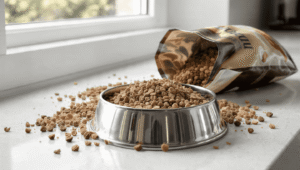
Many families practice “free feeding” with dry. The bowl stays full all day. However, this works for some cats, but many cats eat more than needed. As a result, cats with higher weight can cost more later. Therefore, measuring half a cup in the morning and half a cup at night works better.
Proper storage matters too. Put the food in a plastic bin with a tight lid. Do not keep it in the garage during summer. Heat makes the fat go bad. Use the bag within 6 weeks after opening.
Online deals offer the best prices in 2026. For instance, Chewy Autoship gives 5% off. Similarly, Amazon Subscribe & Save gives up to 10% off. On a $25 bag, that saves $30 per year. That amount pays for a bag of litter.
2. Wet Food: More Water, More Cost
Wet food comes in cans or pouches. It contains about 75% water. This high water content helps because cats in the wild get water from prey. However, house cats often do not drink enough.
Here are real 2026 prices you will find:
- Budget cans like Friskies Pate and Fancy Feast: $27 to $35 per month
- Mid-range like Natural Balance, Wellness, and Purina Pro Plan wet: $50 to $70 per month
- Premium like Tiki Cat, Weruva, and Instinct: $95 to $120 per month
- Very premium like Royal Canin or prescription: $150 to $210 per month
Why does such a big range exist? Let’s do the math together. A 10-pound cat needs about 180 to 200 calories from wet food daily.
For example, a cheap 3-ounce Friskies can has about 70 calories and costs 45 cents at Walmart. You need almost 3 cans per day. That total comes to $1.35 per day, or $40 per month. However, many stores sell a case of 24 for $11, which drops the price to 46 cents per can. Now monthly costs fall to $27 to $35.
On the other hand, a premium 3-ounce Tiki Cat can has 90 calories and costs $1.69. You need 2 cans per day. That total reaches $3.38 per day, or $101 per month.
Pros of wet food:
- It provides lots of water to help kidneys and bladder
- It has higher meat content
- Cats love the smell
- It works well for picky eaters and older cats
Cons of wet food:
- It costs more per calorie
- You cannot leave it out more than 2 hours
- Cans take up space and create trash
- Some cats get soft stool at first
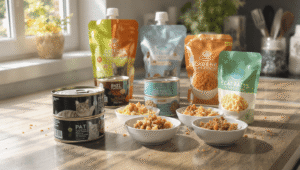
Many Americans use a smart feeding method called “one wet meal a day.” First, give dry food in the morning, then offer a 3-ounce wet can at night. This routine provides water without the full wet food cost. As a result, this mix usually costs $35 to $48 per month.
Watch for sales throughout the year. For example, Petco and Petsmart often run “buy 12 get 2 free” promotions. Stock up when cans drop to 40 cents. Wet food stays good for 2 years unopened.
Cat owners with multiple pets should buy the big 12.5-ounce cans. They cost $2.19 but equal four small cans. Therefore, you save about 30%. Just keep leftovers in the fridge with a lid for up to 3 days.
3. Raw Food: The Big Surprise
People often think raw food costs too much. However, in 2026, that idea is outdated.
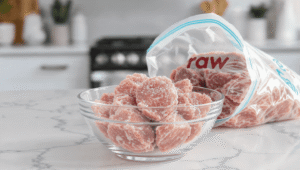
Commercial raw food comes frozen. You thaw portions in the fridge overnight. Brands you will find include Darwin’s Natural, Stella & Chewy’s, Primal, Vital Essentials, and Smallbatch.
Real monthly costs for one 10-pound cat in 2026 break down like this:
- Local purchase at pet store or co-op: $23 to $48 per month
- Online order with shipping: $32 to $88 per month
- Homemade raw (not for beginners): $20 to $40 per month plus time
Why does raw cost less than expected? The food is very dense in calories. A cat needs only 3 to 4 ounces daily, not 6 ounces like wet food. For example, a 3-pound bag of frozen patties costs about $24 and lasts 16 days. That price works out to $1.50 per day, or $45 per month.
Compare that number to premium wet food at $3.38 daily. Therefore, raw saves $60 per month.
Pros of raw:
- It has very high meat and no fillers
- It creates small, less smelly poop
- It gives shiny coat for many cats
- It needs less volume to feed
Cons of raw:
- It must stay frozen
- Thawing takes planning
- It costs more if shipped
- Not all vets recommend it
- You must clean bowls well
Frozen raw cat food patties
Shipping creates the biggest expense with raw food. Each box needs dry ice to stay cold. Shipping adds $20 to $30 per order. Therefore, buying local makes more sense. Many cities have raw co-ops where 10 families order together and split shipping costs.
New raw feeders should start slowly. Try one meal per week first. Replace Sunday night wet food with raw. Watch how your cat responds. Most cats switch completely within 7 days.
Safety matters most with raw. Wash hands thoroughly, clean bowls with hot soapy water, and never leave raw out longer than 30 minutes. Treat it exactly like raw chicken for people.
4. Price Comparison Table
| Type of Food | Low Cost | Middle Cost | High Cost |
|---|---|---|---|
| Dry Only | $8–$15 | $18–$28 | $30–$45 |
| Wet Only | $27–$35 | $50–$70 | $95–$210 |
| Raw Only | $23–$35 | $38–$60 | $70–$95 |
| Mix (Half Dry/Half Wet) | $18–$25 | $35–$48 | $60–$90 |
Surveys reveal what average Americans actually spend. Most data shows $22 to $50 per month for food. That figure matches the “middle cost” mix diet. It fits inside the total pet budget of $65 to $125 per month when you add litter ($15–$30) and vet savings ($10–$20).
5. Why Prices Are Different
- Inflation. Pet food prices rose about 22% from 2021 to 2024. A bag that cost $25 now costs $30. Good news: prices stabilized in 2025.
- Location matters. Ohio or Texas stores sell Friskies cases for $11. However, New York City or San Francisco stores charge $15 for the same case. Shipping and rent increase costs.
- Cat size changes everything. A 15-pound cat eats 50% more than an 8-pound cat. Also, kittens need 2 to 3 times more food per pound. Older cats often require prescription food costing $60 to $90 monthly.
- Marketing costs money. Fancy packaging and TV commercials increase prices. However, ingredients often match cheaper store brands. Read labels instead of trusting pictures.
- Buying method impacts price. Single small bags from gas stations cost the most. In contrast, large bags with autoship subscriptions cost the least.
6. Three Real Family Budgets
The Martinez Family – Phoenix, AZ – 2 cats
They buy Costco Kirkland dry ($28 for 25 lbs) plus Friskies wet at night. The dry bag lasts 3 months for both cats. One wet can splits between two cats each evening. Total food cost: $38 monthly for both cats, or $19 per cat. They stay within the low-cost mix range.
Sarah – Single in Chicago – 1 cat, 12 years old
Her older cat needs wet food for kidney health. She orders Weruva through autoship. Monthly food spending reaches $78. She also sets aside $20 monthly for vet visits. Total pet budget hits $115, near the top of average but keeps her cat healthy.
The Johnsons – Rural Iowa – 3 cats
They joined a local raw food co-op. Monthly pickup includes 40 pounds of frozen raw for $110. That amount feeds all three cats. Per-cat cost equals $37 monthly. They spend less than premium wet food users, plus vet bills stay low.
7. 9 Easy Ways to Save Money
- First, measure every meal. Most owners overfeed by 20%. That habit wastes $5 to $15 monthly.
- Next, set up autoship. Chewy, Amazon, and Petco offer 5% to 10% discounts. That saves $30 to $60 yearly.
- Also, choose large bags. A 16-pound bag costs less per pound than any 5-pound bag.
- Furthermore, mix food types. Half dry plus half wet provides health benefits while keeping costs near $40.
- In addition, wait for sales. Black Friday, July 4th, and Prime Day offer 20% to 30% off.
- Besides that, check dollar stores. They sometimes carry identical cans for 25% less.
- Next, install cashback apps. Ibotta and Fetch return $1 to $3 on pet food purchases regularly.
- Then, prevent food waste. Serve smaller portions if wet food remains uneaten. Discarding half a can wastes $15 monthly.
- Finally, maintain healthy weight. Cats with higher weight eat more and develop more health issues. Vet bills destroy budgets faster than food costs.
8. Common Mistakes to Avoid
Mistake 1: Never choose food by bag price alone. A $40 bag lasting 90 days costs less than a $15 bag lasting 20 days. Always calculate price per day.
Mistake 2: Avoid fast food switches. Quick changes cause diarrhea. You lose money and create messes. Transition over 10 days minimum.
Mistake 3: Skip treat-only diets. Treats should stay under 10% of daily calories. An $8 weekly treat bag adds $32 monthly with zero nutrition.
Mistake 4: Don’t ignore water intake. Dry-food cats who drink too little end up in emergency rooms. One ER visit erases 2 years of food savings.
Mistake 5: Store food incorrectly at your own risk. Open bags go stale quickly. Cats eat less, forcing you to throw food away. Use airtight bins instead.
9. FAQ
Q: What’s the cheapest healthy feeding method?
A: Purchase Purina Cat Chow dry ($15) plus Friskies wet cases ($11). Serve half cup dry mornings and half can wet evenings. Monthly cost lands at $22 to $26.
Q: Does expensive food justify the price?
A: Sometimes yes. Premium foods contain more meat and fewer fillers. Many cats eat smaller portions, making daily costs similar. Test small bags first.
Q: How much do kittens cost monthly?
A: Growing kittens need 2 to 3 times more food per pound. Budget $35 to $55 monthly for year one, then costs drop.
Q: Can human food replace cat food?
A: No way. Tuna and chicken lack essential vitamins. This diet causes expensive health problems later.
Q: How can I spot overfeeding?
A: Feel your cat’s ribs like you feel knuckles on your hand. If ribs hide under fat, reduce portions by 10%.
Q: Is commercial raw food safe?
A: Quality brands test every batch for bacteria. Handle it like raw chicken. Wash hands and bowls immediately. Healthy cats tolerate it well.
Q: Are subscription boxes worth it?
A: Brands like Smalls and Cat Person charge $60 to $90 monthly. They offer convenience and perfect portions, but you pay premium prices. Compare costs first.
10. To Sum Up
Cat owners in the United States spend anywhere from $20 to $80 monthly on food in 2026. Dry food costs around $20 to $30. Premium wet diets reach $80 or higher. Raw diets typically fall between $45 and $60 each month.
Choose the option that supports your cat’s health while matching your budget. In addition, measure portions carefully to prevent waste and overfeeding. Furthermore, bulk purchases and subscription discounts lower yearly expenses significantly.
These simple habits save $200 to $400 every year. Start with a plan that fits your current finances and your cat’s needs. Adjust the feeding strategy anytime your situation changes.
Remember that nutrition represents just one part of responsible pet care. Fresh water, daily play, and regular vet checkups protect long-term health equally. As a result, overall wellness matters more than expensive brand names.
Your cat values safety, full bowls, clean water, and daily attention far more than premium packaging ever could.
References
-
American Pet Products Association (APPA). (2025). Pet Industry Market Size & Ownership Statistics. Retrieved from https://www.americanpetproducts.org
- American Veterinary Medical Association (AVMA). (2025). Pet Ownership and Care Resources. Retrieved from https://www.avma.org/resources-tools/pet-owners
- Chewy. (2026). Cat Food Products and Pricing. Retrieved from https://www.chewy.com
- Walmart. (2026). Cat Food Department. Retrieved from https://www.walmart.com/c/kp/cat-food
- Target. (2026). Cat Food & Treats. Retrieved from https://www.target.com/c/cat-food-supplies-pets
- Purina. (2026). Cat Feeding Guidelines and Nutrition Resources. Retrieved from https://www.purina.com/cats
- Cornell Feline Health Center. (2025). Feline Nutrition and Feeding Recommendations. Retrieved from https://www.vet.cornell.edu/departments-centers-and-institutes/cornell-feline-health-center
- PetMD. (2025). Cat Nutrition Guide: What Should Cats Eat? Retrieved from https://www.petmd.com/cat/nutrition
- VCA Animal Hospitals. (2025). Feeding Your Cat: Nutrition Basics. Retrieved from https://vcahospitals.com/know-your-pet
- ValuePenguin. (2025). Average Cost of Owning a Cat. Retrieved from https://www.valuepenguin.com/pet-insurance/cost-of-owning-a-cat
- Rover. (2025). The Cost of Cat Ownership in the United States. Retrieved from https://www.rover.com/blog
-
Battersea Dogs & Cats Home. (2026). How Much Does It Cost to Own a Cat? Retrieved from https://www.battersea.org.uk/pet-advice/cat-advice/cost-owning-cat